
Why the pre-announcement teaser phase matters, how to structure it, what to measure, and how to turn curiosity into demand.
| Core idea: The buzz phase is not primarily about selling tickets. It is about making the eventual announcement feel anticipated rather than unexpected. |
Most Event Marketing Starts Too Late
Most event marketing begins with an announcement. A headliner graphic goes live. An email hits the database. The venue posts the date. Tickets go on sale. Everyone involved starts sharing.
By then, one of the most valuable marketing opportunities may already have passed.
Before the official announcement, there is a window to create curiosity, conversation, and a ready-made audience waiting for the reveal. This is the pre-announcement buzz phase, sometimes called the teaser, pre-launch, or pre-buzz phase.
Handled well, it turns an announcement into something people have been waiting to hear. Its job is not primarily to sell tickets (they may not exist yet) but to make more people notice, care about, and act on the announcement when it arrives.
For public concerts, fairs, festivals, casinos, theme parks, theaters, and corporate productions, that creates a much stronger starting point for the entire sales campaign.
What Is the Pre-Announcement Buzz Phase?
The buzz phase is the period immediately before an entertainment event is formally revealed. It falls between internal preparation and the official announcement.
During this period, marketers deliberately release limited information that signals something is coming. A smaller event may tease for a few days, while a major festival or signature booking may use several weeks.
The operative word is gradually. Instead of immediately saying, “Artist X will perform at Venue Y on August 14. Tickets go on sale Friday,” the audience might first see a date, then a visual clue, then a location, then a countdown, and finally the full reveal.
The sequence turns the announcement into an event of its own.
Why Buzz Before the Announcement Matters
A cold announcement must capture attention, explain the event, generate interest, overcome hesitation, and persuade someone to act, all at once. Pre-announcement marketing reduces that burden by preparing the audience first.
It creates anticipation
Anticipation gives people a reason to watch for what comes next. A cold audience sees, “There’s a concert happening.” A primed audience thinks, “So that’s what they’ve been teasing.” The information may be identical. The audience’s relationship with it is not.
It creates repeated exposure without repetitive selling
Reposting the same ticket graphic quickly becomes background noise. A teaser campaign lets each exposure offer something new: a mystery, a clue, a date, a look behind the scenes, a countdown. Each message advances the story instead of repeating the same ad.
It encourages conversation
Mystery invites participation. Who do you think it is? Recognize this song? When followers speculate, tag friends, and share, they distribute the message themselves and feel involved in the reveal.
It wakes up your most valuable audience
Past attendees, subscribers, season-ticket holders, and sponsors are usually the people most likely to respond quickly to a new event. The buzz phase re-engages them before asking them to buy anything.
It strengthens announcement day
The goal is not likes but a larger pool of people ready to respond when the announcement becomes actionable. When the reveal arrives, the audience already knows something has been coming, so the announcement becomes the payoff rather than the introduction.
How Long Should the Buzz Phase Last?
There is no universal formula. An active teaser phase of roughly one to four weeks is a useful planning range for many entertainment events, while a major festival or signature booking may justify a longer runway. These are planning guidelines, not rules.
The important distinction is between audience priming and active teasing. You can cultivate an audience for months without asking it to solve the same mystery for months. Too little time and anticipation never accumulates. Too much and curiosity turns into fatigue. Once you start an obvious countdown or tease a specific announcement, the audience needs a reasonably quick payoff.
The budget should be modest, too. In TSE’s recommended starting allocation for a single-night show, roughly 5 percent of total marketing spend goes to the buzz and pre-announcement stage, with the heaviest spending reserved for the announcement, on-sale, and final push. The buzz phase runs on creative and owned channels more than media dollars.
What Should You Tease?
The best teaser gives the audience enough to become curious but not enough to resolve the curiosity. Useful material includes the date without the artist, a recognizable location, a cropped photo or silhouette, a short audio clue where rights allow, footage from a previous event, a backstage image, or a clue longtime attendees will recognize.
For an established annual fair or festival, nostalgia is particularly powerful. Images and video from previous years remind people how the event feels before introducing what comes next. Behind-the-scenes material works for a similar reason: it shows the event taking shape.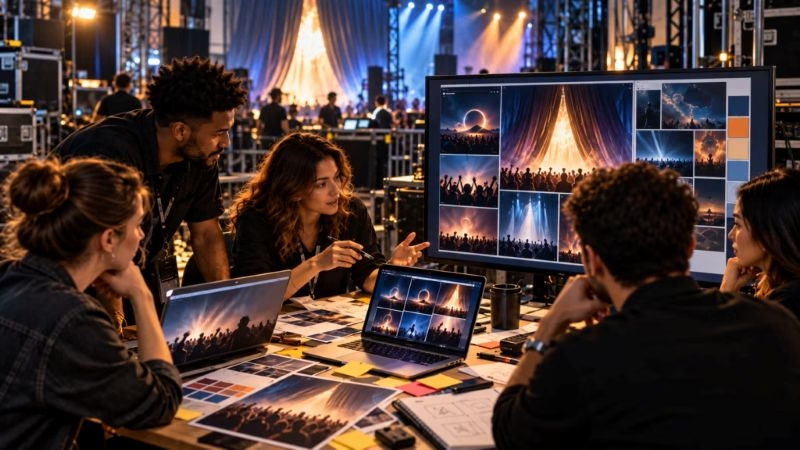 Build a Sequence, Not a Random Collection of Teasers
A common mistake is posting several unrelated “coming soon” graphics. A stronger campaign has progression. One practical structure is signal, curiosity, confirmation, and countdown.
Stage 1: Signal
Tell people something is happening. “Clear your calendar.” “We’ve been keeping a secret.” “Something is returning.” No explanation is necessary yet.
Stage 2: Curiosity
Provide clues people can interpret: a fragment of artwork, an audio clip, a location, a backstage photo, or another element that narrows the possibilities. This is where guessing, polls, comments, and shares work best.
Stage 3: Confirmation
Give the audience something concrete: the date, city, venue, genre, or announcement time. Now it knows something is happening.
Stage 4: Countdown
Shift from mystery to expectation. “Tomorrow.” “Wednesday at 10.” “24 hours.” The desired behavior is now simple: come back for the announcement. A countdown turns the reveal into an appointment.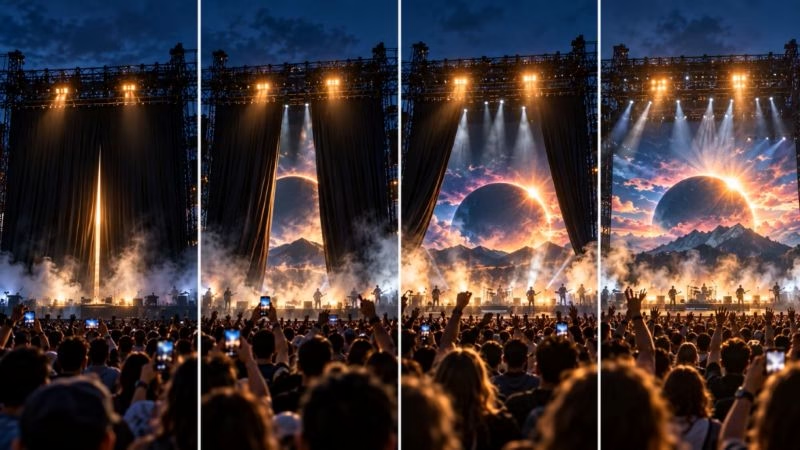
Give People Something to Do Before Tickets Exist
Curiosity is useful. Captured interest is better.
One of the strongest buzz-phase tactics is a simple landing page where people sign up for first access, presale notification, on-sale reminders, or text alerts. The call to action changes from Buy Tickets to Be the First to Know.
That converts anonymous attention into an audience you can reach again. A social follower may or may not see the next post. Someone who joined your email or SMS list can be contacted directly. Collect proper consent: commercial email must follow the CAN-SPAM Act, and marketing text messages carry their own consent requirements under the Telephone Consumer Protection Act.
Keep the form short. An email address or mobile number may be all you need. The mystery should be in the event, not in figuring out how to register. If the list will receive a genuine presale or early access, say so. A real reward is the strongest reason to sign up.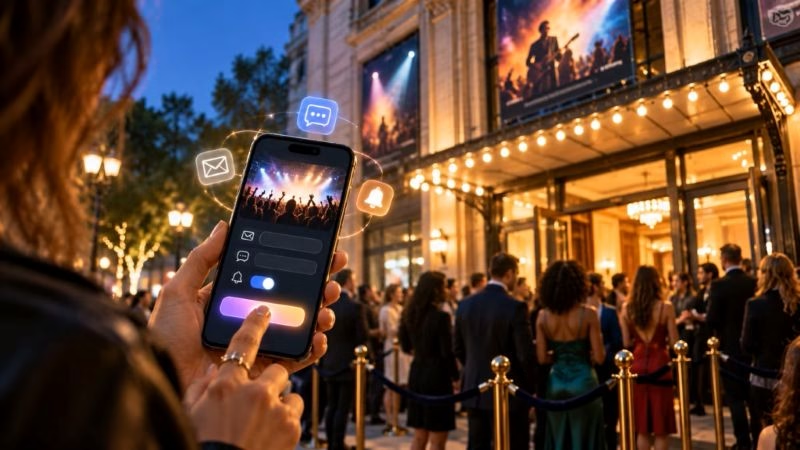
Use the Channels Your Audience Already Uses
The buzz phase does not require being everywhere. It requires consistency where likely attendees already pay attention.
Social media
Short video, polls, Stories, and countdown features naturally support teasers. Use the platforms that fit the audience rather than posting identical content everywhere.
A subject line such as “We’ve been keeping something from you” can re-engage past attendees without asking for a purchase, and subscriber-only clues give list membership real value.
Website
A simple teaser page reinforces the campaign, collects registrations, hosts a countdown, and gives every channel a destination without revealing the full event listing.
Should You Use Paid Advertising During the Buzz Phase?
Possibly, but the objective should match the phase. Asking a cold audience to care about a mystery is rarely a good use of budget. Paid media is usually more valuable when it amplifies interest that already exists or builds an audience you can reach again.
Useful applications include retargeting past event-page visitors, promoting the sign-up page, boosting a teaser video that is already earning engagement, and promoting the countdown just before the reveal.
Because tickets may not exist yet, measure sign-ups, video views, landing-page visits, shares, and audience growth rather than sales. Once the event is announced, the objective shifts to ticket conversion.
Activate Partners Before Announcement Day
One of the easiest ways to expand a teaser campaign is to involve organizations that already reach relevant audiences: the venue, sponsors, tourism bureaus, local media, food and beverage partners, community groups, and creators.
Give partners coordinated assets and a posting schedule rather than one graphic at the last minute. Related messages from several trusted sources make the announcement feel bigger than any isolated ad.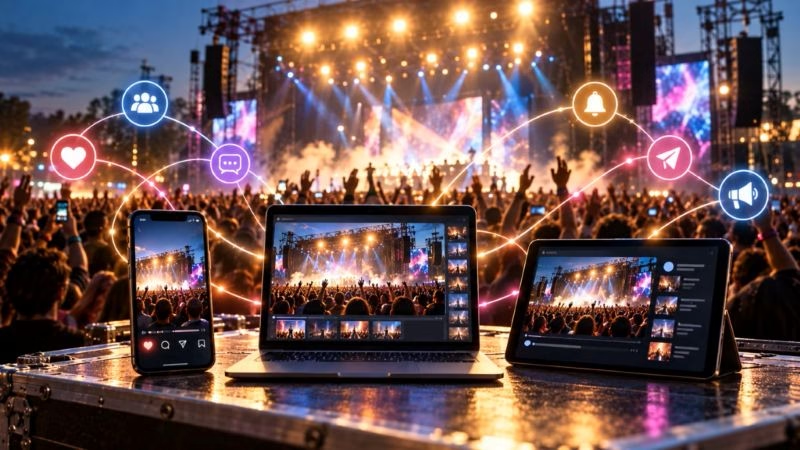
If creators or partners receive payment, free admission, merchandise, or another benefit in exchange for promotional content, the material relationship should be clearly disclosed in line with the FTC’s Endorsement Guides.
Protect the Secret Without Losing the Marketing Opportunity
The biggest operational challenge is obvious: the announcement must stay confidential long enough for the strategy to work. Artist announcements in particular are often governed by contract terms, routing, radius clauses, competing dates, or a coordinated tour announcement.
From the buyer’s side, the announce date is something to settle early. It is often addressed in the offer, and the artist’s agent or management may control when and how the booking can be revealed. Until the agreement is fully executed and the announce date confirmed, build teasers around the event experience rather than the artist.
Before launch, confirm the authorized announcement date and time, exactly what can and cannot be hinted at, who approves creative (including the artist’s team, where required), which partners receive advance information, whether music, photos, or logos are approved, whether ticket prices can be released, and who handles an unexpected leak.
A teaser should create speculation, not accidentally break an announcement embargo. Any partner who receives advance information should also receive the embargo date in writing.
Match the Strategy to the Type of Event
Public concerts
Artist identity is usually the strongest mystery. Clues may include musical imagery, recognizable colors, song references, tour-style graphics, silhouettes, or short audio clips where rights permit.
Fairs and festivals
The event itself is usually well known, so the buzz phase can focus on the lineup, a new attraction, a major improvement, or the first headliner. Many fairs reveal acts one at a time, so each announcement becomes the teaser for the next.
Casinos, theme parks, and theaters
These venues announce shows frequently, so save teasers for significant bookings or the technique loses its novelty. A theme park concert series may get more value from teasing the season lineup as a whole than from teasing each date.
Corporate productions
The buzz phase may be internal rather than public. A company can tease entertainment through employee communications, conference registration, or an event app. Staged reveals make attendees more invested in the final announcement.
Community events
Mystery does not require a celebrity. A town festival might tease a new stage, a fireworks show, or a children’s attraction. The central question remains: what can we temporarily withhold that people will genuinely want to know?
Avoid the Most Common Buzz-Campaign Mistakes
Being too vague
“Something exciting is coming” is not inherently exciting. Give people enough context to understand why the announcement could matter to them.
Stretching the mystery too long
Suspense has a shelf life. Repeating that something is coming without new information turns curiosity into annoyance.
Giving everything away too early
If the audience can immediately identify the artist, event, location, date, and offer, the “teaser” is really the announcement, and little remains to anticipate.
Creating clues nobody can solve
A clue can be challenging without being incomprehensible. The best clues are recognizable to at least part of the audience, and those people start the conversation for everyone else.
Failing to deliver a strong reveal
The teaser creates a promise, and the announcement has to fulfill it. Match the intensity of the tease to the significance of the announcement.
A Simple Two-Week Buzz Plan
A campaign does not have to be elaborate. The following two-week sequence is a practical starting point for an announcement scheduled for a Friday.
| Timing | Purpose | Example |
| Day 14 | Partner briefing | Send sponsors, venue, and media partners the teaser assets, posting schedule, and embargo date in writing. Quietly launch the Be the First to Know page. |
| Day 12 | Signal | Publish a simple visual suggesting something new is coming. Point followers to the registration page. |
| Day 10 | Memory | Post a strong photo or short video from a previous event. Ask followers what they remember most. |
| Day 8 | First clue | Reveal an image fragment, musical clue, or visual theme. |
| Day 7 | Subscriber exclusive | Email the list a clue the public has not seen, rewarding people who signed up. |
| Day 5 | Participation | Run a poll or ask followers to make predictions. |
| Day 4 | Behind the scenes | Show event preparation without revealing the answer. |
| Day 3 | Concrete information | Reveal the date, venue, announcement time, or another confirmed detail. |
| Day 2 | Partner activation | Sponsors, venue partners, media outlets, and participating organizations release coordinated teaser content. |
| Day 1 | Countdown | Send a clear appointment message, such as “Tomorrow at 10 a.m.,” through social and email. |
| Announcement Day | Reveal + conversion | Publish simultaneously across website, email, social, partners, ticketing page, and media outreach. Give the registration list its early access first. Make the next action unmistakable. |
Measure Whether the Buzz Actually Worked
Measure the buzz phase separately from the ticket-sales campaign that follows it. Useful measures include:
Audience growth: New email subscribers, SMS opt-ins, social followers, and remarketing audiences.
Engagement: Comments, shares, video views, Story interactions, and other signals that should rise as the reveal approaches.
Traffic: Visits to the teaser page, registration page, and website.
Search interest: Increases in branded search and direct website visits.
Announcement-day response: Traffic and engagement in the first hours after the reveal.
Presale performance: Whether the pre-announcement list converts into early purchasers.
Source performance: Which teaser channels ultimately produce the most ticket buyers.
That last measure matters most. A social post with 50,000 views can look impressive, yet an email list of 2,000 highly interested people may generate more actual buyers. Do not confuse visibility with business impact. Tagging the registration link by source (UTM parameters work well) makes the comparison possible.
The Buzz Phase Is Only the Beginning
Pre-announcement marketing works because it changes the starting point of an event campaign. Without it, the announcement asks the audience to go from unaware to interested to buyer almost immediately.
A strong buzz phase moves people through the first two stages before tickets are ever offered. By announcement day, they have seen clues, made predictions, and in many cases registered to hear more. The reveal simply answers the question the campaign has been encouraging them to ask.
That is the real purpose of the buzz phase. It is not secrecy for its own sake. It turns attention into anticipation and makes the official announcement the beginning of demand rather than the beginning of awareness.
Frequently Asked Questions
What is the buzz phase of event marketing?
The buzz phase is the period immediately before an event, or a major element of an event, is officially announced. Organizers deliberately release limited information, clues, previews, or countdown content to create awareness and anticipation before the complete announcement.
How far in advance should an event teaser campaign begin?
For many entertainment events, an active teaser campaign of roughly one to four weeks is sufficient. Larger festivals or major announcements may justify a longer period, while a single concert announcement may need only several days. The key is maintaining momentum rather than following a fixed number of days.
How much of the marketing budget should go to the buzz phase?
Relatively little. TSE’s recommended starting allocation for a single-night show puts roughly 5 percent of total marketing spend into the buzz and pre-announcement stage. Most of the budget belongs to the announcement, the on-sale, and the final weeks before the show, when buyers are ready to purchase.
Is the buzz phase the same as the entire pre-event marketing campaign?
No. The buzz phase occurs before the formal announcement. The broader pre-event campaign continues after the announcement and may include ticket advertising, artist content, retargeting, publicity, promotions, sponsorship activation, and attendee communications.
What should an event organizer post before an announcement?
Good teaser content includes partial images, dates, venue photos, artist clues, behind-the-scenes footage, previous-event highlights, polls, countdowns, audio clues where rights allow, questions, and short videos. Each piece should reveal slightly more as announcement day approaches.
Should the artist’s name be used during the teaser campaign?
Usually not if the artist is the subject of the reveal. Promoters should also confirm contractual announcement restrictions and obtain the necessary approvals from the artist’s team before using artist names, images, music, logos, or other protected materials.
When can a booked artist be teased?
Only after the agreement is fully executed and the announce date has been confirmed with the artist’s agent or management. Before that point, keep teasers focused on the event, the venue, or the experience rather than anything that points to a specific artist.
Should tickets be available during the buzz phase?
Usually the primary on-sale follows the announcement, although some events use priority lists, registrations, memberships, or presale sign-ups beforehand. The pre-announcement call to action is typically Be the First to Know rather than Buy Tickets.
Does a teaser campaign work for free events?
Yes. The desired conversion may simply be awareness, attendance intent, registration, email signup, sharing, or saving the date rather than purchasing a ticket.
Can small events benefit from a buzz campaign?
Yes. A small event does not need a complex campaign. A few coordinated posts, an email, a teaser page, and a 48 or 72 hour countdown can create anticipation without a large budget.
What is the biggest mistake in pre-announcement marketing?
One of the most common mistakes is teasing an announcement for too long without providing new information. The audience should feel that it is moving toward a reveal rather than repeatedly seeing variations of “coming soon.”
How do you know whether a buzz campaign worked?
Measure audience growth, sign-ups, website traffic, engagement, shares, branded searches, announcement-day traffic, presale activity, and ultimately how effectively the pre-announcement audience converts into ticket buyers or attendees.
Resources and References
Event Marketing Resources (Eventbrite). Guidance on event storytelling, teaser content, behind-the-scenes material, countdowns, and channel selection. Open resource
Social Media for Event Marketing (Eventbrite). Pre-event teasers, countdowns, and social engagement tactics for building an audience before the event. Open resource
Event Email Marketing (Eventbrite). Using teaser and countdown emails to build anticipation and reward subscribers. Open resource
Endorsements, Influencers, and Reviews (Federal Trade Commission). Plain-language guidance on the Endorsement Guides, revised in 2023, including disclosure of material connections with creators and partners. Open resource
CAN-SPAM Act: A Compliance Guide for Business (Federal Trade Commission). Requirements for commercial email campaigns, including sender identification and opt-out handling. Open resource
Setting the Right Event Marketing Budget (TSE Entertainment). TSE’s recommended phasing of marketing spend across a campaign, including the buzz and pre-announcement stage. Open resource
The Psychology of the Sale (TSE Entertainment). White paper on the behavioral psychology of ticket buying, including running a countdown to the announcement itself. Open resource
Event Marketing White Paper (TSE Entertainment). Broader framework for planning event marketing across the full event lifecycle, including pre-announcement audience development. Open resource
Word count: article body 2,491 words (excluding FAQ and resources); FAQ 550 words; resources 184 words; total 3