
Introduction
Setting the right event marketing budget is a critical piece of event planning. Marketing is a major component of any entertainment event budget and should be treated as an investment rather than one of the first lines cut when costs rise. Many venues, promoters, and event organizers are right to reduce expenses where they can to maintain profitability. Far too often, however, the marketing budget is looked upon as just another event expense to minimize.
TSE Entertainment has spent more than 50 years working with venue operators and event organizers, and we still routinely meet clients who do not understand the distinction between an expense and an investment in their events. That distinction is critical to developing and funding the right marketing budget for live entertainment events. We consistently see two mistakes:
- Treating marketing as just another expense and underfunding the event marketing budget.
- Using the same marketing budget for all their events, no matter the difference in the performers, the ticket prices, and the size of the room.
To that list we would now add a third: spending real money without any way to tie that spending back to tickets sold.
Why This Matters More in 2026 Than It Did Five Years Ago
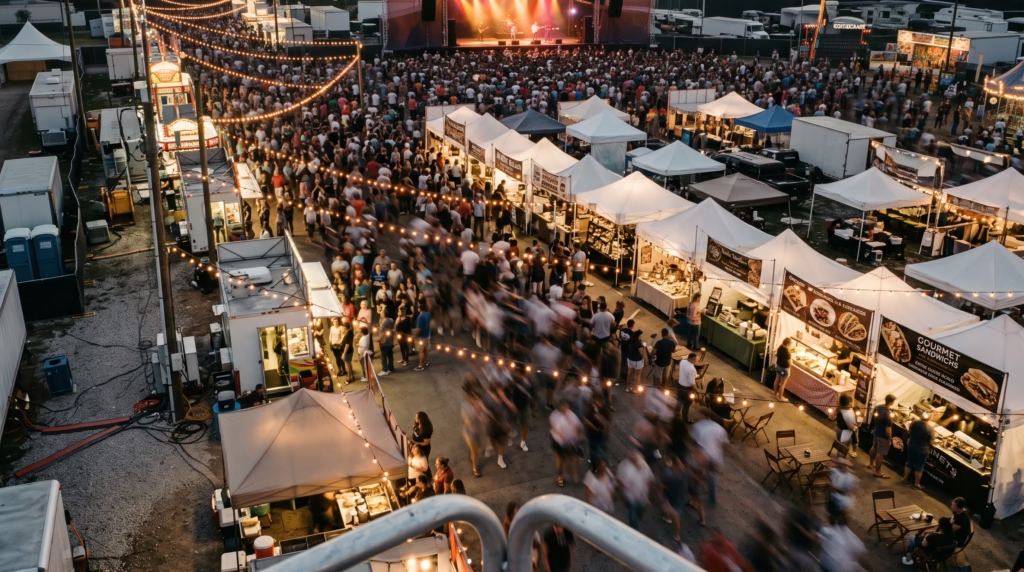
Growth is not the whole story. More money in the sector means more events chasing the same discretionary dollars. A 2026 industry analysis found that an unprecedented number of festivals were canceled or went bankrupt in 2025 amid weak sales and rising costs. Meanwhile, ticket prices have climbed sharply while affordability has eroded for many fans, making buyers more selective about which events get their money.
In that environment, underfunding marketing can turn an otherwise viable event into a weak-selling one. Cutting marketing is not necessarily a cost saving if it prevents the event from reaching the audience required to break even.
Some Benchmarks for the Right Event Marketing Budget
There are a lot of factors that go into creating the right event marketing budget for live entertainment, and they are covered later in this article. As a starting point, those experienced in marketing entertainment events will tell you to plan on spending between 10 and 20 percent of your total potential gross ticket sales on marketing the event.
That band holds up against outside sources. Bauer Entertainment Marketing states that most event producers allocate 15 to 20 percent of their total potential gross revenue at sell-out to marketing, and illustrates it with a show of 2,500 tickets at $40 each, a $100,000 gross potential, producing a $15,000 to $20,000 marketing budget. Ticket Fairy’s event marketing budget calculator sets its benchmark at 8 to 15 percent of projected gross revenue for established events and 18 to 25 percent for new events or those with a weak audience, and its worked concert example uses 12 percent of gross for a medium-strength audience, treating a resulting customer acquisition cost of roughly 12 percent of ticket price as healthy.
An important note on a number you will see quoted elsewhere. HubSpot’s widely repeated guidance, echoed by Eventbrite, is to allocate 10 to 15 percent of your total event budget for a recurring event and 15 to 20 percent for a new one. Those percentages happen to look identical to ours, but they are calculated against a different base. HubSpot is talking about a share of what you spend. TSE is talking about a share of what you could take in at a sell-out. For a show where talent and production run well above the marketing line, the two methods produce very different dollar figures. Use gross potential as your base. It is the number that scales with the size of the audience you actually need to reach.
The right number within the range is affected by the reputation and frequency of events at a venue. A venue that consistently delivers high quality events has a significant head start when it comes to marketing future events. As a TSE planning rule of thumb, a consistently active venue is one presenting roughly 10 to 12 or more events per year. These venues should generally allocate between 10 and 15 percent of their potential gross ticketing income to the marketing budget for each future show. The actual number is determined by how much data they hold on their target audiences and by how actively they have engaged past ticket buyers and venue fans.
If you are a new venue, host only a few shows per year, or are producing a single hard-ticket event, the right marketing budget will often be in the 15 to 20 percent range. First-year events in a new or highly competitive market may need to exceed 20 percent, particularly when the promoter has little owned audience data.
Hard-Ticket, Soft-Ticket, and Hybrid Events
Before you pick a percentage, decide what you are taking a percentage of. Live entertainment events fall into three ticketing models, and they do not share a budgeting base. Many events, particularly fairs and festivals, run more than one of these models at the same time.
Hard-ticket events. Admission to the performance is sold separately and ticket revenue is the primary measure of demand. Standalone concerts, theater dates, casino showroom performances, and separately ticketed grandstand shows all fall here. Size the marketing budget against gross potential ticket sales, using the 10 to 20 percent band above.
Soft-ticket events. Entertainment is included in the price of gate admission or offered free to anyone on the grounds. County fair side stages, free community festivals, theme park concert series, and most street festivals work this way. There is no separate ticket gross to take a percentage of, so tie the budget to the attendance goal and to the revenue streams that attendance drives, including gate admissions, food and beverage, sponsorships, merchandise, parking, carnival or ride revenue, and paid upgrades. A useful working method is to calculate total projected per capita revenue, multiply it by the attendance goal, and apply the same 10 to 20 percent logic to that figure.
Hybrid events. This is the most common structure at larger fairs and festivals, and the one most often budgeted incorrectly. The gate is soft-ticket, included entertainment plays the side stages, and one or more high-end headline concerts are sold as separate hard tickets, sometimes with the paid ticket including gate admission and sometimes requiring it on top. Budget these as two campaigns against two bases: an attendance-and-per-capita budget for the gate and the included programming, and a gross-potential budget for each hard-ticket concert. Do not fund the headline concert out of the general fair advertising line. A separately ticketed show competes for the same discretionary dollars as any standalone concert in that market, and it needs a campaign sized to its own gross potential.
One caution on hybrid math.Whether the concert ticket includes gate admission varies by fair, so confirm your own structure before building either budget. Some fairs bundle admission into every grandstand ticket, some include it only with reserved seats, and some sell the two entirely separately. Where admission is bundled, do not count that revenue twice. Assign it to the concert base or to the gate base, state which, and hold to it across the budget.
Private corporate events require a different base altogether. Their marketing or communications budget should be tied to objectives such as attendance, employee engagement, recruiting, client development, or another defined business outcome rather than to ticket gross.
Examples of the Right Marketing Budget for Entertainment Events
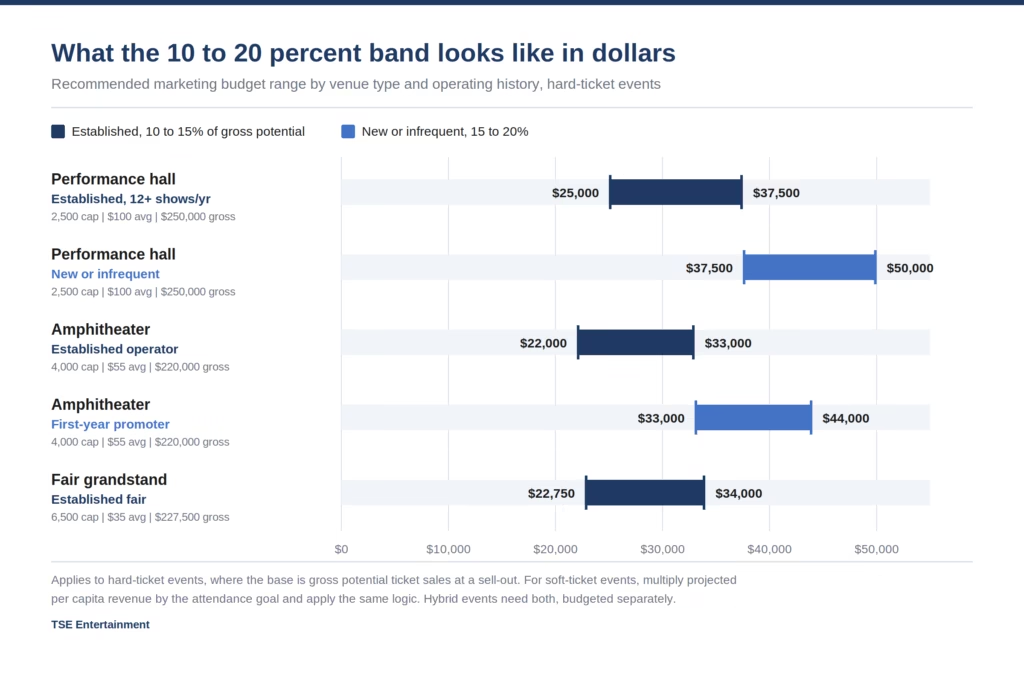
Performance hall, established. A music venue that regularly hosts 12 live entertainment events per year has a capacity of 2,500. An upcoming event carries an average ticket price of $100 across all ticketing tiers. Total gross potential ticket sales revenue is $250,000. The benchmark marketing budget for this event should be $25,000 to $37,500, with the final number determined by the factors discussed below.
Performance hall, new or infrequent. A new venue, or one that does not regularly host live entertainment, running the same show would need to spend more. In this case the right marketing budget is $37,500 to $50,000.
Mid-size public concert. A 4,000-capacity outdoor amphitheater with an average ticket price of $55 has a gross potential of $220,000. An established operator budgets $22,000 to $33,000. A first-year promoter in the same market budgets $33,000 to $44,000.
Fair grandstand show. This is the hard-ticket component of a hybrid event, so it is budgeted on gross potential even though the fair around it is soft-ticket. A fair grandstand seating 6,500 with an average paid ticket of $35 has a gross potential of $227,500. Fairs carry a built-in advantage, since gate traffic and decades of community familiarity do part of the awareness work, but the grandstand act still has to be sold on its own, out of its own budget line. Established fairs typically land at the low end of the range, from $22,750 to $34,000, with a portion of that reallocated toward on-grounds and regional radio rather than pure digital.
Remember that these are guidelines, not hard percentages. They are historically grounded in what it actually takes to market successful live entertainment events.
Working Backward From the Ticket
 Percentages are a sanity check. The more rigorous approach is to build the number from the bottom up, using your own conversion math, and then confirm it lands inside the benchmark range.
Bauer Entertainment Marketing publishes a working version of this formula: revenue goal divided by ticket price gives tickets needed, tickets divided by an average of 2.7 tickets per order gives orders, orders divided by a 2 percent conversion rate gives unique ad clicks, and unique clicks multiplied by 1.25 gives total clicks. Their worked example targets $45,000 from digital ads at $40 per ticket, requiring 1,125 tickets, 417 orders, 20,800 unique clicks, 26,000 total clicks, and roughly $13,000 in ad spend. Bauer describes that outcome as a 4X return on ad spend, though the figures as published work out closer to 3.5X. Bauer also reports that most event campaigns target 3X return on ad spend or better, and that 25 percent of their clients achieve 8X.
Two cautions apply. First, that math covers paid digital only, which is one line inside a full marketing budget. Second, small events break the model. Paid advertising underperforms organic promotion for events under roughly 200 capacity, because customer acquisition cost exceeds the ticket price.
The Significance of Marketing Budgets for Entertainment Events
Having the right event marketing budget can make or break the success of your event. It is not just a number. It is the mechanism by which you build awareness, boost attendance, and generate revenue.
You cannot attract attendees to an event they do not know exists. You need a well-considered marketing budget for your events, whether they are fairs, festivals, public concerts, casino shows, theme park events, or corporate productions. The right marketing does more than create awareness. It creates buzz and anticipation. With the right budget you will reach enough of your target audience to build genuine excitement.
The right budget also funds something most underfunded campaigns never get to do: test. Adequate funding lets your team try different strategies and channels, find out which ones actually move tickets in your market, and shift money toward them while the campaign is still running.
General Guidelines for Marketing Budgeting
Budgeting can be daunting at first. While fairs, festivals, and public concerts differ in how they are marketed, these general guidelines apply across all of them.
Establish Campaign Goals
Your goals can be tangible, intangible, or both. Identifying them determines your target audience, the best way to reach that audience, and the costs associated with doing so. For ticketed events, set a target sell-through percentage rather than only a raw ticket count, but do not assume the same percentage works for every show. Start with your break-even point, target profit, realistic capacity, historical sales patterns, and the artist or event demand in that market, then establish a sell-through goal that fits those economics.
Identify Your Target Audience
Pinpoint the audience type and segments you are promoting to. The more you know about their demographics and interests, the easier it is to target them. Audience size and geography directly affect cost. Be honest about how much of your audience is new. Gupta Media’s multi-year festival analysis found that repeat purchasers represented only about 12 to 17 percent of buyers at most festivals studied, illustrating how heavily many festival campaigns depend on net-new acquisition rather than retention. Gupta notes that the figure is probably an undercount, because it tracks unique purchasers, so a group of friends in which a different person buys each year registers nobody as a repeat buyer. Even allowing for that, a high share of new buyers should push the budget toward the top of the range.
Select Marketing Channels
Think about where your target audience can be found and how you can best reach them. Depending on your budget, you may need to prioritize some channels over others. Concentrating spend on the right ones matters more than covering every one of them. Most organizers spread marketing effort across too many channels at low intensity, while the teams that consistently sell out concentrate on the few channels that actually convert.
Make a List of Your Event Marketing Costs
List estimated costs and break them into projected fixed and variable components. Reach out to platforms and advertising outlets to obtain precise pricing for the services you will require to meet your campaign objectives.
Identify Revenue Streams and Cash Flow Issues
Cash flow is critical. You will incur marketing costs well before any revenue is generated. Just as with other upfront costs of producing a live entertainment event, you need funds on hand to pay them before revenue arrives.
TSE strongly recommends that event promoters and venues have roughly 60 percent of their total event budget on hand before proceeding. That provides enough capital to cover cash flow gaps and protects you if the event does not break even.
Make a list of all revenue streams and the anticipated timetable for receiving them, then build a cash flow schedule from it. Operators running strictly on incoming cash flow will struggle. Note also that ticket revenue is often not the whole picture. For many festivals, ticket revenue covers only part of the total event economics, with food and beverage, sponsorships, merchandise, parking, VIP upgrades, and other ancillary revenue contributing materially. Marketing that drives attendance therefore drives ancillary revenue as well, which is part of why it should be treated as an investment.
Complete an Event Budget Template
Your event budget lets you keep tabs on spending. Event marketing should have its own section within the overall event budget. Eventbrite offers a free event budget template you can download, and most ticketing and event management platforms now include one.
Review, Optimize, and Update the Budget Regularly
Your event marketing budget should never be set in stone. Monitor marketing spending daily to make sure you are staying within budget and adjusting tactics toward the channels reaching your audience most efficiently. A good event marketing budget tracks actual versus budgeted spend and shows variances, which improves your budgeting for future events.
Breaking Down Your Marketing Budget
Account for every channel you will use to reach your target audience, then divide your marketing spend into groups such as these.
Paid Advertising
Social advertising on Meta properties including Facebook and Instagram, along with YouTube, TikTok, Google search, and retargeting campaigns.
Campaign and Content Production
Website and box office content, video production, graphic design for posters, ads, and social content, content creation and scheduling, photography for teasers and recaps, and motion graphics. Video deserves particular emphasis, since it consistently outperforms static posts for live events.
Email and SMS Marketing
Email platform subscription, list segmentation, and an SMS texting platform. For venues and promoters with a meaningful opted-in mobile list, SMS deserves its own budget line. Subtext’s 2026 benchmark data shows the events category producing the highest performance of any industry on SMS, at a 40.64 percent click-through rate and a 59.39 percent engagement rate, against email averages of roughly 46 percent open rates and 1.28 percent click-through.
The practical division of labor is straightforward. Email carries the full announcement, and text is the closer for the on-sale, the early-bird deadline, and the last-call push.
Influencer Marketing, Partnerships, and Street Teams
Influencer partnerships and ambassador or street team programs. The influencer marketing industry was estimated at $32.5 billion in 2025, and festivals are actively tapping it. For most promoters, micro-influencers in the 5,000 to 50,000 follower range, engaged with tracked links and performance-based commissions, are the more efficient play than large flat fees.
Referral and Affiliate Programs
This category did not appear on most budget sheets a few years ago and belongs on them now. Affiliate and referral programs are performance-based, so you only spend when tickets sell, and typical commissions run 5 to 15 percent of the ticket price. Structure the commission so it comes out of margin you have already accounted for.
PR and Press Outreach
Press release creation and distribution, radio and podcast outreach, and outlet pitches.
Organic Social Media
Content posting and selective boosting of posts. Social media remains a major discovery channel for live events, particularly when paid distribution, artist content, venue content, and fan sharing work together.
On-Site and Local Promotion
Event signage, posters, marquee, banners, and cross-promotion at other events on your grounds or in your market.
Measurement and Attribution
Budget for it explicitly rather than assuming it is free. This is covered in the next section.
Developing a budget is only one aspect of a strong marketing strategy. The other is matching tactics and channels to your objectives and audience. You can maximize ticket sales and position your event for long-term success by allocating resources according to audience data and event timing, then reallocating as the campaign unfolds and channel performance becomes clear.
Budget for Attribution, Not Just Advertising
The single biggest change in event marketing budgeting over the past several years is that guessing is no longer defensible. If your marketing system cannot tie ad spend to ticket revenue by channel, you are not marketing your event, you are guessing.
Live events marketing teams rarely lack engagement data such as opens, clicks, impressions, and reach. What is almost always missing is the data that pays the bills: which email and SMS campaigns sold tickets, and how many. Meta and Google can report conversions when tracking is configured properly, but platform attribution is modeled and can differ from actual ticketing data. Promoter reporting should reconcile platform attribution with UTM-tagged links, ticketing-platform sales data, email and SMS tracking, and the event’s own CRM.
The value of closing that gap is not abstract. Without attribution, budget conversations are about justifying spend. With attribution, the conversation becomes a statement of what a channel produced in ticket revenue.
Attribution also changes how you phase spend. If your data shows that 40 percent of an artist’s tickets sell during presale, front-loading marketing spend makes sense. If walk-up sales historically dominate, preserving budget for the final push matters more.
Phasing the Spend Across the Campaign
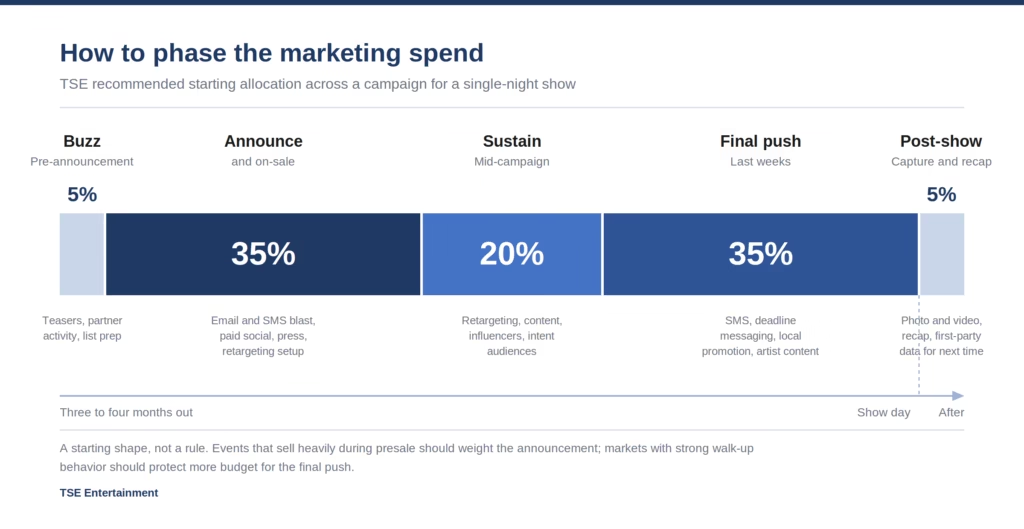
A dollar figure without a calendar is only half a budget. For a typical single-night show, TSE recommends opening the campaign three to four months out and phasing the total marketing spend across five stages:
- Buzz / pre-announcement, 5 percent. Build awareness before the formal announcement through teasers, partner activity, organic social content, email list preparation, and other low-cost efforts designed to create curiosity without revealing everything at once.
- Announcement and on-sale, 35 percent. Use coordinated email and SMS, paid social, artist and venue channels, press outreach, retargeting setup, and other promotion to generate strong early ticket velocity.
- Sustain, 20 percent. Maintain visibility after the initial announcement surge through retargeting, content production, organic social, influencer and partner activity, email segmentation, and paid campaigns aimed at audiences showing purchase intent.
- Final push, 35 percent. Concentrate significant resources in the final weeks before the event, when urgency increases and many buyers make their purchase decision. SMS, retargeting, high-performing paid channels, local promotion, artist content, and deadline-driven messaging should receive particular emphasis.
- Post-show, 5 percent. Marketing should not stop when the event ends. Capture photos and video, publish recap content, thank attendees, encourage social sharing, collect audience data where appropriate, and begin building the first-party audience for the next event.
The exact timing should still be adjusted based on the event’s sales curve. An event that historically sells heavily during presale may warrant more spending at announcement, while a market with strong walk-up behavior may require protecting more of the budget for the final push.
Phasing for Fairs and Multi-Day Events
The five stages above describe a single-night show. Fairs run two clocks at once.
Hard-ticket grandstand shows announce earlier than a typical single date, often five to nine months out for a marquee headliner and closer to three to four months at mid-size fairs. The runway is set by the tier of the act rather than the type of event, since a headliner drawing from the same routing pool as an arena tour competes with every other date that act plays that season.
Gate promotion runs the other direction. Attendance at a community fair is a habitual local decision made close to the event. Open the planning, sponsorship, and partnership work three to four months out, then weight the paid spend toward the final six weeks, when the schedule and daily entertainment lineup give you something new to say.
Fairs also rarely have a single announcement moment, because grandstand lineups roll out in waves as contracts confirm. Treat the five stages as a cycle that repeats for each hard-ticket show, with the gate campaign running alongside on its own timeline.
Other Tools and Tips
A marketing calendar or scheduling template is worth the setup time. It gives you a clear view of what your promotional tactics should look like across the campaign, keeps content and scheduling organized, and lets you track how much you are spending in each phase and on what.
A budgeting app or template is equally useful for tracking budgeted versus actual spend. Like the calendar, it keeps you and your team current as the campaign unfolds, and it is the mechanism for reallocating funds away from an underperforming channel toward one that is working. Judge every reallocation against the key performance indicators you set at the outset.
One caution about tools and shortcuts: benchmark averages, including the ones in this article, are a starting point rather than an answer. Your venue’s own history is better data than any industry average, and every show you run should be adding to that history.
TSE Entertainment Can Help
TSE Entertainment can help you develop the right event marketing budget for your events and make the most of every dollar spent. From building awareness and increasing engagement to driving ticket sales, we help clients reach bigger audiences and build marketing strategies that produce trackable results. Reach out to us with this inquiry form for a free consultation or call us at 1-800-765-8203
Conclusion
Creating the right event marketing budget is one of the most important steps in producing financially successful events. It is easy to underestimate how much you actually need to spend to create awareness and get people through the doors.
A marketing budget built on target audience data, sized against gross potential ticket sales for hard-ticket events, against defined attendance and per capita outcomes for soft-ticket events, and against both where a hybrid event carries a separately ticketed headline show, allocated to specific channels, phased across the campaign, and measured by real attribution is what allows you to reach your intended audience and hit your goals. It can make or break your event. Be sure you are neither underspending nor overspending on the marketing your event actually requires.
Frequently Asked Questions
Why is marketing considered an investment rather than just an expense for entertainment events?
Marketing builds awareness, generates buzz, and drives ticket sales, contributing directly to event success and return on investment. Unlike fixed expenses such as venue rental, marketing actively grows event revenue when it is done right, and it drives the on-site food, beverage, and merchandise revenue that often decides whether the event is profitable.
How much should I budget for marketing my entertainment event?
For hard-ticket events, plan on roughly 10 to 20 percent of your total potential gross ticket sales as a starting benchmark:
- Established venues with regular events (as a TSE rule of thumb, roughly 10 to 12 or more per year): 10 to 15 percent
- New venues, infrequent hosts, or single events: 15 to 20 percent, with some first-year or highly competitive events requiring more than 20 percent
Is that a percentage of my ticket revenue or of my total event budget?
For hard-ticket events, use gross potential ticket sales at a sell-out. This is a common point of confusion, because widely cited guidance from HubSpot and Eventbrite uses similar percentages calculated against the total event budget instead. The two produce different dollar figures. Gross potential is the better base when ticket sales are the primary revenue objective because it scales with the size of the audience you need to reach. For soft-ticket or private events, use attendance and the business or revenue outcomes the marketing is expected to influence rather than ticket gross. Hybrid events, such as a fair with free side stages and a separately ticketed grandstand concert, need both: an attendance-and-per-capita budget for the gate and included programming, and a separate gross-potential budget for each hard-ticket show.
Can I use the same marketing budget for all my events?
No. Each event varies in scale, performer popularity, audience reach, and ticket price. Marketing budgets should be built per event.
What factors influence how much I should spend on marketing?
Venue reputation and event frequency, the quality of your audience data and engagement, the share of your audience that is new rather than returning, event size and ticket pricing, available marketing channels, and the cash you have on hand.
What are the key components of a marketing budget?
Paid advertising, content and creative production, email and SMS marketing, influencer and street team outreach, referral and affiliate programs, PR and press, organic social media, on-site and local promotion, and measurement and attribution.
When should I start spending on marketing?
Marketing expenses begin well before ticket revenue arrives, which makes cash flow critical. TSE recommends having at least 60 percent of your total event budget on hand before launching your campaign.
How should I phase spending across the campaign?
For a single-night show, open the campaign three to four months out. TSE’s recommended starting allocation is 5 percent for buzz / pre-announcement, 35 percent for announcement and on-sale, 20 percent for sustain, 35 percent for the final push, and 5 percent for post-show marketing. Adjust the timing based on your own presale-versus-walk-up history and sales curve.
How do I identify the right target audience for my event?
Define your ideal attendee by demographics such as age, gender, and location, by interests and past purchase behavior, and by event relevance including music genre and type of entertainment.
How do I choose the right marketing channels?
Choose based on where your audience actually spends time, the cost efficiency of each channel, and documented channel performance at your past events. Concentrating budget on a few converting channels beats spreading it thin across many.
Is SMS worth adding to the budget?
For venues and promoters with a meaningful opted-in mobile list, yes. Subtext’s 2026 benchmarks show particularly strong SMS engagement in the events category, making text especially useful for on-sale, deadline, and last-minute urgency. Email still carries the full announcement, so the two work together rather than competing.
Should I track and update my marketing budget?
Yes. Monitor spending regularly and adjust as needed. Use budgeting templates and marketing calendars to track actual versus budgeted costs, and use real attribution rather than engagement metrics to evaluate channel performance.
What is the biggest mistake event organizers make with marketing budgets?
Three, in order of cost: underfunding the budget by treating marketing as an ordinary expense, applying a fixed budget across every event regardless of scale, and spending without any attribution to show which channels produced tickets.
Can TSE Entertainment help with marketing budgets?
Yes. TSE Entertainment assists with building the right marketing budget, crafting tailored marketing strategies, and maximizing return through effective promotion and audience targeting.
Sources
Budget Benchmarks and Formulas
- Bauer Entertainment Marketing, “How Much Should I Spend on Event Advertising?” https://www.bauerentertainmentmarketing.com/event-advertising-budget
- Ticket Fairy, Event Marketing Budget Calculator. https://www.ticketfairy.com/tools/marketing-budget-calculator
- HubSpot, “Designing an Event Marketing Budget? Here’s What Experts Recommend.” https://blog.hubspot.com/marketing/event-marketing-budget
- Eventbrite, “Event Marketing: Strategies to Promote Events Successfully.” https://www.eventbrite.com/blog/event-marketing/
- Eventbrite, “Event Budget Template: Organize Your Finances.” https://www.eventbrite.com/resources/budgets/event-budget-template/
Market Size and Industry Conditions
- IBISWorld, “Concert & Event Promotion in the US Industry Analysis, 2026.” https://www.ibisworld.com/united-states/industry/concert-event-promotion/1960/
- fm, “Concert Budget Template: How to Plan Profitable Events in 2026.” https://prism.fm/blog/venue-insights/tips-on-building-concert-budget-template/
- fm, “Music Festival Marketing in 2026: A Promoter’s Playbook for Selling Out.” https://prism.fm/blog/live-music-events/how-to-promote-a-music-festival/
- Gupta Media, “Music Festival Marketing.” https://www.guptamedia.com/music-festival-marketing
Channel Performance and Attribution
- Subtext, “2026 SMS Marketing Benchmarks Report.” https://info.joinsubtext.com/blog/sms-marketing-benchmark-report-2026
- Audience Republic, “Attribution for Live Events.” https://www.audiencerepublic.com/blog/attribution-for-live-events-the-questions-every-venue-and-promoter-should-be-asking
- Seatfun, “Concert Marketing: How to Promote a Show and Sell Tickets (2026).” https://www.seatfun.com/blog/concert-marketing
- Posh University, “The Best Marketing Channels for Selling Event Tickets in 2026.” https://posh.vip/university/post/best-marketing-channels-event-tickets
- live, “How Promoters Analyze Concert Box Office Data Before Booking Tours.” https://insights.live/blog/promoters-analyze-concert-box-office-data-before-booking-tours/
Festival Budgeting and Revenue Mix
- Ticket Fairy, “Your 2026 Music Festival Marketing Budget: 8 Key Factors to Consider.” https://www.ticketfairy.com/blog/key-factors-in-a-music-festival-marketing-budget
- Ticket Fairy, “Mastering Your Festival Budget: Creating a Detailed Financial Plan.” https://ticketfairy.com/blog/2025/07/07/mastering-your-festival-budget-creating-a-detailed-financial-plan
- Ticket Fairy, “Maximizing Per Attendee Spending at Festivals.” https://www.ticketfairy.com/blog/maximizing-per-attendee-spending-at-festivals-boosting-on-site-revenue-streams
Ticket Fairy, “Mastering Affiliate Marketing for Event Promotion in 2026.” https://www.ticketfairy.com/blog/mastering-affiliate-marketing-for-event-promotion-in-2026-commission-based-partnerships-that-scale-ticket-sales
