
Booking entertainment is about more than finding a great performance. It’s about protecting your organization’s reputation before the first guest arrives.
Executive Summary
When an event goes well, guests remember the entertainment. When it goes poorly, people remember the headlines.
That’s why booking entertainment has become a communications decision as much as an event decision. An act that is technically talented can still create problems if its public image, on-stage content, or professional conduct conflicts with an organization’s values.
Whether you’re planning a corporate celebration, a municipal festival, or a university event, brand-safe booking starts long before contracts are signed. It requires research, clear expectations, and thoughtful vetting to ensure every performer aligns with your audience, your culture, and your reputation.
Entertainment Reflects Your Brand
Every performer becomes part of your event’s public identity.
That doesn’t mean every act has to be conservative or predictable. It does mean organizers should understand exactly what they’re bringing on stage. A comedian’s material, a musician’s online presence, or even a performer’s interactions with guests can shape how attendees view the organization that hired them.
People rarely separate entertainment from the event itself. If something goes wrong, the audience often sees it as the organizer’s decision, not the performer’s mistake.
That makes booking a communications strategy, not just a production task.
Start With More Than a Demo Reel
 Highlight videos are designed to sell an act. They are not designed to answer difficult questions.
Before booking entertainment, spend time looking beyond promotional materials. Review recent performances, public social media, interviews, and audience videos that show how the act behaves outside of a polished marketing reel.
This matters because audiences often meet performers online before they ever see them in person. Whatever they find there becomes part of how the entertainment is experienced.
Organizations like the Music Business Association regularly publish research on trends affecting the live entertainment industry, including the growing importance of reputation management and audience expectations.
The goal is not perfection, and it is not judging personal opinions. It is understanding whether an act consistently represents itself in a way that aligns with your event.
If an audience spends more time talking about the performer than the event itself, the entertainment may be drawing attention for the wrong reasons.
Ask the Questions a Reel Cannot Answer
Agents and managers expect questions. Asking them early signals that you are a serious buyer, not a difficult one.
A short list of direct questions will tell you more than hours of watching video:
- What venues and organizations has the act performed for in the past year?
- Has the act played to a similar audience, and can the agent connect you with that buyer?
- Does the act offer a version of the show suited to this type of event?
- Who else travels with the act and appears on stage?
- Are there segments, bits, or production elements the act considers essential?
Most agents answer these questions readily. Hesitation is information too.
Consider Your Audience First
The same act can be an excellent fit for one audience and the wrong choice for another.
A university welcome event has different expectations than a company holiday party. A city-sponsored festival serves a broader audience than an adults-only fundraiser.
Before reviewing performers, define who will actually be in the crowd.
Will children attend?
Are employees bringing families?
Is the event open to the public?
Will local elected officials or community partners be present?
The answers should guide the booking process long before entertainment options are narrowed down.
Match the Vetting to the Risk
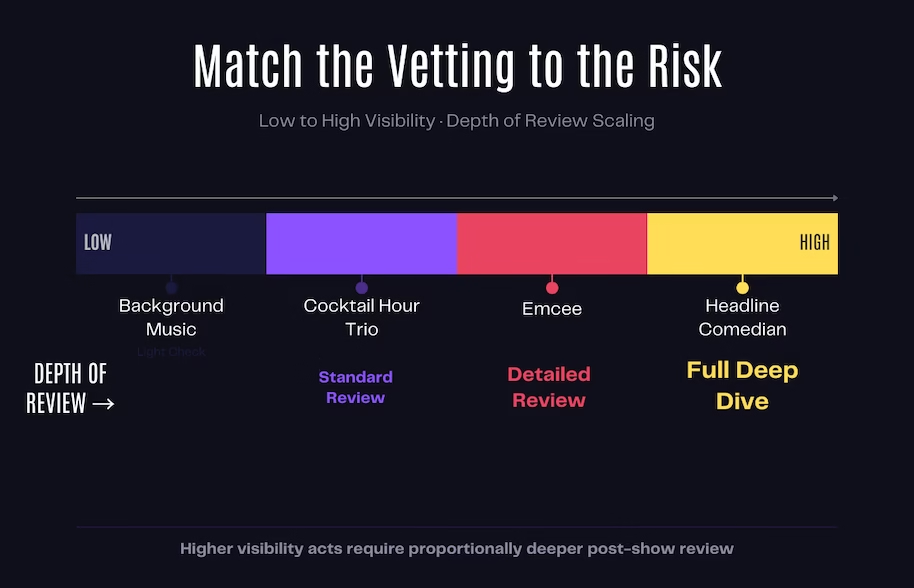 Not every booking deserves the same level of review.
A jazz trio playing during a cocktail hour carries different exposure than a comedian headlining an employee appreciation night. One performs to a room that is only half listening. The other has a microphone, a captive audience, and an hour of material nobody has previewed.
A useful way to think about it is visibility. How much attention will the act command? How much of the performance is scripted? Will the show be recorded or streamed? Is the act being promoted publicly under the organization’s name?
The more those answers point toward high visibility, the deeper the vetting should go.
This keeps the process realistic. Applying the same review to every booking slows planning and frustrates teams. Concentrating effort where reputational weight actually sits is what makes it sustainable.
Do the Work Before the Offer Goes Out
Timing matters more than most organizers expect.
Once an offer is extended, even verbally, agents generally treat the date as committed. Withdrawing an offer after concerns surface is uncomfortable at best and damaging to the relationship at worst. It can also carry cost if the artist has already turned down other work to hold the date.
Vetting belongs in the shortlist stage, not the contract stage.
When the review happens while several options are still live, moving away from one act becomes a routine decision instead of a crisis.
Why Conduct Riders Matter
Contracts protect more than schedules and payment terms.
Many organizations now include conduct riders that establish expectations for professional behavior before, during, and after an event. These provisions can address everything from appropriate language and interactions with guests to social media activities connected to the event.
Conduct riders are not about limiting creativity. They help ensure expectations are clear for everyone involved and reduce the chance of misunderstandings once the event begins.
When expectations are discussed early, both organizers and performers are better positioned for a successful partnership.
Define What Clean Actually Means
Clean may be the most common and least useful word in entertainment booking.
To one comedian, clean means no profanity. To another, it means no profanity while everything else remains fair game. To a corporate audience, it often means something closer to what people would be comfortable hearing from a colleague in a conference room.
The word travels from planner to agent to performer, and everyone assumes it means the same thing. It rarely does.
Write the expectation down instead. Address language, subject matter, audience interaction, and whether crowd work is anticipated. If the program includes an awards presentation, executives on stage, or a mixed-age audience, say so directly.
Most experienced performers welcome the clarity. A performer who misjudges a room because nobody described it accurately was set up to fail.
Vet the Whole Package, Not Just the Headliner
 The name on the poster is rarely the only person who appears on stage.
Openers, emcees, DJs, backing musicians, roaming performers, and guests the headliner brings up mid-show all represent the event. So does anyone handed a microphone between sets.
Vetting often stops at the top of the bill, because that is where the budget and the attention go. Support slots get filled later, faster, and with far less review. That is exactly why they deserve attention.
Ask who else will be performing, apply the same standards, and make sure contract language covers everyone the act brings.
Build PR and HR Into the Booking Process
Entertainment decisions should not happen in isolation.
For larger organizations, involving communications and human resources early in the booking process often leads to stronger decisions. PR teams understand reputational risk. HR leaders understand workplace culture and employee expectations.
Their perspective can help identify concerns that may not be obvious during production planning.
Booking becomes more effective when multiple teams contribute before contracts are finalized instead of responding after a problem arises.
Public Events Follow Different Rules
 Government-sponsored events operate under constraints that private organizations do not face.
When a city, a county, or a public university programs an event, content decisions can raise legal questions a private company would never encounter. Public entities generally have less latitude to make booking decisions based on a performer’s viewpoint.
This is not a reason to skip vetting. It is a reason to ground decisions in criteria that can be stated plainly, such as audience fit, professional history, and technical requirements.
Involve legal counsel early rather than after a booking becomes contested. A consistent process applied to every act is far easier to explain than a decision made case by case. Requirements vary by state and by institution, and nothing here is legal advice.
Sponsors Bring Their Own Standards
Entertainment decisions rarely affect only the organization hosting the event.
Sponsorship agreements often include language about brand association and reputational risk. A sponsor whose logo appears on the stage banner has a stake in who stands in front of it.
Larger sponsors sometimes require notice of headline talent or reserve the right to review the lineup. Smaller ones may say nothing until something goes wrong.
Read the sponsorship agreements before announcing the lineup. If a sponsor holds approval rights, build that review into the timeline.
Plan for the Night Of
 Vetting reduces risk. It does not eliminate it.
Every event should have one person carrying the authority to make decisions during the show. That person needs to be identified before doors open, not located in the middle of a problem.
Brief the act’s road manager on the room. Explain who is in the audience, what the organization cares about, and who to find if something needs to change mid-show. Most professionals adjust willingly once they understand the context.
Decide in advance who would speak to the artist, to the audience, and to the press if a performance moved in an unexpected direction.
If something does go wrong, a brief factual statement usually serves an organization better than a lengthy defense.
Best Practices for Vetting Entertainment
- Research performers beyond promotional materials, including recent public content and audience interactions.
- Match entertainment to the audience, not just the budget.
- Include conduct expectations in contracts when appropriate.
- Give communications and HR teams an opportunity to review high-profile bookings.
- Work with experienced booking professionals who understand both logistics and reputational considerations.
- Complete vetting before an offer is extended, not after.
- Scale the depth of review to the visibility of the booking.
- Put content expectations in writing instead of relying on the word clean.
- Vet openers, emcees, and anyone else the act brings on stage.
- Confirm whether sponsor agreements or public-sector rules affect the decision.
- Name one on-site decision maker before doors open.
- Keep a short written record of what was reviewed and why the act was selected.
Common Mistakes
One of the biggest mistakes organizations make is assuming that popularity guarantees compatibility.
Another is waiting until contracts are signed before discussing expectations. By that point, options are limited and conversations become more difficult.
It is also easy to overlook an online reputation. Audiences often discover performers through social media before they ever arrive at the event, making digital presence part of the overall experience.
Another is assuming an agent will volunteer a problem. Agents represent their artists, and most are straightforward when asked a direct question. Few will raise a concern nobody thought to ask about.
Finally, many organizations never write anything down. If a booking is questioned later, showing what was reviewed and why is worth considerably more than remembering that the conversation happened.
Conclusion
Brand-safe booking is not about eliminating personality or taking creative risks off the table. It is about making informed decisions that support the event instead of distracting from it.
The strongest entertainment enhances an organization’s message, reflects its audience, and creates positive memories for the right reasons.
When booking decisions are guided by thoughtful vetting, clear communication, and realistic expectations, organizers spend less time managing risk and more time creating experiences people remember.
Where a Booking Partner Fits
Thorough vetting takes time most event teams do not have, and it depends on information that is not published anywhere.
An experienced booking agency sees the same acts across many markets and audiences. That perspective surfaces what a single organizer cannot easily find alone: how a performer handled a difficult room, whether the show delivered what the pitch promised, and whether the agent was direct during the offer stage.
TSE Entertainment has been booking talent for corporate events, fairs, festivals, casinos, and public concerts since 1975. TSE manages the offer, the contract, the rider, and show-day coordination, and works with clients to match entertainment to the audience actually in the room.
If you are weighing entertainment options for an upcoming event, it costs nothing to compare notes before you commit. Learn more about TSE’s talent booking services.
Frequently Asked Questions
What does brand-safe booking mean?
Brand-safe booking is the process of evaluating performers not only for talent but also for professionalism, public reputation, and compatibility with an organization’s audience and values.
What is a conduct rider?
A conduct rider is a section of a performance agreement that outlines behavioral expectations for artists and performers before, during, and after an event.
Should HR be involved in entertainment booking?
For many corporate events, yes. HR can provide valuable insight into workplace culture, employee expectations, and potential concerns that may not be obvious during the booking process.
Can an experienced booking partner help with vetting?
Yes. Experienced booking professionals often evaluate not only talent and availability but also professionalism, technical requirements, and overall fit for the event.
How early should entertainment vetting begin?
Vetting should be finished before an offer is extended. Once an offer is made, even verbally, the artist and agent generally treat the date as held, and reversing course afterward is difficult and can carry financial consequences.
How do we communicate content expectations to a performer?
Put them in writing and be specific. Address language, subject matter, audience interaction, and whether crowd work is expected, and describe the room honestly. General instructions such as keep it clean mean different things to different performers.
Are the rules different for city or university events?
Often, yes. Public entities operate under legal constraints private organizations do not, particularly around decisions tied to a performer’s viewpoint. Public organizations should involve legal counsel early and apply consistent criteria to every act under consideration.
What should we do if a performance goes off script?
Have a single decision maker identified before the show, a fast way to reach the artist’s road manager, and a short factual statement ready if one becomes necessary.
Industry Resources
The following organizations publish guidance relevant to entertainment vetting, event risk, and reputation management.
Live Entertainment and Event Associations
- Music Business Association, Education and Research. Industry education and research covering the live music business.
- International Entertainment Buyers Association (IEBA). Trade association for talent buyers, agents, and promoters.
- International Festivals and Events Association (IFEA), Resources. Professional resources for festival and public event organizers.
- National Association for Campus Activities (NACA). Programming and talent buying guidance for higher education events.
Event Risk and Operations
- Event Safety Alliance, Standards and Guidance. Standards addressing planning, communication, and on-site risk for live events.
Workplace and Human Resources
- S. Equal Employment Opportunity Commission, Harassment. Federal guidance on workplace harassment, relevant to employee-facing events.
Communications and Reputation
- Public Relations Society of America, Crisis Communications Resources. Practical material on preparing and delivering crisis communications.
Public and Government-Sponsored Events
- The First Amendment Encyclopedia, Free Speech Center at Middle Tennessee State University. Background on public forum principles affecting government-sponsored programming.
