
Executive Summary
Every venue or event organizer that does ticketing for live events deals with the same three problems. Fans complain about fees they didn’t see coming, real fans lose out when automated buyers overwhelm an onsale, and presale codes leak before the people they were meant for ever get a shot. None of that is new. Price transparency has been a federal requirement for live-event tickets since May 2025, and circumventing ticketing controls covered by the federal BOTS Act has been illegal since 2016. What is new is the pressure behind those rules. Federal regulators brought ticketing enforcement actions in April and July of 2026, a Senate subcommittee took up ticket fees and bots in January, and states are still adding requirements of their own.
The good news is that fixing these problems takes the same basic approach. Show the real price up front. Know how much inventory is actually available before the public on sale. Control who gets early access. And stop treating “sold out in nine seconds” like a compliment. An instant sellout can reflect extraordinary demand, but it can also reflect bots, presale allocations, purchase limits, or ticket holds that left fewer seats available to the public than fans realized.
This isn’t about chasing the fanciest ticketing software on the market. It’s about building a pricing, inventory, presale, and onsale process that protects your fans and keeps your venue or event operation out of a regulatory headache at the same time.
Fees: Show the Real Number First
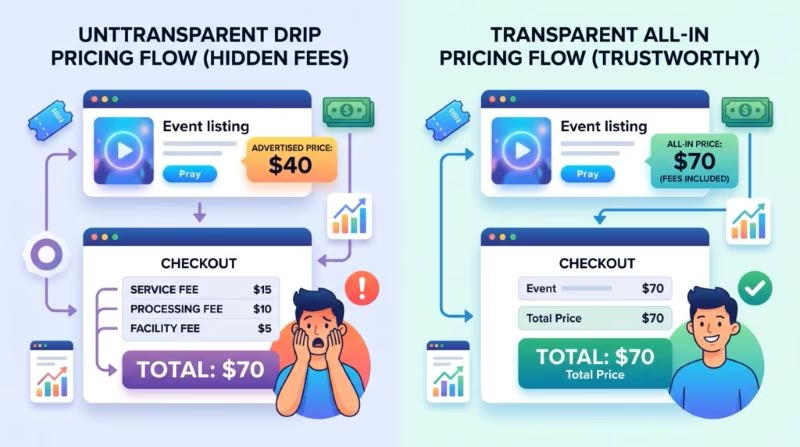
Fans don’t hate fees. They hate finding out about fees after they’ve already mentally committed to buying. That’s been enough of a national issue that the Federal Trade Commission’s Rule on Unfair or Deceptive Fees, effective May 12, 2025, requires businesses that offer, display, or advertise live-event ticket prices to show the total price up front. That total must include mandatory charges the seller knows about and can calculate in advance. Taxes and other government charges, shipping, and genuinely optional add-ons can be excluded from the initial total, but they still have to be disclosed before payment.
And it’s not just federal. States have been adding their own ticket-price transparency and resale requirements, some of which go beyond the federal rule. North Carolina’s 2026 provisions, covered later in this article, are one example. That means a venue operator or event organizer can’t assume federal compliance answers every state-law question, especially when it sells tickets to events in more than one state.
The practical fix is straightforward. If a ticket is advertised at $35 but every buyer must pay a $6 venue fee and a $4 service fee, the price the fan sees first should be $45, not $35. For many venues and event organizers, this won’t require changing ticketing companies. It may mean enabling all-in pricing tools and making sure the same total-price approach carries through ticket listings, promotional pages, and checkout. The FTC has already shown it is willing to enforce the rule: in April 2026, StubHub agreed to a settlement providing $10 million in refunds to consumers who bought tickets during a three-day window in May 2025, resolving charges that it advertised prices without disclosing the total up front. The stipulated order was entered by the court on April 10, 2026.
Holds: Know What Is Actually for Sale
Ticket holds are normal. Artists, promoters, venues, sponsors, production teams, media, and guest lists may all need inventory set aside before a show. The problem starts when nobody is actively managing those holds. A room can look almost sold out to the public while a meaningful block of inventory is still sitting behind the curtain waiting for someone to decide whether it will actually be used.
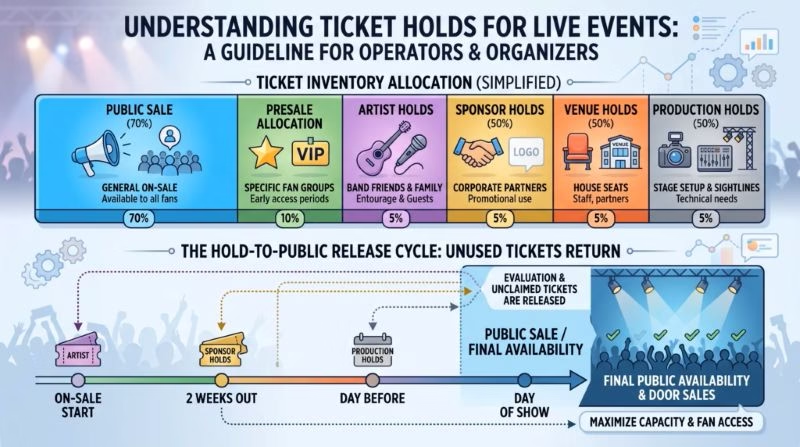
That creates two problems. First, it makes demand harder to read. A fast public sell-through may look like a huge success when the real story is that only part of the house was released. Second, it frustrates fans who see little or no inventory at the public onsale and then watch better seats appear later after unused holds are released.
The fix is basic inventory discipline. Identify every hold before the on sale, who controls it, why it exists, and when it will be reviewed. Set release deadlines for artist, venue, sponsor, production, and comp holds instead of leaving them open-ended. Then return unused tickets to public inventory in planned waves. A hold should have an owner and a release point, not just a label in the ticketing system.
Presales: Give Real Fans a Head Start
A presale only works if the people it’s meant for actually get to use it. Too many venues still send one static code through email or social media with no meaningful control over who redeems it. That’s how a code intended for a mailing list or fan club ends up on public forums minutes after it goes out, turning early access into another race to refresh the page fastest.
Single-use or account-linked access codes, short expiration windows, and phone or email verification make leaked presale codes far less useful. They won’t eliminate abuse, but they can stop one publicly posted code from opening a presale to thousands of unintended buyers.
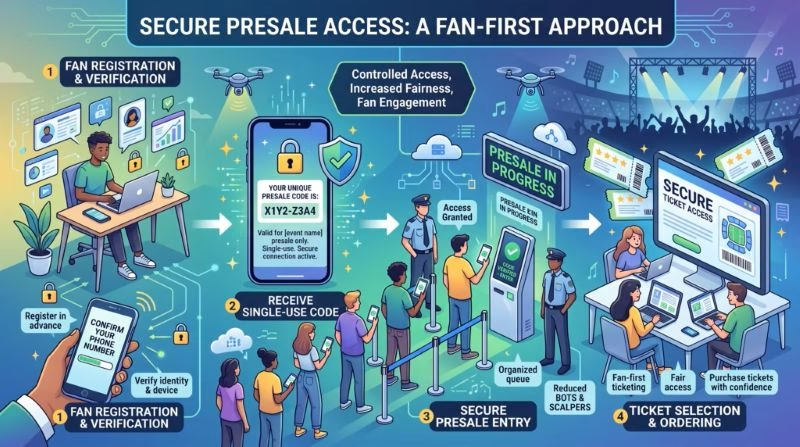
Verified-fan or pre-registration systems add another layer. Fans register before the onsale, the platform evaluates registrations for bot-like or irregular behavior, and approved buyers receive access to the sale. That doesn’t eliminate bots or guarantee tickets, but it can reduce the number of automated buyers and professional resellers competing with legitimate customers when inventory goes live.
Depending on the platform and the permissions collected during registration, pre-registration may also give the venue better first-party audience data than a generic presale code provides. Don’t assume that data automatically belongs to the venue or can be reused for unrelated marketing. Check the platform agreement and the consent language used during registration.
None of this necessarily requires a full overhaul. Many ticketing platforms offer some combination of unique codes, purchase limits, waiting rooms, account verification, mobile-ticket controls, or fraud tools, although the exact features vary by provider and service tier. The point is to use the controls that match the risk of the show instead of accepting the default setup every time.
Anti-Bot: Stop Fighting the Wrong Battle
Here’s the mistake a lot of venues still make. They think a CAPTCHA (Completely Automated Public Turing test to tell Computers and Humans Apart) is the finish line. It isn’t. CAPTCHA can still be one useful checkpoint, but by itself it is no longer an adequate defense against sophisticated ticket-bot operations. Modern bot management increasingly relies on multiple signals, including behavioral analysis, machine learning, device and network signals, rate limits, and account-level controls. Major bot-mitigation vendors have moved their own products in that direction, though vendor claims about what a tool stops should be measured against your own on sale data rather than taken at face value.
What actually works is layered:
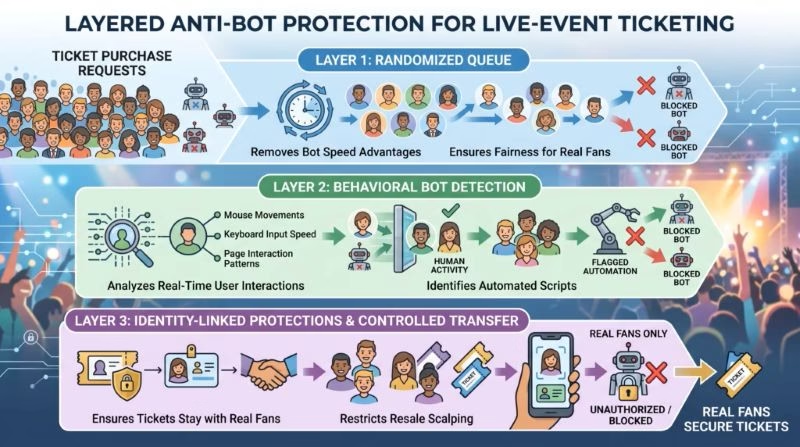
Randomized pre-queues reduce the split-second speed advantage bots have over a human clicking a mouse. Fans who arrive before a scheduled onsale can be randomized when the sale opens, after which the queue can proceed in controlled order. That doesn’t eliminate bots, but it removes speed alone as the deciding factor.
Behavioral detection can look at patterns such as mouse movement, scrolling rhythm, typing cadence, page visibility, request velocity, and other session signals to identify activity that doesn’t behave like a normal human buyer. It works best as one part of a broader bot-management system, not as a single magic filter.
Controlled ticket transfer can make bulk resale harder without unnecessarily punishing legitimate buyers. Depending on the platform and applicable state law, that can include verified transfers, rotating mobile barcodes, delayed ticket delivery, transfer windows, purchase limits, or additional identity checks for especially high-demand events. Blanket non-transferability is not always the best answer and may be restricted by state law.
Federal law is already part of this picture. The Better Online Ticket Sales Act of 2016, better known as the BOTS Act, prohibits using technological means to circumvent ticket purchase limits or other ticketing access controls, and it also reaches certain resales of tickets obtained through those violations. The FTC has enforced it more than once. In July 2026, the agency announced a proposed settlement with a ticket broker accused of bypassing purchase limits across more than 2,400 events using fictitious accounts, virtual credit card numbers, and proxy services. The proposed order imposes more than $10.7 million in civil penalties, with all but $300,000 suspended based on the defendants’ stated inability to pay, and the full amount becomes due if they misrepresented their finances. The defendants neither admitted nor denied the complaint’s allegations except as stated in the order.
You don’t need every anti-bot layer on every show. Start with the weakness that creates the biggest problem: queue abuse, leaked access, excessive purchase volume, fake accounts, or resale. Then build from there. Venue operators and event organizers that try to fix everything at once tend to stall out before they fix anything.
Why This Matters Beyond the Fans
This isn’t just a customer-service issue anymore. Congress has been paying attention. A January 28, 2026 hearing of the Senate Commerce Subcommittee on Consumer Protection, Technology, and Data Privacy specifically examined ticket fees, primary and secondary ticket-sale practices, and automated bots that make it harder for fans to buy tickets at list price.
States are moving too. North Carolina enacted a set of ticketing provisions in July 2026 as Section 5.8 of the state budget act, creating a new article in the state’s consumer protection statutes. Effective October 1, 2026, and applying to tickets sold or resold on or after that date, the provisions require the total ticket price to be displayed when a price is shown, limit increases to that initially displayed price during a ticketing session except for specified charges, prohibit speculative ticket sales, regulate certain presale and fan-club resales, and address prohibited bot activity.
That kind of legislative attention makes it risky to treat ticketing settings as a set-it-and-forget-it decision. A venue operator or event organizer that already uses transparent pricing, documented holds, controlled presales, and layered bot protection is in a much better position when laws or platform rules change.
Venues and event organizers that get ahead of this aren’t just avoiding fines. They’re building the kind of trust that keeps fans buying directly instead of turning to resale sites out of frustration, which is good for the box office and good for the brand. A fan who trusts your checkout process is a fan who is more likely to buy again for the next show without thinking twice.
What You Should Do
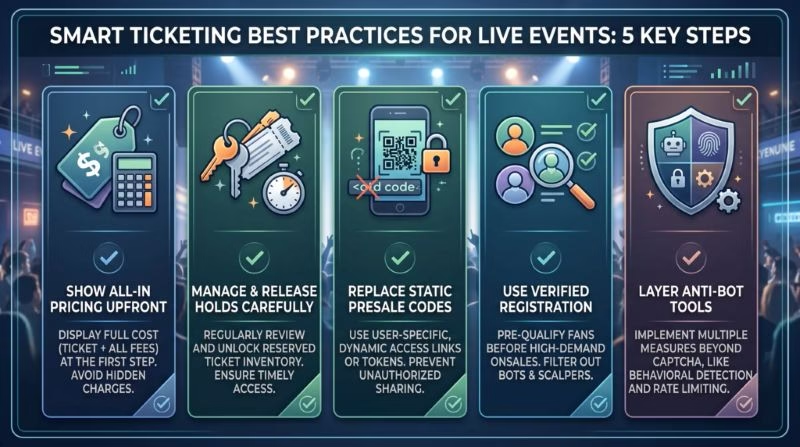
- Move to all-in ticket pricing anywhere you display a live-event ticket price, including all mandatory charges that can be calculated up front.
- Audit every ticket hold before the on-sale and assign an owner and release deadline to each block of withheld inventory.
- Replace broadly shared static presale codes with unique, limited-use, or account-linked access wherever your platform supports it.
- Use pre-registration or verified access for shows where demand or resale risk justifies the extra friction.
- Use randomized pre-queues and layered bot detection instead of relying on CAPTCHA alone.
- Use controlled ticket-transfer tools where appropriate, but check state law before imposing broad non-transferability restrictions.
- Review federal and state ticketing requirements regularly. The rules are changing too quickly for a one-time compliance check.
Getting this right isn’t about outspending larger venues or event operators on technology. It’s about knowing what inventory is actually available, closing the gaps bots and scalpers exploit, and being straight with fans about what they’re actually paying. Do those three things well, and the trust you build shows up in repeat buyers and a lot fewer headaches the next time you run an on-sale.
FAQ: Smart Ticketing for Live Events
Does the FTC require every tax and optional add-on to be included in the first ticket price a fan sees?
No. The federal rule requires the upfront total to include mandatory charges the seller knows about and can calculate in advance. Government charges, shipping, and truly optional add-ons may be excluded from the initially displayed total, but they must be disclosed before the customer is asked to pay.
Is all-in ticket pricing now required everywhere in the United States?
For live-event tickets, the FTC’s federal pricing rule applies broadly to businesses that offer, display, or advertise ticket prices. States can impose additional or stricter requirements, so venue operators and event organizers should also check the law in every state where they operate.
What exactly is a ticket hold?
A hold is inventory temporarily withheld from public sale for a specific purpose, such as artist needs, production, sponsors, media, venue use, or guest lists. Holds are normal, but every hold should have a clear owner and a planned review or release point.
Can a venue or event organizer completely eliminate ticket bots?
No single tool can guarantee that. The more realistic goal is to make automated buying harder and less profitable by combining queue controls, account verification, purchase limits, behavioral detection, rate limits, and other platform protections.
Is a verified-fan program the same as guaranteeing a fan a ticket?
No. Verification can screen registrations and control access to an onsale, but it does not create more inventory and it does not guarantee that every approved buyer will get a ticket.
Should venues and event organizers make high-demand tickets completely nontransferable?
Not automatically. Non-transferability can interfere with legitimate ticket sharing and may be restricted by state law. Controlled transfers, rotating barcodes, delayed delivery, purchase limits, and verified resale or transfer tools can often reduce abuse with less friction for real fans.
How often should a venue operator or event organizer review its ticketing setup?
At minimum, venue operators and event organizers should review the setup before every high-demand onsale and whenever the ticketing platform or applicable law changes. Pricing display, hold inventory, presale access, purchase limits, transfer settings, and bot protections should all be part of that review.
References
- Federal Trade Commission – The Rule on Unfair or Deceptive Fees: Frequently Asked Questions
- Federal Trade Commission – StubHub Refunding $10 Million in Fees to Consumers After Deceptive Ticket Pricing
- Federal Trade Commission – BOTS Act Compliance: Time for a Refresher?
- Federal Trade Commission – FTC Takes Action Against Elite Events for Bypassing Ticket Purchase Limits
- U.S. Senate Committee on Commerce, Science, and Transportation – Fees Rolled on All Summer Long: Examining the Live Entertainment Industry
- North Carolina General Assembly – Session Law 2026-41 (2026 Appropriations Act, SB 257), Section 5.8: Consumer Protections for Entertainment Event Ticket Sales and Resales
- Queue-it – How Does Queue-it Work?
- Cloudflare – Precursor Behavioral Defense Against Modern Bots