
Balancing Headliners, Mid-Tier, and Local Acts
Executive Summary
Building a strong fair and festival lineup in 2026 is about more than just booking one expensive headliner. It’s about balancing all the acts in a way that feels natural and easy to manage. In today’s world, fairs and festivals are dealing with higher artist fees, tighter budgets, higher production costs, and shifting audience expectations. Successful lineups are made up of headliners, mid-tier acts, and local bands that build community support. Instead of spending the most on one artist, events perform best when they divide and conquer their budget across all three tiers, giving the audience something worth showing up for throughout the run.
The goal of this article is to explain how fairs and festivals can build balanced lineups that increase attendance, control costs, and improve the guest experience across multiple days.
| Know Your Talent Spend Range
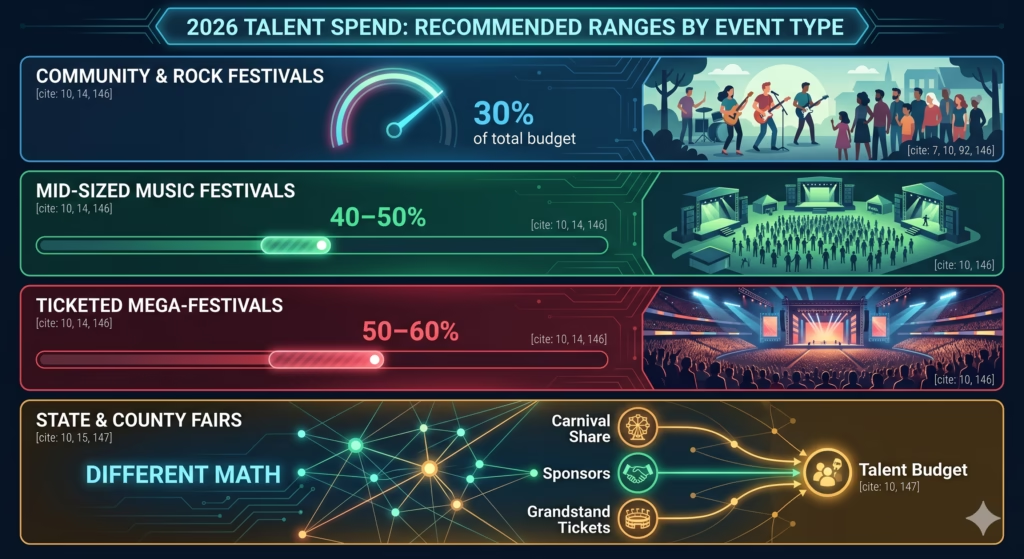
Talent budgets vary widely by event type. Community and rock festivals often run around 30% of total budget on talent, mid-sized music festivals commonly land in the 40–50% range, and ticketed mega-festivals can push 50–60%. State and county fairs operate on different math entirely, where entertainment is frequently underwritten by sponsors, grandstand ticket revenue, or carnival/midway shares. Whatever range fits your event type, the principle holds: set the cap before you book, and don’t let one headliner blow past it. |
Why One Big Headliner Is Not Enough
Many fairs and festivals believe booking one major act guarantees success, but that is not always true. A typical lineup includes one or two large headliners supported by a roster of mid-tier and local acts, but in order for that to work it’s important to understand how to budget those acts. The right share of the budget to spend on talent depends heavily on your event type: community and rock festivals often run around 30%, mid-sized music festivals 40–50%, and large ticketed festivals can push 50–60%. State and county fairs, especially those with sponsor-underwritten grandstand entertainment, often operate on entirely different math. Whatever your target share, the rest of the budget still has to cover production, staffing, marketing, hospitality, security, and the unpredictable costs that come with keeping the show running. Overspending on a single headliner not only puts the entire budget at risk, but the operation as a whole as well.
When too much money goes toward one act it can affect the following:
- Budget constraints weaken the supporting lineup
- Fewer strong acts across multiple nights hurts overall attendance
- Lower profit margins
- Less variety for attendees, causing less incentive to buy multi-day passes
If the rest of the lineup feels weak, guests may only buy one-day tickets or not buy them at all. With fair and festival tickets getting increasingly expensive, adjusting musical lineups and balancing artists is one way to justify those prices.
What This Means
Since fairs and festivals are usually multi-day events, success depends on performance across all artists. One huge night cannot always make up for weak attendance for the rest of the show. The acts performing before the headliner are not background characters — they are what keep audiences engaged, on site, and spending. They are the glue.
What You Should Do
- Treat lineup planning as a full-event strategy, not a single booking decision
- Balance spending across multiple nights
- Consider total attendance across all days, not just the headliner night
The Role of the Headliner
Headliners are the acts most likely to create buzz, media attention, and major attendance spikes. For a fair or festival, a headliner is more than just a big name on a list — they set the tone for the whole show. A well-chosen headliner can make or break attendance. With that in mind, they are not the whole show. Most promoters and event bookers secure their top acts 6–18 months in advance, making them the foundation around which the rest of the lineup is built. Whether that is sharing the same genre, target audience, or overall theme, it is important that all the shows flow together.
Strong headliners can help:
- Sell advance tickets
- Drive sponsorship value
- Increase social media reach
- Attract first-time visitors
What This Means
Headliners are commonly household names drawing in crowds from across the country, but sometimes a mid-tier artist with a strong fan base can be more than enough. As noted above, having common genres is important — especially if you are trying to target a specific demographic — but sometimes promoters like to book a variety of artists for larger events to bring in as many attendees as possible.
For example, on opening night of Lollapalooza 2021, Playboi Carti was scheduled at 6:45 PM directly before Miley Cyrus at 8:45 PM on the same stage — two artists with very different fan bases and energy levels. The set order didn’t cause major disruption to the event, but it did cause audience members to clash with one another, with reports of mosh pit injuries spilling into the crowd waiting for Cyrus. It’s all a balancing game of who you want to perform and where, without causing unnecessary friction. It all depends on what kind of audience you are trying to bring in to your event.
What You Should Do
- Book headliners that fit your specific market and audience demographic
- Use past attendance data to validate the choice
- Consider travel and routing opportunities to reduce fees
- Promote headliners early to drive advance ticket sales
- Think about set order and adjacent acts — not just who plays, but who plays next to whom
Why Mid-Tier Acts Matter More Than People Think
Although headliners are the first thing that customers look at, mid-tier acts are often the most valuable part of the lineup. Having a variety of mid-tier acts can collectively outperform one A-list performer for a fraction of the price and significantly reduces risk — if one act cancels, it does not sink the whole show. The category is broad: in 2026, many nationally touring mid-tier acts fall somewhere between $15,000 and $75,000, though pricing varies significantly by genre, season, and routing. Some strong regional or emerging mid-tier acts come in well under $10,000, while others crossing into sub-headliner territory can exceed $150,000. Major headliner guarantees can range from tens of thousands into the millions, depending heavily on market size and act profile — plenty of legitimate fair headliners, especially legacy country, nostalgia, and theater-level acts, book in the $40,000 to $100,000 range, while arena-level current stars routinely land in the high six figures or above.
Usually, mid-tier acts have the best ROI because their fees are manageable, their fan bases arrive early and stay late, and they diversify the event as a whole. Since fairs and festivals usually run for more than one day, it’s important for them to stay consistent, and focusing a little more on mid-level acts can really balance everything out without prioritizing just one headliner.
They usually cost less than headliners while still bringing:
- Recognizable names
- Strong live shows
- Niche fanbases
- Good weekday attendance
Mid-tier talent helps fill out nights that might otherwise underperform.
What This Means
When you are selecting your lineup, it is very important to have variety. Mixing up genres throughout the week can bring in so many more people from all over to experience your event. For example, let’s say you have a country artist on a Monday and then a Latin artist on a Tuesday — both of those acts will bring in totally different audiences to your fair or festival.
With that being said, the headliners might be what get people to buy a ticket, but a well-placed mid-tier act on a Thursday night is what gets people to come back. Repeat attendance should always be the goal, especially for multi-day events.
What You Should Do
- Use mid-tier acts strategically on weeknights
- Diversify genres across the week to reach underserved audiences in your market
- Track which genres/acts drive the most attendance to make smarter lineup decisions in the future
- Look for artists with active social media fanbases
How to Build the Right Mix
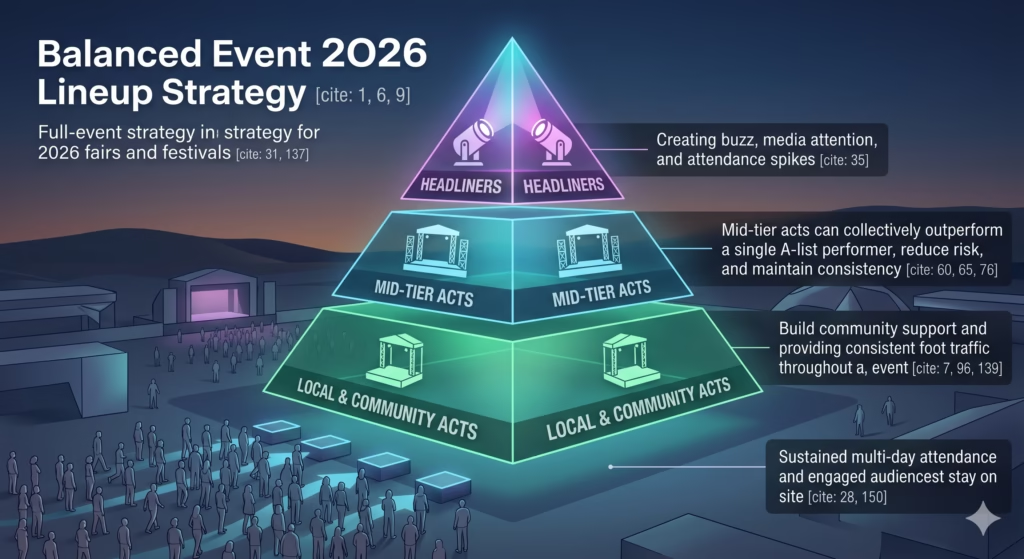 A balanced lineup often includes one or two major headliners, several mid-tier acts, and a few local or community performers spread throughout the event. When it comes to fairs and festivals, attendance usually spikes primarily on the weekends or during large performances, while weekdays are often slower. Once you start planning your lineup schedule, this will help you figure out your budget throughout the week. With that being said, not every night has to have the same level of spending, so it makes sense to invest a little more on expected high-traffic shows.
Example Lineup for a 7-Day Fair or Festival
- Day 1 (Friday): Headliner
- Day 2 (Saturday): Headliner
- Day 3 (Sunday): Mid-tier family act
- Day 4 (Monday): Local showcase
- Day 5 (Tuesday): Mid-tier country act
- Day 6 (Wednesday): Tribute or local mix
- Day 7 (Thursday): Mid-tier rock or pop act
This approach can lead to consistent foot traffic because it shows a variety of genres, letting audience members have a different experience every night, rather than just betting it all on one night.
What This Means
Yes, budgeting matters, but never forget you are curating to your audience. Evenly distributing the artists during the week plays a big part in a successful event. Different nights need different strategies.
What You Should Do
- Invest more on peak nights (Friday and Saturday) where attendance justifies it
- Keep weekday programming affordable and community-focused
- Match genres to known audience patterns for each day
Budgeting the Lineup Smartly
 Poor budget planning is one of the most common reasons events overspend. Industry reporting from Ticket Fairy notes that the majority of festivals end up spending more than initially projected, mostly because of unexpected costs and high performance fees. Pollstar’s 2025 Year-End Business Analysis reinforces the underlying pressure: the top 100 worldwide tours averaged over $2.5 million per show in 2025, with average per-show ticket sales hitting an all-time high, meaning the top of the talent market continues to set the pricing tone that ripples down to fair and festival buyers. This is why it is vital, especially in this industry, to plan thoroughly in advance and leave enough room to adjust if anything unexpected happens.
Remember to account for costs such as:
- Production
- Hospitality
- Security
- Marketing
- Travel
- Ticketing costs
When too much of the budget goes toward a single act, these costs become harder to cover and can directly affect the guest experience.
What This Means
An affordable and smart way to curate your lineup is by searching for artists or bands that are already touring in your direction. This helps significantly when it comes to finding headliners, because since they’re already en route to your region, their travel costs are partially absorbed by the larger tour. This allows you to have much more leverage when it comes to negotiating their performance fee, since you don’t have to fly them in cold. The sooner you contact their agent, the better chance you have at booking an act that audiences will enjoy at a reasonable price. In addition, this can give you the perfect opportunity to build a relationship with the agent, potentially leading to more business opportunities in the future.
What You Should Do
- Plan your full event budget before committing to any single artist fee
- Account for hidden costs like travel, hospitality, and production on top of every artist guarantee
- Set aside a reserve fund to protect yourself when unexpected costs arise
- Look for artists already touring in your region to negotiate better fees
Common Mistakes to Avoid
- Betting the entire budget on one headliner — especially one chosen on name recognition alone, without considering whether they fit your specific market and audience
- Not giving weekday performances the attention they deserve
- Booking the same genre every night and missing the opportunity to reach different audiences
- Overlooking hidden costs like travel, hospitality, and production when calculating what you can actually afford
- Waiting too long to book headliners (should be secured 6–18 months in advance, not last minute)
- Neglecting to look for routing opportunities that could save money on travel and negotiation
- Ignoring set order and stage-adjacent programming, which can create real safety and crowd-management issues
Conclusion
The best fair and festival lineups in 2026 will not always be the most expensive or have the biggest names. Some of the best events are the ones that take the time and effort to curate their lineups to their audience without putting their operation at risk. When headliners, mid-tier acts, and local performers all have a role to play, it creates a show that feels complete from start to finish — and balancing your budget and talent across the full event is what sets you up to deliver an experience your attendees will never forget.
For an even more extendsive treatment of this subject, you can view TSE’ white paper: The 2026 Fair & Festival Lineup Playbook
Frequently Asked Questions
How far in advance should we start booking our 2026 lineup?
Headliners should be secured 6–18 months in advance. Mid-tier acts can typically be booked 4–9 months out, and local or community performers 60–120 days before the event. Routing-based deals often require the most lead time because they depend on the artist’s broader tour schedule.
What percentage of our total budget should go to talent?
There is no universal number — it depends on your event type and revenue model. Community and rock festivals often allocate around 30% of total budget to talent, mid-sized music festivals typically land in the 40–50% range, and large ticketed festivals can run 50–60%. State and county fairs are a different animal: entertainment is often underwritten by sponsors, grandstand ticket sales, or carnival/midway revenue shares, which can shift the calculus considerably. The bigger principle: set your cap before you book, and treat it as a hard ceiling rather than a starting point.
Is it better to book one expensive headliner or two mid-tier acts?
For most multi-day fairs and festivals, two strong mid-tier acts on separate nights will outperform a single A-list booking, both in cumulative attendance and in ROI. A headliner drives the spike; mid-tier acts drive the week.
How do we handle weekday programming when attendance is naturally lower?
Treat weeknights as opportunities for community-focused, genre-diverse, and lower-cost programming. Local showcases, tribute acts, and emerging mid-tier artists with active social followings tend to perform well midweek without straining the budget.
What’s the biggest mistake first-time bookers make?
Overcommitting to a single headliner before the rest of the budget is mapped out. Once that fee is locked in, every other line item — production, marketing, supporting acts — gets squeezed, and the overall event suffers.
Can tribute acts really hold their own on a fair or festival lineup?
Yes, and increasingly so. Well-cast tribute and themed acts deliver familiar catalogs at a fraction of headliner cost, which makes them strong choices for midweek programming and family-night slots.
Does this playbook apply to single-day festivals too?
The principles do, with one adjustment: when you only have one day, the balance shifts from across-week pacing to across-stage and across-set-time pacing. Knowing your talent spend cap, the importance of mid-tier acts, and the value of set-order intentionality all still apply.
Build Your 2026 Lineup with TSE Entertainment
Balancing headliners, mid-tier acts, and local talent is exactly what TSE’s booking team does every day. We work with fairs and festivals across the country to build lineups that fit your market, your budget, and your audience — and we have direct relationships with the agents, headliners, and rising acts that make routing-based deals possible.
Whether you’re locking in a 2026 headliner, filling out weeknight programming, or starting your lineup from scratch, we can help.
Talk to a TSE booking agent → 1-800-765-8203
or fill out this simple form to get pricing and availability
References
Industry Research & Analysis
Pollstar News. 2025 Year-End Business Analysis: A Return to Earth — Grosses & Ticket Sales Drop, Averages Increase. https://news.pollstar.com/2025/12/23/year-end-business-analysis-a-return-to-earth-2025-grosses-ticket-sales-drop-averages-increase-beyonce-oasis-coldplay-have-top-tours-venues-stadiums-rock/
Eventbrite. The Social Study Report: What’s Shaping Live Events in 2026. https://www.eventbrite.com/l/event-trends/
International Festivals & Events Association (IFEA). Industry News & Resources. https://www.ifea.com/p/resources/industry-news
Festival Budgeting & Talent Economics
Ticket Fairy. Talent Wars 2026: How Festivals Can Cope with Soaring Artist Fees and Fierce Competition. https://www.ticketfairy.com/blog/talent-wars-2026-how-festivals-can-cope-with-soaring-artist-fees-and-fierce-competition
Ticket Fairy. What 90% of Festivals Get Wrong About Budgeting & Finance — and How to Get It Right. https://www.ticketfairy.com/blog/what-90-of-festivals-get-wrong-about-budgeting-finance-and-how-to-get-it-right
TSE Entertainment
TSE Entertainment. Entertainment Booking Strategies: Balancing Headliners, Mid-Level Acts, and Local Talent. https://tseentertainment.com/entertainment-booking-strategies-balancing-headliners-mid-level-acts-and-local-talent/