
Somewhere in a commercial database is a record of the crowd that walked onto your grounds last season. You did not create it, you do not control it, and a competing promoter can buy access to it without your knowledge or permission.
Handled correctly, that data is also one of the more useful tools an organizer has for understanding an audience.
TSE Entertainment’s new white paper, Fenced In: What Location Data Knows About Your Audience, is the first of three on location data for live events. It covers what location data exists, what each kind can and cannot tell you, what is legal in 2026, and where to buy it. This post walks through the core ideas of the first. The full paper goes much deeper.
Its central argument fits in one sentence: location data is a stronger intelligence tool than an advertising tool. Its most reliable value is telling you who your audience is and where they come from. Reaching them is the cheaper problem, and it gets cheaper still once you know who they are.
One Word That Means Four Things
Most confusion here comes from vocabulary. “Geofencing” gets applied to at least four activities that share little beyond a boundary drawn on a map.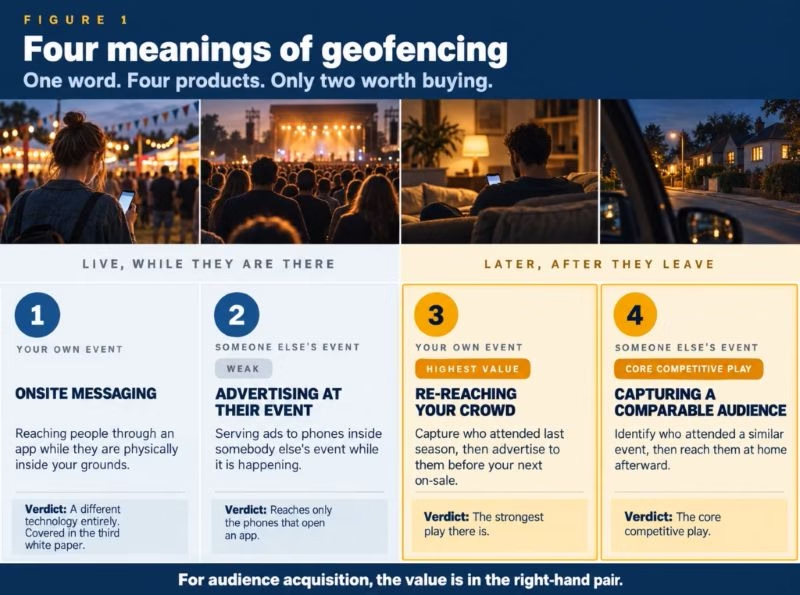 The first split is the one that matters most: does the fence tell you something, or does it reach someone? A measurement fence reports, in aggregate, who was inside a boundary: how many people, where they came from, what kind of households. You learn about a crowd, but you cannot contact anyone. A delivery fence reaches the specific phones that were inside it, but may tell you very little about who those people are. These are different products, from different companies, at different prices, with different legal exposure. Organizers routinely buy the first expecting the second.
The terms worth knowing:
- Geotargeting serves ads to a defined area, from a TV market down to a postal code.
- Geofencing serves ads to phones currently inside a tighter boundary.
- Geoframing, or historical geofencing, identifies which phones were inside a boundary during a past window, then buys ordinary ad slots against them afterward.
- Location intelligence is aggregated reporting on who visits a place. Measurement, not delivery.
Geoframing is where nearly everyone forms the wrong picture. No text, push notification, or message is sent. The paper’s best image is that a device identifier is a name tag, not an address. Your ad appears only when that phone happens to open a weather app or news site and your bid wins the auction. It also means the audience decays: a new phone wears a new name tag, and nothing forwards.
The paper’s practical takeaway: when a vendor pitches you, the first question is not what it costs. It is whether they are selling you information about a crowd or access to a crowd.
Can You Just Do This on Facebook?
It is the first question nearly every organizer asks, and the answer is no. Facebook and Google are walled gardens: they sell only their own inventory, on their own terms, and neither will accept a location vendor’s list of devices seen at your fairground last August as a targetable audience. The capability is absent, not hidden behind a bigger budget.
What both platforms do accept is a customer list, and that turns out to be better. Ticket sales do not produce device identifiers; they produce names, emails, phone numbers, and addresses. Those match more reliably, do not reset when someone buys a new phone, and sit behind no tracking permission prompt. Upload your buyer list, build similar audiences from it, and suppress people who already bought. One catch: Google requires at least ninety days of account history and more than $50,000 in lifetime spend before a customer list can be used for targeting.
Both platforms also offer postal code targeting as a standard setting. Layer household characteristics on top and you are running the profile approach the paper recommends on the cheapest inventory available. The technique the paper warns against needs a specialist vendor and a legal check; the one it recommends runs on platforms your staff already use.
Where the Data Comes From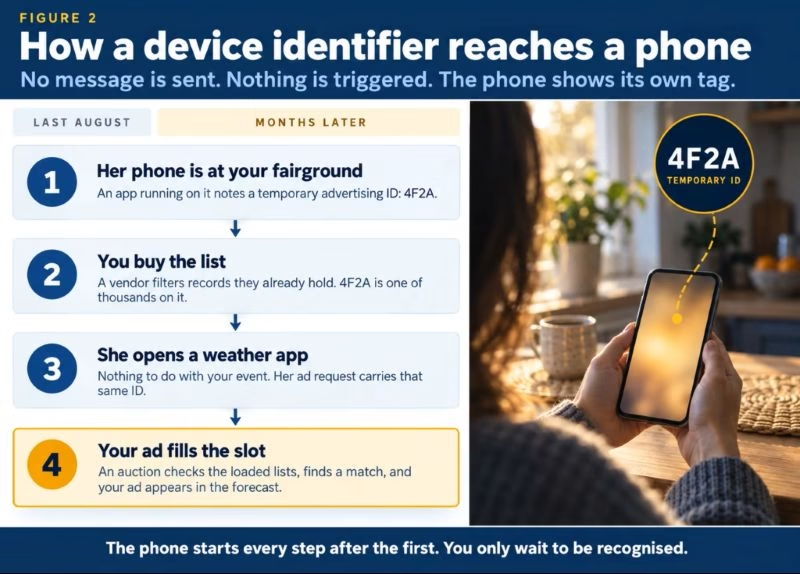 Nothing was installed at your fairground to make any of this possible. Weather apps, games, navigation tools, and coupon apps collect location in the background, and many pass it to data companies. The result is billions of timestamped records saying an anonymous device was at particular coordinates at a particular moment. Coverage is thinner in rural areas, which is exactly where most county fairs sit.
Because vendors already hold those records, they had your audience’s data before you called them. Requesting an audience is a database query, not a collection effort. It needs no permission from you and sends no notice to you, and the same is true of every other event in the country.
The accuracy trap follows directly. The pool only includes phones that happened to be sharing location with a participating app, and that share has been falling since phones began prompting users to approve tracking. So when a vendor reports fifty thousand devices, the organizer hears fifty thousand attendees. They are not the same number. Ask any vendor, in writing, what share of actual gate its figure typically represents for an event like yours.
The Five Kinds of Location Data
Location data is not one thing you buy or skip. It is five things, with different sources, costs, questions they answer, and risks. Buying the wrong one is the most expensive error in the field, and it usually happens at the first purchase.
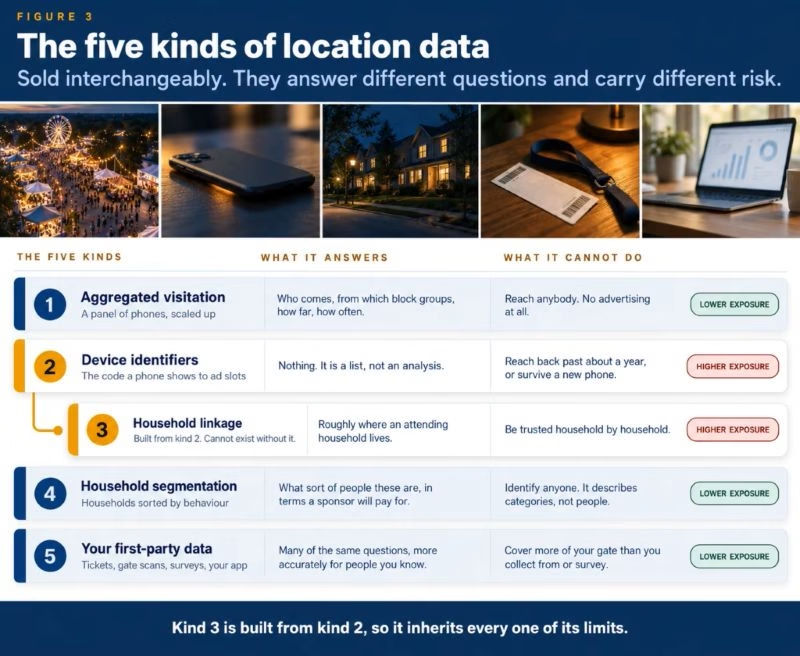 Two points from this section deserve emphasis. First, segmentation does not need location data at all. Append segments to the postal codes on your ticket orders and you get a usable audience profile from data you already hold, for the cost of the segmentation alone.
Second, only one instrument can tell you why people came: a survey. Every other kind describes behavior. A survey can tell you someone drove two hours for one act, nearly stayed home because of parking, or heard about you from a neighbor rather than anything you paid for. An intercept survey at the gate also reaches the cash walk-up who never bought online and appears nowhere else in your records.
The paper’s recommended pairing is aggregated visitation plus household segmentation. One tells you where your audience comes from, the other tells you who they are, and neither delivers a single ad.
The Floor and the Law
Two limits decide, for most organizers, whether device-based products are even on the table.
The floor. Vendors will not run device-based campaigns below a minimum, and one event-market vendor publishes a floor of fifty thousand unique devices. Because a device count is only a fraction of gate, an event needs meaningfully more than fifty thousand attendees to clear it. For a standalone county fair, community festival, or single-day event, device targeting is not expensive; it is unavailable. The paper sums it up bluntly: large single events, portfolios, or nobody. Since household linkage is built from device identifiers, it disappears along with them.
The law. State privacy law has moved most directly against precise device-level location and the identity links built on it. Virginia’s ban on selling precise geolocation took effect July 1, 2026, and Oregon’s on January 1, 2026. Maryland goes further, prohibiting the sale of sensitive data outright and allowing its processing only where strictly necessary. Vendors are already switching products off state by state.
Texas is not the open state it is often described as: its privacy act treats precise geolocation as sensitive data that requires consent. It simply lacks an outright sales ban.
Aggregated visitation, segmentation, and first-party data carry lower exposure, though not zero. The paper’s advice is to plan on device-based audience building becoming unavailable in more states through 2027 and beyond, and to review any program with counsel familiar with privacy law where your audience lives.
Reading Your Trade Area, a Competitor’s, and an Act’s
A trade area is the territory your attendance actually comes from, measured rather than assumed. Most organizers’ mental picture is right in the middle and wrong at the edges, and the edges are where growth lives.
Visitation platforms, such as category leader Placer.ai, report your trade area in two forms. The captured market weights each census block group by its share of actual visits: who came. The potential market weights each block group by population: who could have come. Lay one over the other and you get a penetration map. High-potential, low-capture areas are your list of places to investigate, whether the gap comes from competition, travel barriers, price, lineup fit, or simply never having been told.
The same analysis runs on any location in the country, which is where it turns strategic. You can profile a competing event’s trade area, audience composition, and trajectory without its cooperation or knowledge. It cuts both ways, and the only defense is knowing your own audience better than an outsider can.
For a talent buyer, the most valuable use is one nobody sells you: reading an act you have never booked. Draw a boundary around a venue where the act played, over the hours of the show, and read the crowd. How far did it come, and what kind of households? The number that matters is not the crowd at that show but the gap between that night and the venue’s typical night, which is evidence of the act’s incremental draw. Then ask the only question that matters before an offer: does that population actually live within reach of your grounds? Single-headliner nights read cleanly; a multi-act festival day tells you nothing about any one performer.
Why Your Best Audience Is a Profile
This is the paper’s strategic argument, and for an annual event it decides the approach. Almost everything sold in this category is a device list, and device lists have two fatal flaws for a long-term program. They expire, because people replace phones, reset identifiers, and decline tracking prompts. And they are being legislated away, state by state.
An audience profile has neither problem. It describes the kind of household your attendance comes from, in segments and geography rather than device identifiers. It does not expire when someone buys a new phone, it is generally not the target of statutes aimed at precise individual location, and it compounds. Pull a visitor report for each past year, append segments, compare them side by side, and the segments that appear every year become your durable base.
A profile is not stranded, either. It converts into ranked postal codes and household characteristics that run on standard location settings on any ad platform. The paper’s two-track recommendation: build the profile every year, and run device-based targeting only opportunistically, where it is legal and clears the vendor minimum.
What It Tells You About Your Lineup
The most valuable output is not a ticket sale. The same analysis shows which days drew from two hundred miles and which drew from twenty. Location data measures days and places, not performers, so the paper is careful: attribution holds only where an act can be isolated, such as a single-headliner night or the same act booked two years apart. Where it can, an organizer negotiates from evidence rather than impression.
What to Do First
The paper lays out a year-one sequence. The first four steps cost nothing but staff time:
- Export postal codes and ticket counts from your ticketing provider for every online and advance order.
- Supplement ticket data with surveys and registration data. Ticket orders miss cash walk-ups entirely, and at a free festival there may be no orders at all. A short intercept survey at the gate plus postal codes from contest entries, email signups, Wi-Fi registrations, and app installs fills that gap. Clean and combine everything in one spreadsheet before you count it; the paper walks through how. For a free event, this is not a supplement; it is your data.
- Build your trade area. Total tickets and responses by postal code, mark the codes making up two thirds of your audience as your core, and divide by households for a penetration rate.
- Profile those places with the Census Bureau’s free American Community Survey at data.census.gov, or Social Explorer through a library subscription or trial. Weight each area by its share of your audience and you have a first audience profile.
If there is funding, add these in order and stop where the budget does:
- Append household segments to your buyers’ postal codes or addresses.
- Buy one visitation analysis, a single study rather than a subscription, to see the cash walk-ups your records miss.
- Run one competitive profile of a competing event or a venue where an act you are considering has played.
The paper’s one-sentence version: find out what you already own, buy the analysis that tells you who your audience is, and only then spend money reaching them.
Frequently Asked Questions
What is the difference between geofencing and geoframing?
Geofencing serves ads to phones that are inside a boundary right now. Geoframing, also called historical geofencing, identifies which phones were inside a boundary during a past window, such as your fairgrounds last August, and then buys ordinary ad slots against those phones afterward. Neither one sends a text or notification.
Can I advertise on Facebook or Google to people who attended my event?
Not by location. Neither platform will build an audience from a vendor’s list of devices seen at your grounds. Both accept customer lists, though, and your ticket buyer list of names, emails, phone numbers, and addresses matches more reliably than device identifiers. Google requires at least ninety days of account history and more than $50,000 in lifetime spend before a customer list can be used for targeting.
How accurate is location data for estimating attendance?
A vendor’s device count is not an attendance count. It includes only phones that were sharing location with a participating app, a share that has been falling. Visitation platforms scale a panel up to an estimate. Ask any vendor, in writing, what share of actual gate its figure typically represents for an event like yours.
Is my event big enough for device-based targeting?
Probably not, unless it is a large single event or part of a portfolio. One event-market vendor publishes a floor of fifty thousand unique devices, and because devices are only a fraction of gate, an event needs meaningfully more attendees than that to qualify. Below the floor, the vendor will decline the business.
Is buying location data legal in 2026?
It depends on where your audience lives. Virginia and Oregon ban the sale of precise geolocation data, Maryland prohibits the sale of sensitive data outright, and Texas requires consent to process precise geolocation. Aggregated visitation, segmentation, and first-party data carry lower exposure. Review any program with counsel familiar with privacy law in those states.
Can a competitor see data about my audience?
Yes. Visitation analysis can be run on any location in the country without the event operator’s permission or knowledge. The practical defense is knowing your own audience better than an outsider can, through ticket data, gate surveys, and registrations that no database query can see.
What should a free festival with no ticket data do first?
Start with a short intercept survey at the gate, asking for home postal code first, and collect postal codes from contest entries, email signups, Wi-Fi logins, and app installs. Clean and combine those records in one spreadsheet, map them, and describe the places with free census data. For a free event, that survey and registration data is your data.
How does location data help with booking talent?
It shows which days drew from two hundred miles and which drew from twenty. Attribution to a single act holds only where the act can be isolated, such as a single-headliner night or the same act booked in two different years. Where it can, you negotiate from evidence rather than impression.
Get the Full White Paper
This post covers the framework. Fenced In: What Location Data Knows About Your Audience goes much further: the four-way breakdown of geofencing with figures, a property-by-property comparison of the five kinds of data, a state-by-state look at what is legal in 2026 (including Canada), the vendor categories and how to tell them apart, a glossary, and a vendor question checklist. Download it free from the Resources Hub at tseentertainment.com. The second paper in the series, on activation, follows.
Since 1975, TSE Entertainment has worked exclusively on the buyer’s side for fairs, festivals, public concerts, casinos, theme parks, rodeos, and corporate productions. If you are building a lineup for 2027, bring what you have learned about your audience to the conversation. Call 800-765-8203 or email info@tseentertainment.com.