
Every fair and festival is built around the movement of people. Attendees travel between stages, grandstands, barns, and rides, stop for food and drinks, meet friends, and eventually head for parking and exits. The midway, whether it is the carnival heart of a fair or the commercial corridors between festival stages, is where all of that movement meets vendor placement, emergency access, and revenue.
When those elements are planned separately, congestion follows. A concession line spills into a walkway, a merchandise tent blocks an intersection, or a delivery truck cuts through a crowd. When they are planned as one system, the same space can move people more safely and give them better opportunities to buy.
Weather raises the stakes. A peer-reviewed study of 2,091 events disrupted by extreme weather between 2004 and 2024 found that festivals and concerts accounted for 39.5 percent of reported incidents, with storms the leading cause [1]. The database tracks reported disruptions rather than every event held, so its findings describe patterns in reported incidents, not global rates, but the direction is clear: heat and heavy rain now belong in the site plan.
1. Start With a Crowd-Flow Risk Assessment
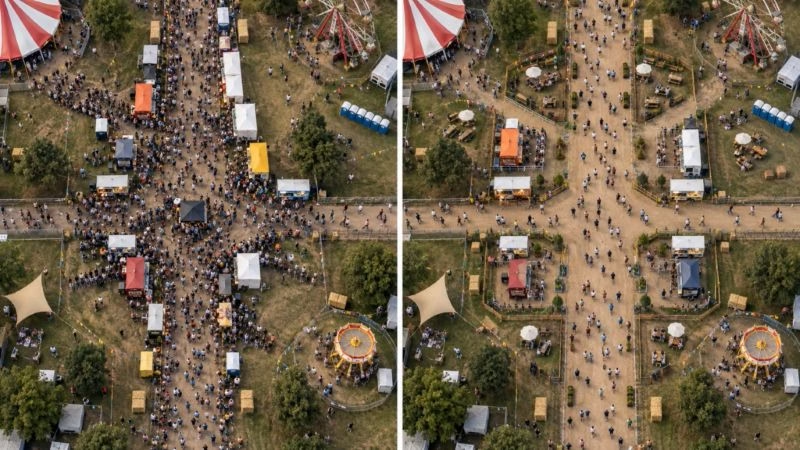
Midway planning begins before vendors are assigned locations. The UK Health and Safety Executive (HSE) treats this as a formal risk assessment and lists stalls and concessions that obstruct crowd movement among the hazards to identify [2]. In the United States, ANSI ES1.9-2020, Event Safety: Crowd Management, sets minimum requirements and planning questions for the same work [3].
Attendance totals do not tell the whole story. Fifty thousand visitors never move uniformly; density shifts with programming, time of day, weather, and attractions. Crowd scientist G. Keith Still’s RAMP analysis (Routes, Areas, Movement, and Profile) offers a useful structure: map routes and site areas first, then layer in arrival and departure timing and the audience profile [4].
Then look for choke points. HSE advises keeping pedestrian routes free of attractions, stalls, and concessions, because unchecked congestion develops into pinch-points and overcrowding [5]. Typical problems include:
- Stage and grandstand exits feeding narrow corridors
- Vendor queues extending into walkways
- Ride entrances and exits opening onto main routes
- Temporary fencing that quietly reduces pathway width
- Public routes crossing service, livestock, or production traffic
Walk the plan with every department that will live with it: security, medical, accessibility, concessions, merchandise, production, and at fairs, the carnival operator and livestock superintendents. Each sees conflicts the others miss, and it is far cheaper to move a tent on paper than during a sold-out evening.
2. Give Stopping a Place to Happen
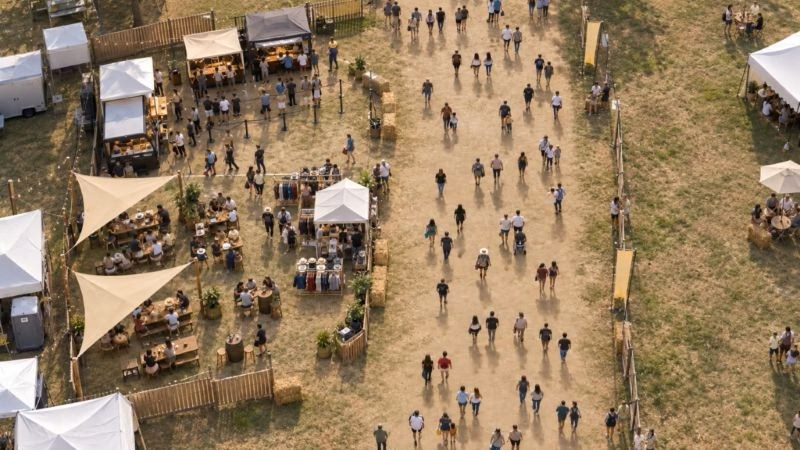
The answer is commercial pockets: concessions, bars, merchandise, and sponsor activations set just off the main flow, visible from it, with seating, shade, and standing room beside them. Attendees in a hurry stay on the route. Customers step aside, buy, and rejoin it. A successful midway does not eliminate stopping; it gives stopping a designated place.
3. Account for What Makes Fairs DifferentMost crowd-flow guidance is written for music festivals. Fairs add their own pressures:
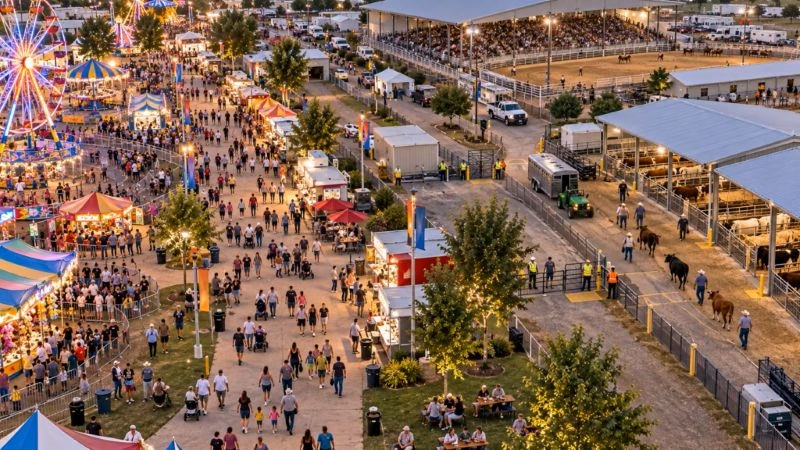
- Carnival rides create queues, fencing, and operating clearances that narrow walkways, so ride placement should be reviewed alongside vendor placement
- Livestock routes should cross public walkways as rarely as possible; HSE-sponsored research identifies large pedestrian flows mixing with animals or traffic as a hazard to manage [6]
- Grandstand shows release thousands of people onto the midway at once
- Family audiences with strollers, older visitors, and mobility devices need wider paths, more seating, and more shade
- Multi-day runs mean weekday and weekend profiles and cumulative wear on the grounds
4. Size Queues With Real Numbers
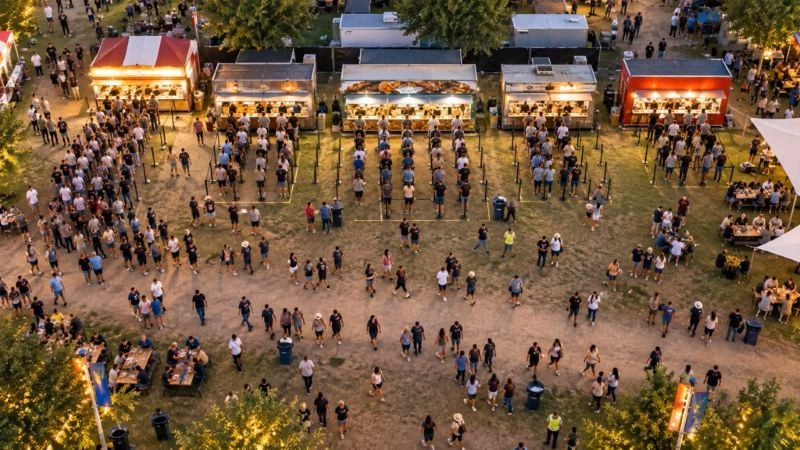
Queue space should be designed in, not discovered after the vendor footprint is set. A simple calculation shows why.
Suppose a grandstand show ends and 3,000 people head toward a food court, and 20 percent want food or drinks within 15 minutes. That is 600 buyers. At 45 seconds per transaction, one point of sale serves about 20 customers in 15 minutes, so keeping pace takes about 30 points of sale. With 15, roughly 300 people will be waiting at the peak.
Using an illustrative allowance of two to three linear feet per person in a single-file queue, that is 40 to 60 feet of line in front of each of 15 stands. Real footprints also depend on lane width, barriers, strollers and mobility devices, and clearance from egress routes, so organizers should substitute their own data.
Staffing follows the same logic. NFPA 101 includes trained crowd-manager requirements for assembly occupancies, generally adding crowd managers as occupant load increases beyond 250 people; the enforceable requirement depends on the locally adopted code and the authority having jurisdiction [7].
5. Speed Up Service at the Point of Sale
Layout decides where queues form. Transaction speed decides how long they grow. In the example above, cutting service time from 45 to 30 seconds halves the peak queue, from 300 people to 150. Useful tools include:
- Cashless payment and tap-to-pay, which can reduce transaction friction and cash handling
- Mobile ordering with a pickup window outside the main line
- Beverage-only or water-only express lines
- Simplified menus during peak periods
Customers appear receptive. In an Oracle survey, 74 percent of sports fans said they would like an express pickup line [8], and atVenu’s 2025 festival data found mobile-order customers averaged a 13 percent higher order value than in-person buyers [9]. Appearance matters too: a study of retail queues found customers decide mainly on how long a line looks, not how fast it moves [10].
6. Use Set Times as a Layout Tool
The schedule decides when crowds move. HSE tells organizers to anticipate mass movement from one performance to another [5], and the most predictable surges are the ones the program creates. Programming can soften them:
- Stagger end times across stages by 15 to 30 minutes
- Avoid ending a grandstand show as fireworks or a major livestock show begins
- Hold part of the audience with a short set on a secondary stage after the headliner
- Move peak programming out of the hottest hours where possible
These are booking decisions as much as operational ones, which is why the talent plan and the site plan should be built together.
7. Separate Service Traffic and Guide Movement
Vendors need deliveries, replenishment, and waste removal, and fairs add carnival equipment and livestock trailers. HSE calls for pedestrians and vehicles to circulate safely on site [5], so plan service routes, delivery windows, and controlled crossings before approving vendor locations.
Wayfinding spreads a crowd; confusion concentrates it. Put directional signs where paths split, avoid dead ends, cover cables at crossings, and light paths and exits for evening crowds.
8. Plan the Layout for Heat
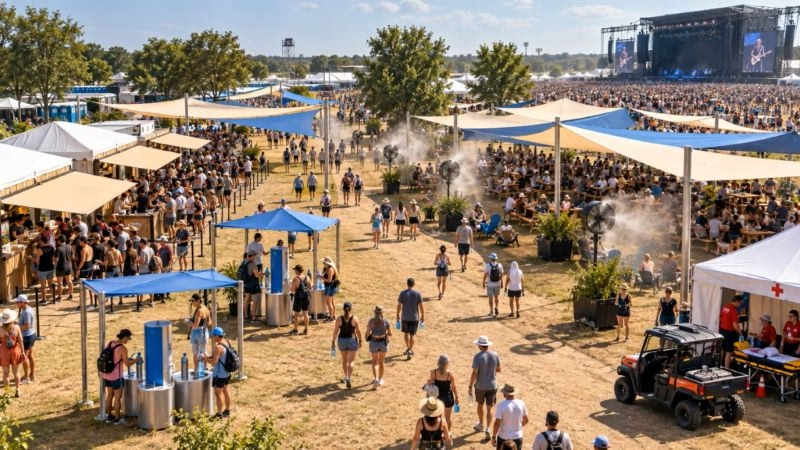
Heat is one of the fastest-growing event risks. In the same study, reported heat disruptions rose by a factor of 2.8 from 2023 to 2024, and crowds were far more likely to stay on site during heat than during major storms [1]. The layout has to carry the response:
- Shade queues as well as seating; a line in full sun for 20 minutes is a heat exposure
- Offer free water refill stations away from sales lines
- Space cooling areas so no part of the site is a long walk from relief
- Place first aid near the densest zones
Monitor the right measure. The National Weather Service notes that the heat index assumes shade, while the wet bulb globe temperature (WBGT) accounts for direct sun and wind [11]. Agreeing WBGT thresholds and actions in advance lets teams respond consistently.
9. Plan the Layout and Grounds for Heavy Rain
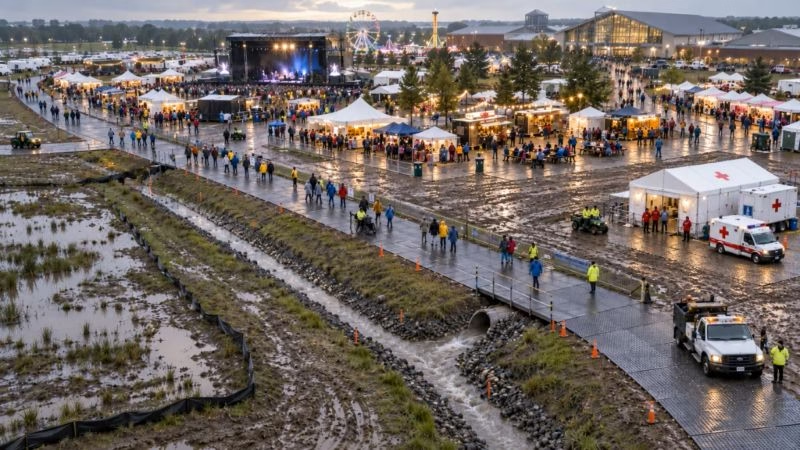
Storms and their effects accounted for 82 percent of reported disruptions in the study, and crowds were often still on site during wind, minor storms, and flooding [1]. On grass and dirt, heavy rain quickly becomes a ground-conditions problem.
HSE advises finding out how a site copes with flooding before designing it [12], and its guidance on site roadways calls for drainage that prevents standing water [13]. In practice:
- Map low spots and keep stages, food courts, first aid, and power on the best-drained ground
- Keep queues and seating out of areas where water collects
- Lay trackway, matting, or gravel on primary, accessible, and high-wear routes
- Plan wet-weather parking, since grass lots can stall egress
Storms also move people fast, and sheltering crowds have experienced near-miss crushes [1]. The National Weather Service states that tents and picnic shelters do not protect against lightning; safe shelter is a substantial, fully enclosed building or a hard-topped metal vehicle, and people should stay sheltered 30 minutes after the last thunder [14]. Know your shelter capacity, keep routes to it clear, and prewrite messages that tell people where to go. ANSI ES1.7-2021, Event Safety: Weather Preparedness, sets out the planning framework for US events [15].
For more on how weather is reshaping live events, see TSE’s article on the impact of climate change on outdoor music events.
10. Protect Accessibility, Emergency Access, and Egress
ADA accessibility requirements apply to covered event facilities, including qualifying temporary ones; the 2010 ADA Standards name stages, platforms, bleachers, and exhibit areas as examples, and state and local rules may add obligations [16]. Queues, displays, and mud must not cut off accessible routes, which should be first in line for ground protection.
Emergency corridors need clear rules and ongoing monitoring, not just a pre-event check. Egress deserves its own plan: HSE treats arrival, circulation, and dispersal as distinct phases, each needing its own design and controls [17]. Commercial operations along exit routes may need to adjust queues when the final show ends.
11. Monitor, Measure, and Improve
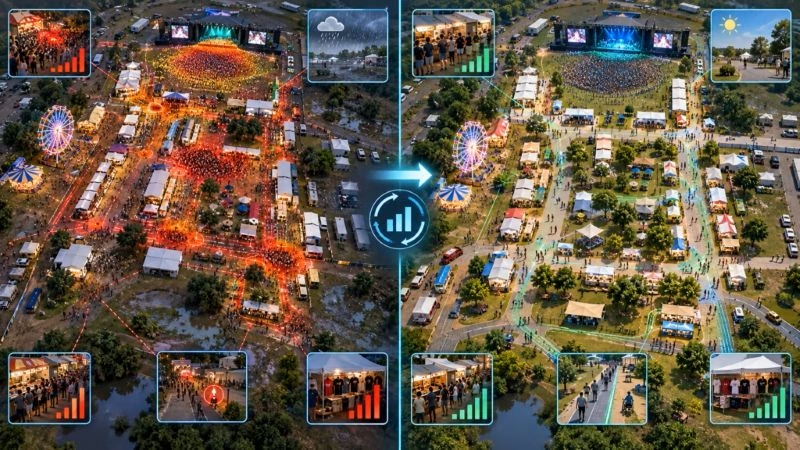
Once gates open, watch both crowd numbers and distribution, especially at popular stalls, bottlenecks, and queuing areas, as HSE advises [18]. Route reports into one central control point [5], with preset responses for common problems such as a queue reaching a threshold or lightning in range.
Afterward, compare sales, queue lengths, transaction times, congestion reports, and weather against the performance schedule. A spike after a set is a predictable surge; congestion at the same spot every day is a layout problem. Measure productive throughput, not just gross sales.
12. Can Better Crowd Flow Support Revenue?
We found no published study that directly measures how fair or festival layouts affect concession or merchandise sales. Research from other venues where people queue for food and drink does, however, support two linked propositions.
First, long, visible queues may cost sales. The retail study found waiting had a nonlinear effect on whether customers bought at all [10], and in an Oracle study of more than 3,500 fans in eight countries, over 40 percent reported abandoning a concession line because of the wait [19].
Second, faster service may raise spending. A drive-thru study estimated that a seven-second reduction in waiting was associated with a 1 percent gain in market share [20], and 59 percent of sports fans said they would spend more if waits were halved [8].
These findings come from retail, fast-food, and stadium settings, and the surveys reflect stated intentions, so they are supporting evidence rather than a forecast. But if the pattern holds, queue length and service speed are exactly what a midway layout controls.
Conclusion
A midway is part of the event’s operating system, not leftover space. Plan routes and programming first, place vendors with room to queue and linger, treat heat and rain as design conditions, and measure the results. The payoff is a safer site and, the evidence suggests, a commercial layout that protects sales instead of losing them to the line.
Coming soon: Check out our Resources Hub for TSE’s more in-depth white paper on this subject.
Plan Your Next Event With TSE Entertainment
Every layout decision starts with the talent. Who headlines and when each set or grandstand show ends determine where crowds surge and when sales peak. TSE Entertainment has booked nationally recognized touring artists for fairs, festivals, public concerts, casinos, theme parks, and corporate productions since 1975, working exclusively on the buyer side for event organizers. We also provide event management and production support so your programming and site plan work together.
To discuss talent booking or event management for your next fair or festival, visit tseentertainment.com or call (800) 765-8203.
Frequently Asked Questions
Where should concessions go at a fair or festival?
Near natural audience routes, with enough adjacent space for queues, transactions, and post-purchase dwell, on well-drained ground with shade where possible.
How can organizers keep concession lines from becoming bottlenecks?
Size queue space from expected peak demand and transaction time, speed up service with express lines or mobile ordering, and keep lines out of primary and emergency routes.
How is a fair midway different from a festival midway?
A fair midway combines carnival rides, livestock areas, exhibit halls, and grandstand shows, and it serves a broader family audience over many days. That adds ride queues, animal routes, and large grandstand releases to the same planning principles festivals use.
How should layouts account for heavy rain?
Put key infrastructure on the best-drained ground, protect primary and accessible routes, plan wet-weather parking, and know where people can shelter from lightning.
Can better crowd flow increase merch and concession sales?
It can. Studies from retail, fast-food, and stadium settings link long, visible queues to fewer purchases and shorter waits to higher spending [10][20][8], though no study has yet measured fair or festival layouts directly.
References
- McKinley, Shawna, Paul Geoerg, Milad Haghani, and Claudio Feliciani. “Mapping the Impact of Extreme Weather on Global Events and Mass Gatherings: Trends and Adaptive Strategies.” International Journal of Disaster Risk Reduction, vol. 127, 2025, article 105628, https://doi.org/10.1016/j.ijdrr.2025.105628.
- Health and Safety Executive. “Assess Crowd Safety Risks and Identify Hazards.” HSE, updated 4 Apr. 2025, https://www.hse.gov.uk/event-safety/crowd-management-assess.htm.
- Entertainment Services and Technology Association. ANSI ES1.9-2020, Event Safety: Crowd Management. ESTA, 2020, https://webstore.ansi.org/standards/esta/ansies12020.
- Still, G. Keith. Introduction to Crowd Science. CRC Press, 2014.
- Health and Safety Executive. “Crowd Controls Inside the Venue.” HSE, https://www.hse.gov.uk/event-safety/crowd-management-control-inside.htm.
- Health and Safety Executive. “Managing Crowds Safely.” HSE leaflet INDG142, https://www.hse.gov.uk/PUBNS/indg142.htm.
- National Fire Protection Association. NFPA 101: Life Safety Code, 2024 ed. NFPA, https://www.nfpa.org/codes-and-standards/nfpa-101-standard-development/101.
- Oracle Food and Beverage. “Survey: Sports Fans Call Foul on Long Concession Wait Times at Stadiums.” Oracle, 30 Apr. 2019, https://www.oracle.com/corporate/pressrelease/concession-wait-times-043019.html.
- “2025 Festival Spending Trends: Merch, Food & Drink.” atVenu, 21 May 2025, https://www.atvenu.com/post/what-were-seeing-fan-spending-on-food-drink-merchandise-at-events.
- Lu, Yina, Andrés Musalem, Marcelo Olivares, and Ariel Schilkrut. “Measuring the Effect of Queues on Customer Purchases.” Management Science, vol. 59, no. 8, 2013, pp. 1743-1763, https://doi.org/10.1287/mnsc.1120.1686.
- National Weather Service. “Wet Bulb Globe Temperature Informational Guide.” NOAA, https://www.weather.gov/media/safety/heat/2020-WBGT-Handout.pdf.
- Health and Safety Executive. “Venue and Site Design.” HSE, https://www.hse.gov.uk/event-safety/venue-site-design.htm.
- Health and Safety Executive. “Drainage.” HSE Workplace Transport Factsheet, https://www.hse.gov.uk/workplacetransport/factsheets/drainage.htm.
- National Weather Service. “Lightning Safety for You and Your Family.” NOAA, https://www.weather.gov/media/safety/Lightning-Brochure18.pdf.
- Entertainment Services and Technology Association. ANSI ES1.7-2021, Event Safety Requirements: Weather Preparedness. ESTA, 2021, https://tsp.esta.org/tsp/documents/docs/ANSI%20ES1.7-2021.pdf.
- S. Department of Justice. “2010 ADA Standards for Accessible Design.” ADA.gov, https://www.ada.gov/law-and-regs/design-standards/2010-stds/.
- Health and Safety Executive. “Put Crowd Controls in Place.” HSE, https://www.hse.gov.uk/event-safety/crowd-management-controls.htm.
- Health and Safety Executive. “Monitor the Crowd.” HSE, https://www.hse.gov.uk/event-safety/crowd-management-monitoring.htm.
- Oracle Hospitality and Turnkey Intelligence. The Fan Experience: Changing the Game with Food and Beverage Technology. Oracle, 2016, https://go.oracle.com/LP=31135/.
- Allon, Gad, Awi Federgruen, and Margaret Pierson. “How Much Is a Reduction of Your Customers’ Wait Worth? An Empirical Study of the Fast-Food Drive-Thru Industry Based on Structural Estimation Methods.” Manufacturing & Service Operations Management, vol. 13, no. 4, 2011, pp. 489-507, https://doi.org/10.1287/msom.1110.0343.
