
Why Corporate Events Now Prioritize Brand-Aligned Entertainment
Corporate events are increasingly being designed around intentional attendee experiences, brand trust and measurable outcomes. That shift is changing the role of entertainment: the best act is no longer necessarily the biggest name, but the performer who fits the audience, event objective and brand.
But, many corporate event planners eventually discover that choosing entertainment for a corporate environment is more complex than booking for a public-facing event. The stakes are higher, expectations are sharper, and the performance must feel exciting and brand aligned.
Drawing from TSE Entertainment’s experience curating talent for corporate clients, here’s what corporate event planners often wish they knew before selecting entertainment for corporate events.
What Planners Often Underestimate When Booking Corporate Entertainment
Corporate entertainment brings a unique set of challenges that many event planners don’t initially anticipate including:
- Brand Safety Matters
Performers suitable for fairs or nightlife venues might not meet corporate standards. Material, music choices, audience engagement styles, and past controversies are all factors that matter. Any misalignment could end up reflecting poorly on the company
- Entertainment Should Reinforce the Event’s Purpose
In most corporate settings, entertainment serves a purpose beyond simply filling time. Performers may help energize a sales team, reward high performers, celebrate milestones, or contribute to the event’s theme. This means that talent should fit the narrative of the event itself.
- Technical requirements Can Exceed Expectations
Even a solo act can require specific audio, lighting, staging, or backline needs that differ from what a corporate event planner is typically used to providing.
- Performers Must Adapt to Structured Agendas
Corporate shows often require precise timing, last-minute cue changes, and sensitivity around executive speeches or award sequences.
- Budget Planning Must Include More Than the Talent Fee
Corporate event planners often budget for the entertainment but forget the cost of the infrastructure needed to support them. Production, hospitality, travel, and rider requirements can quickly add complexity. Without guidance, many companies discover too late that an act is not appropriate for their event because it’s too expensive or too demanding.
 Key Criteria for Selecting Corporate Entertainment That Represents Your Brand
 Key Criteria for Selecting Corporate Entertainment That Represents Your Brand
Choosing the right entertainment starts with understanding what the occasion must communicate. The most successful corporate events create memorable experiences that reinforce company culture, energize attendees, and leave a lasting positive impression. However, achieving this outcome requires careful consideration of multiple factors that extend far beyond simply booking a recognizable name or popular act.
Brand Alignment
The entertainment selected for a corporate event essentially becomes a temporary extension of your brand, performing in front of employees, clients, or stakeholders who will associate that experience with your company. Acts should complement a company’s values and be appropriate for the intended audience, which requires examining several dimensions of the performance. This includes content, wardrobe, language, and audience interaction style.
Audience Insight
Corporate audiences are rarely homogeneous, and the entertainment that captivates one segment may leave another completely disengaged. Corporate audiences often span generations, roles and interests. Sales teams, executives, clients, stakeholders, and cross-generational employee groups may respond very differently to the same performance. Audience demographics, expectations, and familiarity with the act should therefore influence the shortlist.
Event Purpose
 Not all corporate events serve the same function, and entertainment choices should align strategically with the specific objectives driving each gathering. The entertainment at a gala celebrating milestone might call for an elegant atmosphere, and performances that honor achievement, while an incentive trip might need high-energy performances that create excitement and reward attendees for their success. Meanwhile, a sales meeting might benefit from more interactive or motivational acts that reinforce messaging and energize participants for upcoming challenges. Booked performers should support the company’s intended outcome for the event.
Production Feasibility
Even the perfect act can become problematic, or impossible, if the venue infrastructure can’t support their technical requirements. This dimension of entertainment selection is frequently underestimated during initial planning but can determine whether a performance succeeds or becomes a logistical nightmare.
Budget Fit
Clear budgeting prevents surprises, especially when factoring in flights, lodging, transportation, AV needs, and backline rentals. Understanding the complete financial picture ensures that budget constraints don’t force last-minute compromises that undermine the overall quality of the entertainment experience.
TSE’s booking team helps corporate event planners evaluate these factors together rather than looking only at artist availability. Considering brand fit, audience, production requirements, and total cost early in the process can eliminate unsuitable options before they become expensive or difficult to change.
What Types of Entertainment Work Well for Corporate Events
Corporate audiences tend to respond best to entertainment that balances professionalism with emotional impact. The right format depends largely on what the event needs the entertainment to accomplish. A sales kickoff may call for energy and interaction, while an executive gala may benefit from a more sophisticated performance. Receptions often need entertainment that creates atmosphere without interfering with conversation, while awards programs benefit from performers and emcees who can work within precise timing.
The graphic below provides a quick way to match entertainment options to common corporate event objectives.
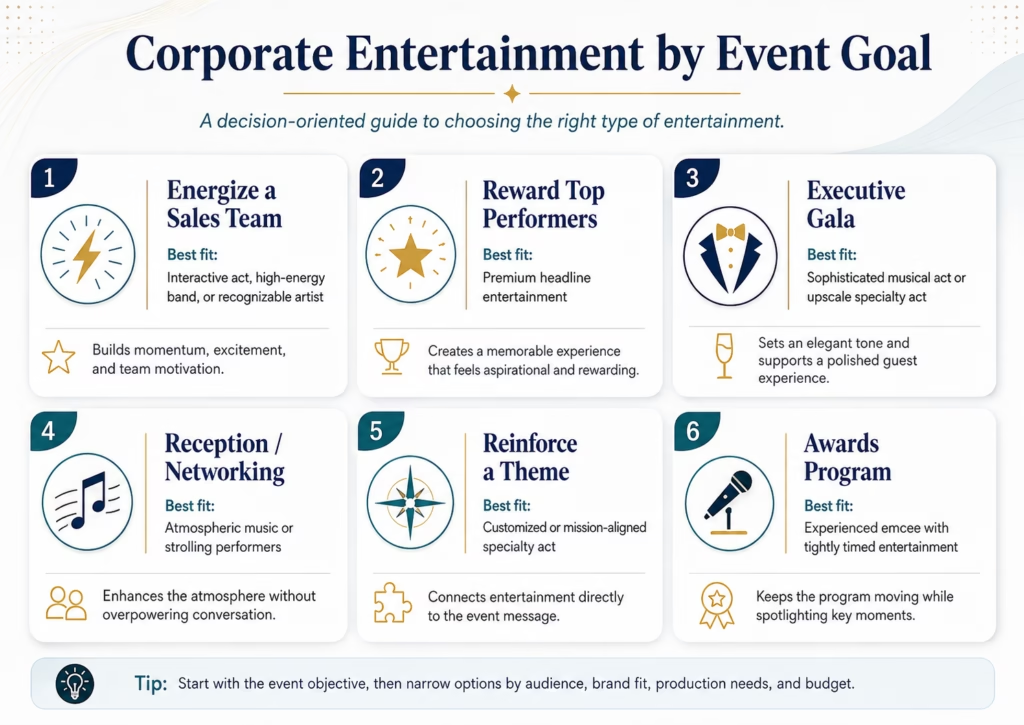
Examples of these types of entertainment can be found on TSE’s Featured Non-Musical – Specialty Entertainment Acts Roster. Some organizations will also prefer mission-aligned acts that reinforce themes like innovation, diversity, sustainability, or resilience. The goal is not simply to choose an entertaining act, but to select a format that supports the audience experience and the purpose of the event.
How Talent Curation Improves the Entire Event Experience
Talent curation is the process of selecting, organizing, and presenting performers to create a specific, cohesive, and engaging experience for an audience or event. It goes beyond simply finding an available performer by considering how the talent fits the audience, brand, event objective, budget, and production environment.
It helps an entire event feel cohesive. A curated approach to corporate entertainment will:
- Ensure the entertainment reflects the brand’s message
- Eliminate performers who might present reputational risk
- Streamline budgeting and technical planning
- Help executives feel confident and comfortable with the entertainment
- Create smooth integration with award segments, presentations, and keynote transitions
- Reduce last-minute surprises around logistics or riders
Ultimately, a curated approach can help everything associated with the entertainment, from walk-in music to the closing act, feel connected to the larger event experience.
What are Common Challenges When Booking Entertainment for Corporate Events
Even with careful planning, several recurring issues can create problems late in the booking process:
- Acts whose material or reputation doesn’t fit the company’s values
- Talent riders that exceed what venues can support
- Budget misalignments when production costs come in higher than expected
- Performers unused to adapting to tight corporate schedules
- Lack of contingency plans if an act is delayed or weather impacts travel
- Executive discomfort with artists who go off script
Early vetting, clear communication, and careful review of production and contractual requirements can reduce many of these risks.
The Future of Corporate Entertainment: Deeper Brand Integration
As companies place more emphasis on intentional event experiences, entertainment is increasingly being evaluated as part of the larger event strategy rather than as a standalone attraction. Brand fit, flexibility, audience engagement, and the ability to work within a structured corporate environment are becoming more important considerations during talent selection.
For corporate event planners, this means entertainment decisions should be deliberate, values-driven, and supported by experts who understand talent and corporate contexts.
Planning a corporate event? Share your audience, event objective, date, and budget with TSE’s booking team to begin building a shortlist of entertainment options that fit your brand and production requirements.
Check Out TSE Corporate Entertainment Services Here!
Frequently Asked Questions
What makes an act “brand-safe”?
- Corporate buyers typically evaluate content, language, wardrobe, audience interaction style, and public reputation to determine whether a performer aligns with the company’s standards and audience expectations.
Do corporate events need different performers than public festivals?
- Often, yes. Corporate events may require performers who are comfortable with structured programs, precise timing, appropriate content guidelines, and different audience expectations than a public festival or nightlife event.
How early should entertainment be booked?
- As early as practical. In-demand artists and peak dates can book well in advance, so starting several months ahead gives planners more choices and more time to coordinate contracts, travel and production. Lead times vary significantly by artist, location and event date.”
What if the company wants an act tied to a theme?
- TSE can work with clients to curate talent that reflects brand messaging, keynotes, or campaign narratives.