
Every promoter has heard some version of the same concern regarding booking local support acts:
“If we book a popular local act, won’t people just come for the opener?”
It’s an understandable question. The headliner is the primary draw, and no one wants to make a decision that unintentionally shifts attention away from the artist carrying the ticket. But in practice, this concern is often overstated. In fact, when local support acts are selected strategically, they frequently help drive ticket sales rather than compete with the headliner.
The key lies in understanding market draw.
A successful support act doesn’t replace the headliner’s audience, it expands it. They introduce your event to fans who may not have been planning to attend while reinforcing the value of the overall lineup. When paired with the right marketing strategy, local artists become an extension of your promotional team, helping venues, fairs, festivals, casinos, and performing arts centers reach deeper into their communities.
Like every booking decision, however, success comes down to strategy, not simply filling an opening slot.
Understanding the Difference Between Draw and Reach
One of the biggest misconceptions in live entertainment is that every artist on a bill needs to have significant ticket-selling power.
There is an important distinction between draw and reach.
A headliner is expected to generate demand. They’re the reason most people initially consider purchasing a ticket. A support act, on the other hand, expands awareness. They reach audiences the headliner may not naturally reach through traditional marketing channels. That’s particularly true for regional and local artists.
While they may not sell thousands of tickets on their own, they often have highly engaged communities built through years of performing locally. Those communities include loyal fans, fellow musicians, local businesses, schools, community organizations, and hometown media outlets. These aren’t just followers; they’re people who have personal relationships with the artist.
That kind of trust is difficult to buy through advertising alone.
Why Local Artists Often Outperform Paid Advertising
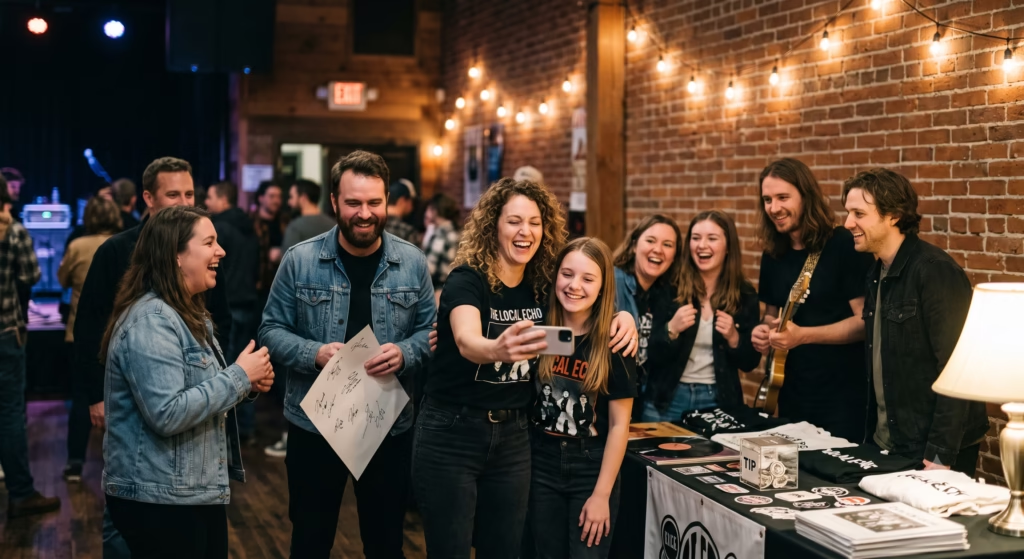
Promoters invest significant resources into digital advertising, radio campaigns, email marketing, and social media. Those tools remain essential, but they’re only one part of the equation. Local artists create something advertising can’t: authentic recommendations. When an artist tells their audience they’re excited to open for a nationally touring act, fans pay attention because the recommendation comes from someone they already trust.
Instead of simply seeing another sponsored post in their feed, they’re hearing directly from someone they’ve watched perform for years. That personal promotion often produces stronger engagement than a traditional advertisement.
Multiply that by two or three carefully selected support acts, and you’ve effectively created several independent marketing teams promoting the same event.
The Real Risk Isn’t Cannibalization: It’s Poor Fit
When people worry about local support cannibalizing ticket sales, they’re usually describing a different problem entirely. The real issue is poor lineup construction. Imagine a hard rock headliner paired with a local indie-folk artist simply because that band has a large hometown following. The audiences may have very little overlap. Fans arrive expecting completely different experiences, and the lineup feels disconnected.
Now compare that to a local hard rock band that regularly performs within the same scene as the headliner. The musical styles complement one another. Fans recognize similarities. The transition between artists feels natural. That’s not cannibalization. That’s thoughtful programming.
Successful promoters spend just as much time evaluating audience compatibility as they do artist popularity.
Look Beyond Streaming Numbers
Streaming statistics and social media followers are valuable tools, but they rarely tell the whole story.
A local artist with 40,000 monthly Spotify listeners spread across the country may generate less local attendance than a band with 2,500 highly engaged fans who regularly attend hometown shows.
Likewise, an artist with 100,000 Instagram followers may see very little ticket conversion if those followers rarely engage with event announcements.
Instead, promoters should ask practical questions:
- Does this artist consistently draw people to local venues?
- Do they actively promote every performance?
- Are their fans engaged or simply passive followers?
- Do they have strong relationships within the community?
- Are they professional and easy to work with?
These factors often predict success far better than metrics.
Think in Terms of Audience Expansion
One of the simplest ways to evaluate support acts is through audience overlap.
Imagine your marketing campaign is already reaching 10,000 potential buyers. If a local support act introduces another 2,000 highly relevant fans who weren’t previously aware of the event, your addressable audience grows substantially. That’s audience expansion.
Conversely, if nearly every one of that artist’s followers was already planning to attend, the booking adds little marketing value.
The strongest support acts consistently bring new buyers into your sales funnel while complementing the overall experience.
Support Acts Are Marketing Partners
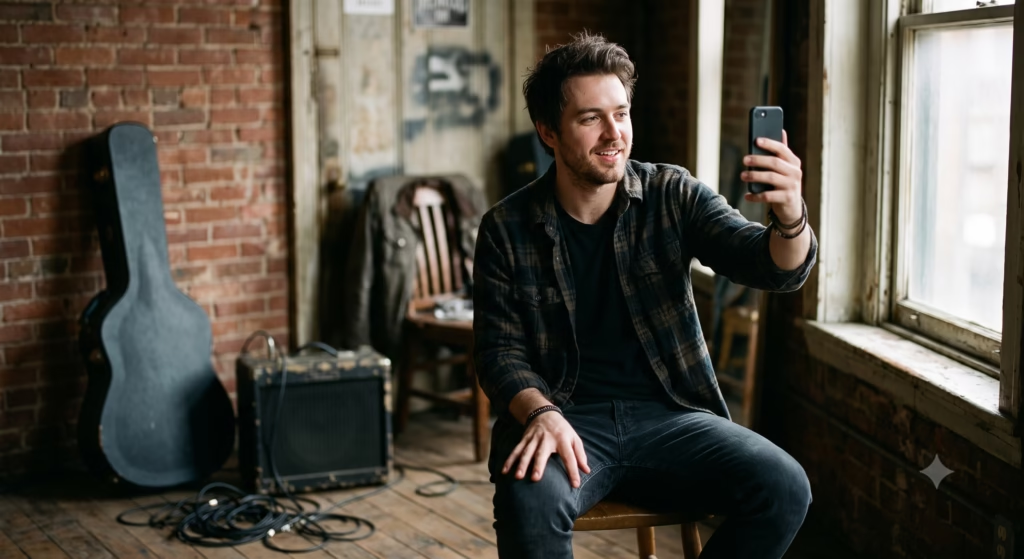
The booking agreement shouldn’t be the end of the conversation.
It should be the beginning of a coordinated marketing campaign.
Before announcing the lineup, promoters should provide every artist with promotional assets that make sharing easy and consistent.
These often include:
- Social media graphics formatted for each platform
- Ticket purchase links
- Short promotional videos
- Artist announcement templates
- Venue branding
- Event hashtags
Providing these materials removes barriers while ensuring messaging remains consistent across every artist’s audience.
Many promoters also establish promotional expectations within the performance agreement, including minimum social posts or announcement timelines.
When expectations are communicated early, everyone works toward the same objective: selling tickets.
Local Support Creates Better Events
Ticket sales are only one measure of success.
Strong support acts also improve the event itself.
- Fans arrive earlier.
- Concession sales increase.
- Merchandise sales often improve because attendees spend more time inside the venue.
- The room develops energy before the headliner takes the stage.
For the headline artist, walking into an engaged audience is almost always preferable to performing for a room that’s still filling. The audience benefits as well.
Discovering a talented local artist before seeing a favorite national act adds value to the ticket purchase and strengthens the overall concert experience.
A Festival Is Different Than a Theater
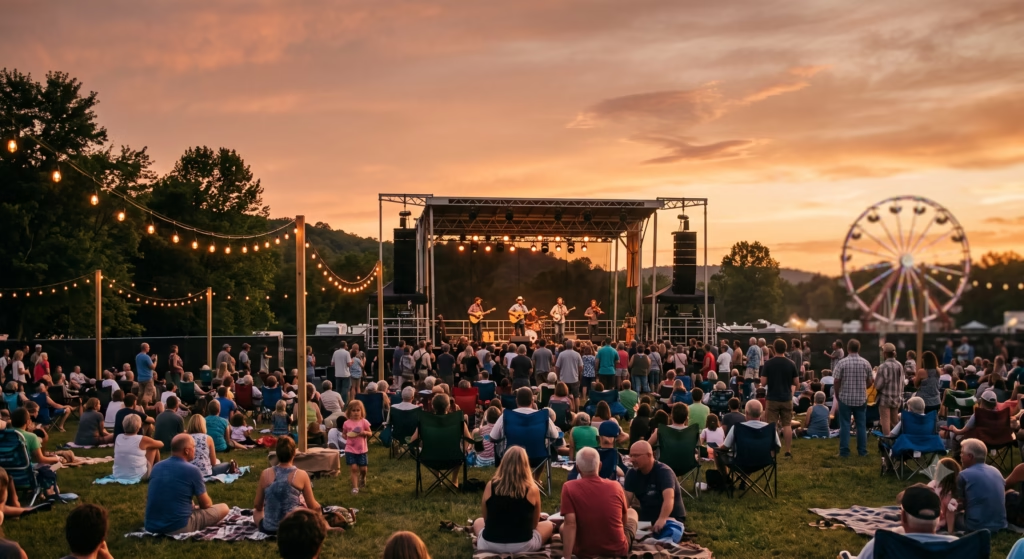
The role of local support also changes depending on the event.
At a county fair, regional artists often reinforce community identity while encouraging local attendance throughout the day.
At a music festival, local acts provide geographic authenticity and help connect the event to its host city.
Performing arts centers frequently introduce regional musicians as a way of cultivating future audiences and supporting local arts initiatives.
While the objectives vary slightly, the principle remains the same: local artists should complement the event’s goals, not simply occupy available time on the schedule.
Common Booking Mistakes
Even experienced promoters occasionally miss opportunities when booking local support.
Some of the most common mistakes include:
- Choosing popularity over compatibility.
The biggest local name isn’t always the best fit.
- Announcing support too late.
Giving artists only a week or two to promote limits their ability to drive ticket sales.
- Providing no promotional assets.
Artists are far more effective marketers when they have professional graphics and messaging.
- Ignoring professionalism.
Reliability, communication, and stage etiquette matter just as much as talent.
- Treating support as an afterthought.
Every artist contributes to the audience’s experience. Each booking should have a strategic purpose.
Building Long-Term Relationships
One successful opening slot can become much more than a single night’s performance.
Local artists who have positive experiences often become advocates for venues and promoters. They recommend opportunities to other musicians, promote future events, and help strengthen the local live music ecosystem.
Likewise, promoters develop a network of reliable regional artists they can confidently recommend for future shows. Those relationships become increasingly valuable over time. The strongest entertainment markets aren’t built through isolated events. They’re built through consistent partnerships between promoters, venues, artists, sponsors, and communities.
It rarely does when the fit is right. The concern people describe as cannibalization is almost always a symptom of poor lineup construction, pairing acts whose audiences have little in common. When a local act shares a scene and a sound with the headliner, its fans tend to be incremental buyers rather than people who would have attended anyway. The real risk is not that local support competes with the headliner. It is choosing an act that does not belong on the bill.
Conclusion
The question shouldn’t be whether local support acts take attention away from a headliner.
The better question is whether they’re helping build a stronger event.
When selected strategically, local artists become audience builders, marketing partners, and ambassadors for the local music community. They introduce new fans to your event, strengthen community engagement, improve the concert experience, and help create long-term relationships that extend far beyond a single performance.
The best lineups aren’t defined by the biggest names alone. They’re built by bringing together artists who elevate one another, expand the audience, and leave attendees excited to come back for the next show.
Build a Lineup That Works with TSE Entertainment
Finding local support acts that genuinely expand your audience takes time, regional relationships, and an honest read on who actually moves tickets. That is where a booking partner earns its place. TSE Entertainment’s talent buyers help venues, fairs, festivals, casinos, and performing arts centers build complete lineups, from headliners to the local openers who bring their communities with them. To start shaping a lineup that sells, explore TSE Entertainment’s talent booking services.
Frequently Asked Questions
How many local support acts should a lineup include?
There is no fixed number. It depends on the venue, the length of the show, and the type of event. A standard club or theater show usually supports one or two openers before the headliner, which keeps the night moving and gives each act enough room to make an impression. Fairs and festivals can absorb more, since a longer schedule leaves space for several regional performers across the day. The goal is never to fill every available minute. It is to choose acts that each bring a distinct audience or add something to the overall experience.
How far in advance should local support be announced?
As a general rule, confirm and announce local support at least four to six weeks before the show, and ideally at or shortly after the on-sale date. Artists need runway to promote effectively, and a support act given only a week or two has almost no time to activate its audience. Announcing early also lets you fold each artist into the marketing calendar rather than treating their promotion as a last-minute add-on.
Should local support acts be paid, or is exposure enough?
Pay them. Treating a support slot as exposure alone tends to attract less reliable acts and signals that the booking is not a real partnership. Fair compensation, even a modest guarantee, reinforces professionalism, encourages the artist to promote seriously, and protects the relationship for future shows. The strongest local acts are the ones other promoters already compete for, and they respond to being treated as genuine collaborators.
How do I evaluate a local act’s real drawing power?
Look past raw follower counts and streaming totals, which often reflect a scattered national audience rather than local demand. The more telling signals are whether the artist consistently draws people to nearby venues, actively promotes every performance, and maintains real relationships within the community. An act with a few thousand engaged hometown fans frequently outperforms one with far larger but passive online numbers. When that local knowledge is not available in-house, a booking partner with regional relationships, such as TSE Entertainment, can help separate the acts that genuinely move tickets from those that only look strong on paper.
What is the difference between local support and direct support?
Direct support, sometimes called the special guest, is the act performing immediately before the headliner, and it is often a nationally touring name booked to strengthen the overall bill. Local support usually opens the show and is drawn from the regional scene. The two roles serve different purposes: direct support adds ticket-selling weight, while local support expands reach into the host community. Many strong lineups use both.
Can booking local support actually hurt headliner ticket sales?
Industry Resources and Further Reading
The sources below are authoritative places to go deeper on the topics covered here, from box office data and drawing power to event marketing and festival programming.
Touring and Box Office Data
- Pollstar: concert box office, tour histories, and touring charts reported by talent buyers and venues.
- CelebrityAccess: artist analytics, tour dates, fee ranges, and box office scores for industry professionals.
- Billboard Boxscore: reported grosses and attendance for tours and individual engagements.
Industry Associations for Buyers, Venues, and Events
- International Entertainment Buyers Association (IEBA): networking and education for talent buyers, agents, promoters, and venues.
- International Festivals and Events Association (IFEA): resources, education, and certification for festival and event professionals.
Event Marketing and Audience Insights
- Eventbrite Organizer Resource Hub: practical guides on event marketing, promotion timelines, and audience growth.
