
Imagine a dinner running twelve minutes late because the kitchen fell behind. Awards started late to make up for it, then the time ran over because nobody was in charge of how long the presenters talked. By the time the band finally got the signal to start, they only had twenty minutes left of their forty five minute set, and the room had already started grabbing coats. Nobody did anything wrong that night. There just wasn’t a plan for what happens when one part runs long and the rest of the night has to make up for it.
That’s what a run of show is actually for. It’s not a schedule you glance at once. It’s the document your whole team is working off of all night. Whoever is holding the clock that night should be checking it between cues the way a stage manager checks a script. Many galas that feel chaotic aren’t understaffed or underfunded. They just never wrote down, minute by minute, what happens next and who’s in charge of making it happen.
Start With What Can’t Slip
Not everything in the night matters the same amount, and the galas that run long are usually the ones that treated every part like it did. Before you touch a timeline, pick your two or three moments that absolutely have to go right. For most galas that’s the top award, the headline entertainment set, and whatever moment raises money or puts the sponsor’s name front and center. Everything else, welcome remarks, smaller awards, the transitions between parts, is there to support those three things, not compete with them for time.
When someone on the committee wants to add another speech or another performance, don’t just ask if it’s a good idea. Ask what’s coming out to make room for it. That’s a much easier conversation to have in a planning meeting than at 8:40 with a room full of guests waiting. It’s also a good time to be honest with your sponsors and board about what the night can actually fit. Too many “must include” moments and you don’t have a run of show anymore, you have a wish list. And a wish list is exactly how a ninety minute program turns into two and a half hours.
The Timeline Is the Easy Part. Handoffs Are Where Nights Fall Apart.
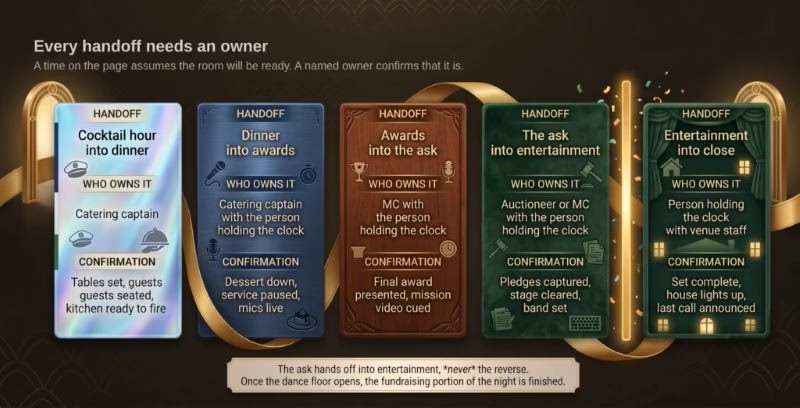
Any run of show can list times and tasks. The ones that actually hold up on the night go further than that. They name one specific person at every handoff point who confirms the room is actually ready to move, not just a time on the page that assumes it will be. Dinner ending into awards, awards ending into the ask, the ask ending into entertainment. Every one of those handoffs needs an owner, not just a hopeful timestamp.
A simple structure that tends to work for either a corporate or a charity gala:
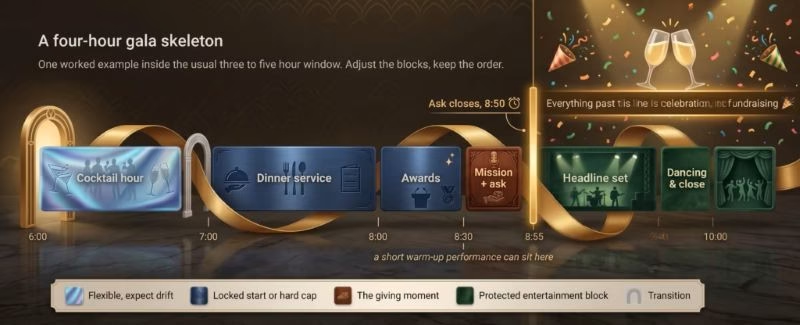
Cocktail hour gets a flexible buffer, since it is a common place for the schedule to drift.
Dinner service gets a locked start time, because everything after it is built off of that time.
Awards get a hard limit on total minutes, with a separate time limit for each presenter.
The auction or giving moment goes while the room is still together and still engaged, after the mission moment and before anything that competes with it for attention. Whether the paddle raise comes immediately before or after the live auction depends on the audience and event format, but keep the live auction short enough that the energy holds through it.
Entertainment gets a protected block. Not “whenever we get to it.” A short performance can work as a warm-up ahead of the ask, but the headline set belongs after it, not before. Once the dance floor opens, the fundraising portion of the night is finished.
Close gets a set end time the whole staff already knows, so nobody’s guessing when to start wrapping up.
How hard that fourth item binds depends on what you are actually asking the room for. A charity gala with a paddle raise has to protect the order, because you get one shot at a room that is seated, quiet, and paying attention. A corporate gala may have no giving moment at all, or it may have a ceremonial check presentation for a partner charity where the money is already committed. That kind of moment is a recognition beat, not an ask, and it can sit almost anywhere in the night. Know which one you have before you build around it.
Write down the actual clock times next to each of these, not just the order they happen in. A run of show that just says “awards, then entertainment” tells your team the order but not the plan. One that says “awards end at 8:30, the ask closes at 8:50, band goes on at 8:55” gives everyone something to hold each other to.
Nothing Runs Smooth Without a Script
The galas that feel effortless are the ones where every transition was assigned to a specific person ahead of time. Who welcomes the room. Who introduces each part. Who releases tables for dinner. Who closes the auction. Who gives the go ahead to the band. If your MC (Master of Ceremonies) is figuring out who talks next in the moment, the timeline has already started slipping, because that kind of improvising is exactly how a five minute overrun turns into a twenty minute one.
This is also where entertainment either gets protected or gets shortchanged. A band booked for forty five minutes deserves all forty five minutes. That only happens if everything before them has a hard stop built in, not just a soft suggestion. It’s worth putting this in writing for your MC and your committee chair specifically, since they’re usually the ones under the most pressure to let a moment “run a little long” to be polite. Being polite is exactly what eats into a headliner’s set time if nobody’s holding the line.
A script nobody has walked through is still just a document. Somewhere before doors, the people with a job on the timeline need to actually move through it together, because the gaps show up when you try to run it rather than when you read it. That is where you find out the lectern is on the wrong side, the video has no audio feed, or the honoree needs help getting up three stairs.
How formal that walkthrough needs to be scales with the night. A large event with a touring act, a hired production company, and a room full of major donors earns a full technical rehearsal with cues called in order. A two hundred person awards dinner in a hotel ballroom may only need the MC, the catering captain, the AV contact, and the person holding the clock standing in the room an hour before doors, walking the transitions out loud. The scale changes. The requirement does not.
Your Entertainment Tier Decides How Much the Timeline Can Flex
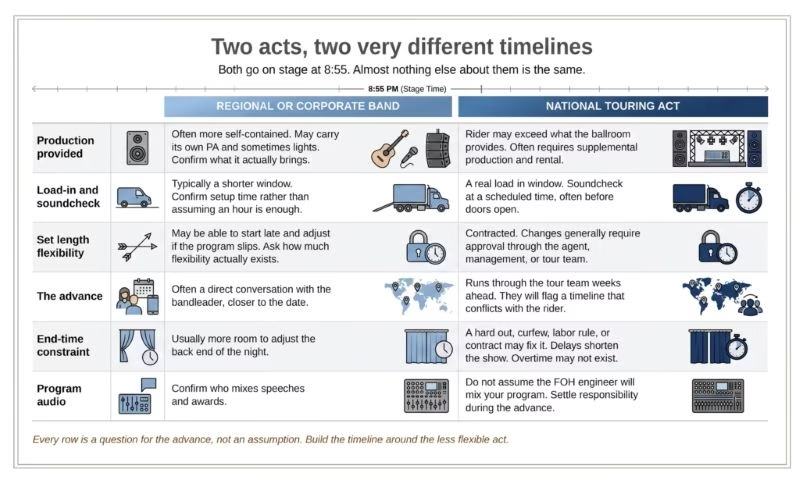 Not every act sits in the run of show the same way, and this is where a lot of otherwise careful planning goes wrong. A very good regional cover band and a national touring entertainer both go on stage at 8:55, but almost nothing else about them is the same.
A regional or corporate band may be substantially more self-contained than a touring national act, with lighter production requirements and more flexibility in the schedule. If dinner runs long, they may be able to start late and adjust, play quietly during dessert and loudly after, or read the room and adapt. But don’t assume what they carry or how quickly they can set. Confirm exactly what the act provides and what the venue must provide during the advance.
Do not assume a national act can be moved. Once the performance time and set length have been agreed, changes generally require approval through the artist’s agent, management, or tour team. The technical rider may exceed what your ballroom provides on its own, often requiring supplemental production and a real load-in window. Soundcheck happens at a scheduled time, often before doors. The advance runs through the tour team weeks ahead, and they will tell you if your timeline conflicts with the rider. Many acts have a hard out because of travel the next day. When the end time is fixed by a hard out, venue curfew, labor rule, or contract, program delays can reduce the available performance window, and overtime may not be available.
Two practical items follow from this. First, do not assume the artist’s FOH (Front of House) engineer will mix your awards program. Establish responsibility for program audio during the advance. Second, build the timeline backward from the act’s contracted start rather than forward from cocktails, and hand that timeline to the tour manager early enough that conflicts surface while they are still fixable.
The instinct to treat entertainment as the flexible part of the night is understandable, because with a cover band it usually is. With a national act it is the least flexible thing on the page.
Decide What Gets Cut Before You Have to Cut It
Something will run long, run late, or not go as planned. That’s not bad planning, it’s just what happens at live events. The difference between a night that stays calm and one that spirals is whether the answer already exists before the problem shows up. Who steps in if a presenter’s running behind. What gets cut short if the timeline slips. By how much. Teams that build those answers into the run of show ahead of time can handle a snag without anyone in the room even noticing it happened.
A useful planning rule here: for every part of the night longer than ten minutes, write down what gets cut if that part runs over. It doesn’t have to be complicated. “If awards run past 8:30, smaller award remarks get cut to thirty seconds each” is enough. The point isn’t to plan for every single thing that could go wrong. It’s to make sure your team isn’t inventing a decision on the spot while two hundred people watch them do it.
Why This Is Worth Getting Right
A tight run of show isn’t really about the schedule for its own sake. It’s protecting three things at once inside the same three to five hour window. The sponsor’s entertainment investment, the honoree’s moment on stage, and the number the committee raises by the end of the night. Order matters as much as timing here, because an ask that lands after the room has been released to the dance floor is an ask that does not land at all. Skip the planning and all three are at risk together. Do the planning and all three are protected together. That’s not a tradeoff between being organized and being generous with the moment. It’s the same decision either way.
This is also where a good run pays off. Sponsors remember whether their brand got the spotlight they paid for. Honorees remember whether their moment felt rushed or whether it landed the way it was supposed to. Committees remember whether the ask happened at the right point in the evening or got squeezed in as an afterthought because the night ran long. None of that shows up on a budget line, but all of it shows up in whether people come back next year.
Before you build your next one, get specific on your two or three non negotiables, name an owner for every handoff, and write out who says what between segments. Then build the timeline around the act you actually booked, keep the ask ahead of the entertainment, walk the transitions with your team before doors, and put the backup plan into the document itself instead of figuring it out on the night. A gala that runs on time never feels rushed to the people sitting in the room. It just feels easy. That ease is never an accident.
 Booking the Act Your Timeline Can Actually Hold
Most of what makes a run of show work is planning your own team can do internally. Where a booking partner helps is earlier than most planners expect, at the point where you are still deciding what kind of act the night can support. TSE Entertainment has been booking live entertainment since 1975, including entertainment for corporate and charity events, and the most useful conversation we have with clients is usually not about who is available on your date. It is about what a given act will require from your timeline, your venue, and your production budget before you commit to it. If you are weighing a self-contained band against a national name, or trying to work out whether your ballroom can carry a rider you have been handed, we are glad to walk through it with you. Give TSE a call at 1-800-765-8203 to start getting the help you want.
Frequently Asked Questions
What is a run of show, and how is it different from an event agenda?
An agenda tells guests what is happening. A run of show tells your team what is happening, at what clock time, and who is responsible for making it happen. The agenda can say “awards, then entertainment.” The run of show says “the ask closes at 8:50, the production lead confirms the stage is clear, band downbeat at 8:55.”
Who should hold the clock on event night?
One person, and it should not be the executive director, the board chair, or anyone else who is hosting. The role requires being reachable and available to say “go” at an exact moment, and the people with relationship duties that night are the least available people in the room. A show caller, stage manager, producer, experienced day-of coordinator, or, for a smaller event, a well-briefed staffer or volunteer works better than a senior title. Whoever it is, tell the venue, the catering captain, the MC, and the band so nobody is guessing who to look at when something slips.
Who else needs a copy of the run of show?
More people than usually get it. The catering captain sets dinner pace, which drives everything after it. The venue or production AV (Audio Visual) lead responsible for sound and lighting needs it too. And if you have booked a touring act, the tour manager needs it during the advance rather than on the day. A run of show that lives only with the planning committee is a planning document, not an operating one.
How long should the whole evening run?
Many corporate and charity galas run three to five hours from reception through close. When possible, keeping the concentrated seated program to roughly 60 to 90 minutes helps protect attention, although awards-heavy formats may run longer.
How much time should each award presenter get?
Set a total cap for the awards block and a separate limit per presenter. A common structure holds the formal recognition segment to 30 to 40 minutes and individual acceptance remarks to about three minutes. Give presenters a countdown they can actually see from the stage, because a reminder given in a briefing does not survive the moment.
Where should the auction or paddle raise go in the night?
Place it close to the mission moment, while the room is still emotionally engaged, and always ahead of the headline entertainment. Once the dance floor opens, the ask is over whether you have made it or not. Whether the paddle raise comes immediately before or after the live auction should be determined based on the audience and event format, ideally with input from the benefit auctioneer. Keep the live auction itself short, often six to ten strong lots, so the room does not fatigue before the close.
Does the type of act change how we build the run of show?
Substantially. Some regional and corporate bands are more self-contained and can absorb a program that slips, but confirm what the act carries and how much flexibility it actually has. A national entertainer arrives with a contracted set length, a technical rider that may exceed what your venue provides, a scheduled soundcheck, and often a hard out. Build the timeline around the second kind and confirm any changes with the artist’s team.
When should the run of show be locked?
Circulate a full working version three to four weeks out so the venue, catering, AV, and entertainment can flag conflicts while there is still time to move things. Issue the final event version after the final walkthrough or rehearsal, typically during event week. Changes after that point should go through the single person holding the clock rather than being negotiated on the floor.
What is the most common thing missing from a run of show?
The contingency. Most documents describe what happens when the night goes to plan and say nothing about what happens when it does not. For every segment longer than ten minutes, write down what gets cut if that segment runs over, and by how much, so nobody is inventing that decision in front of the room.
Industry Resources
- MeyerPro. What Does a Stage Manager Do at Corporate Events? meyerproinc.com/what-does-a-stage-manager-do/
- MeyerPro. Show Caller vs. Stage Manager vs. Producer. meyerproinc.com/show-caller-stage-manager-producer/
- Festival and Event Production. Stage Manager Guide. festivalandeventproduction.com/special-guides/stage-manager-guide/
- Corporate Optics. 5 Best Practices for Producing a Corporate Awards Ceremony. corporateoptics.com/blog/best-practices-producing-corporate-awards-ceremony
- Engineerica. Awards Ceremony Ideas: Planning, Themes and Categories. engineerica.com/conferences-and-events/post/awards-ceremony-ideas/
- Community Tool Box, University of Kansas. Holding Awards Ceremonies. ctb.ku.edu/en/table-of-contents/maintain/reward-accomplishments/awards-ceremonies/main
- GEO Events. How to Plan a Corporate Gala: The Definitive Guide. geoevents.com/how-to-plan-a-corporate-gala-the-definitive-guide/
- Hyatt Meetings and Events. How to Plan a Gala Event. eventsathyatt.com/blog/how-to-plan-a-gala-event
- Kevin Troutt. The Nonprofit Gala Auction Run-of-Show That Raises More (Without Feeling Rushed). www.kevintroutt.com/the-nonprofit-gala-auction-run-of-show-that-raises-more-without-feeling-rushed/
- FestivalPro. What Is the Typical Live Music Set Duration? festivalpro.com/festival-management/3852/news/2025/6/30/What-is-the-Typical-Live-Music-Set-Duration.html
- Bishop McCann. The Sponsor Fulfillment Checklist Every Event Manager Needs. blog.bishopmccann.com/the-sponsor-fulfillment-checklist-every-event-manager-needs
- Eventbrite. Free Run of Show Template and Event Planning Resources. eventbrite.com/blog/run-of-show-template/