
Introduction
Every outdoor music festivals is built around months, sometimes years, of planning. Organizers coordinate artists, vendors, production crews, security, medical services, and countless logistical details to create a memorable experience for attendees. Despite this preparation, one critical factor remains beyond anyone’s control: the weather.
Severe weather has become one of the greatest challenges facing festivals. Extreme heat, lightning, flash flooding, high winds, wildfire smoke, and other environmental hazards can develop quickly, disrupting performances and creating serious safety risks. As weather patterns become more unpredictable, organizers need to be prepared to make timely decisions that protect the attendees while minimizing operational and financial impacts.
Weather preparedness is not limited to checking the forecast in the days leading up to an event. It begins during site selection, and it continues throughout planning and remains an active process from load-in through the final performance. Successful festivals integrate weather monitoring, emergency planning, staff training, communication strategies, and recovery procedures into every stage of event management.
Industry guidance from organizations such as the Event Safety Alliance, the Federal Emergency Management Agency (FEMA), the National Weather Service (NWS), and the Occupational Safety and Health Administration (OSHA) consistently emphasizes that emergency planning is most effective when decisions are made before severe weather occurs, not while it is unfolding.
Ultimately, successful weather operations are about more than protecting stages or minimizing financial losses. They are about safeguarding attendees, artists, staff, volunteers, and vendors while preserving confidence in the event and ensuring the festival can continue operating safely when conditions change.
Executive Summary
Severe weather can affect every aspect of an outdoor music festival, from attendee safety and infrastructure to scheduling and business continuity. While weather cannot be controlled, its impact can be reduced through proactive planning, continuous monitoring, and well-defined emergency procedures.
Festival organizers should conduct weather risk assessments before the event, establish clear decision-making authority, monitor conditions throughout festival operations, and develop evacuation and shelter procedures tailored to the venue. Equally important are staff training, coordination with local emergency management and public safety agencies, and communication systems that can deliver timely, consistent information to attendees.
By incorporating weather prep into every phase of planning, festivals can respond more effectively to changing conditions, reduce risk, and strengthen both public safety and long-term organizational resilience.
1. Weather Risk Assessment Before Festival Season
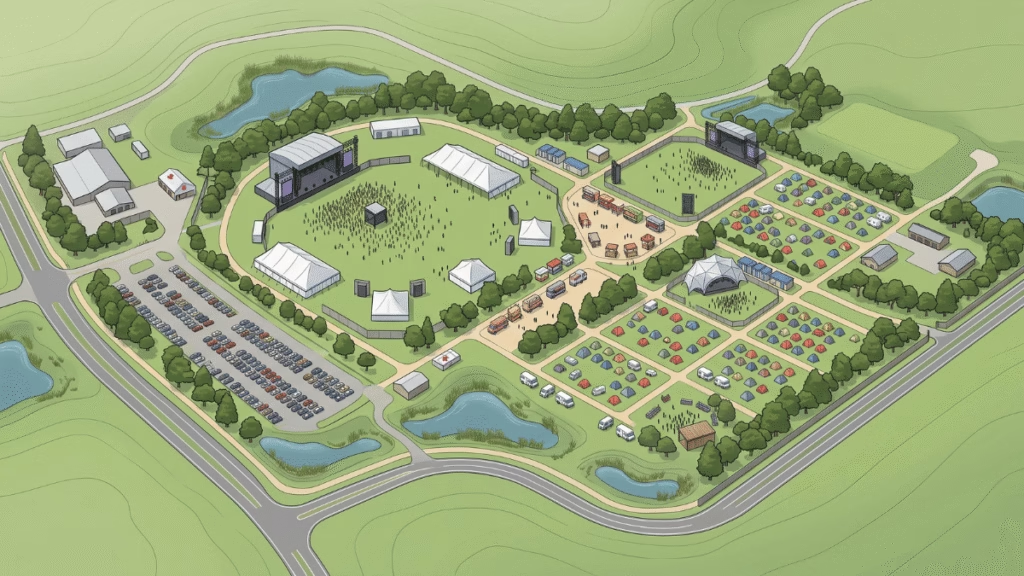
Effective weather management begins way before the first forecast is issued. Before tickets go on sale or stages are built, organizers should evaluate the environmental risks associated with the venue and the time of year the festival will take place. A comprehensive weather risk assessment provides the foundation for safer operations by identifying hazards early and incorporating mitigation strategies into the planning process.
One common mistake is assuming that because a festival has experienced favorable weather in previous years, the conditions will always remain the same. Weather patterns can vary significantly from season to season. A venue that was dry and mild one year may experience extreme heat, heavy rainfall, or severe thunderstorms the next.
A thorough assessment should examine weather data history, seasonal climate trends, flood prone areas, drainage capacity, prevailing wind exposure, terrain, tree hazards, temporary structure locations, emergency vehicle access, available shelter, utility vulnerabilities, and local emergency response capabilities. Understanding these factors helps organizers make informed decisions about site layout, structure placement, staffing, and emergency planning before the festival begins.
Weather planning should also extend beyond life safety. Severe weather can disrupt artist travel, vendor operations, food service, parking, accessibility, power distribution, waste management, and medical services. Identifying these dependencies allows organizers to build contingency plans that reduce safety risks.
Because weather affects nearly every department, risk assessments should involve representatives from across the organization. Production teams may identify stages exposed to prevailing winds, medical personnel can anticipate heat related illnesses, parking managers may recognize flood risks, accessibility coordinators can evaluate routes that become difficult to navigate during heavy rain, and security teams can identify evacuation bottlenecks. Bringing in all these perspectives creates a more comprehensive understanding of the venue and improves coordination.
Historical weather records from the National Weather Service and NOAA provide valuable insight into recurring hazards such as average temperatures, rainfall, lightning frequency, and prevailing wind conditions. This information should be combined with local knowledge from venue operators and emergency management agencies to ensure planning reflects the area’s unique environmental risks.
Organizations such as FEMA and the Event Safety Alliance recommend incorporating weather into an event’s overall risk management strategy rather than treating it as a standalone issue. Integrating weather considerations into site design, staffing, emergency procedures, and operational planning enables faster, more informed decision making when conditions change.
Key Actions
Before festival season begins:
- Conduct a formal weather risk assessment for the venue.
- Review historical weather and climate data for the event dates.
- Identify flood zones, drainage concerns, and areas exposed to high winds.
- Evaluate shelter locations, evacuation routes, and emergency vehicle access.
- Coordinate planning with local emergency management and public safety agencies.
- Incorporate weather considerations into site design, production planning, and infrastructure placement.
- Review insurance coverage for weather-related disruptions.
- Document findings in the festival’s Emergency Action Plan (EAP).
2. Preparing for Major Weather Hazards
Not all-weather events create the same level of risk. While light rain may be little more than an inconvenience, hazards such as lightning, extreme heat, flash flooding, and high winds can escalate rapidly into life threatening emergencies. These conditions can endanger attendees and staff, damage infrastructure, disrupt performances, and require difficult operational decisions within minutes.
A common misconception is that severe weather only becomes a concern once attendees notice it. The safest responses often begin well before conditions are visible. Professional event organizers rely on continuous weather monitoring, predefined action thresholds, and clear decision-making procedures to act proactively rather than reactively.
Guidance from the Event Safety Alliance, the National Weather Service (NWS), NOAA, and FEMA consistently emphasize that waiting for “one more forecast” can reduce the time available for safe evacuations or sheltering. Instead, festivals should establish weather action plans before gates open, ensuring that everyone understands when operations may be delayed, suspended, or canceled.
Lightning: One of the Most Immediate Threats
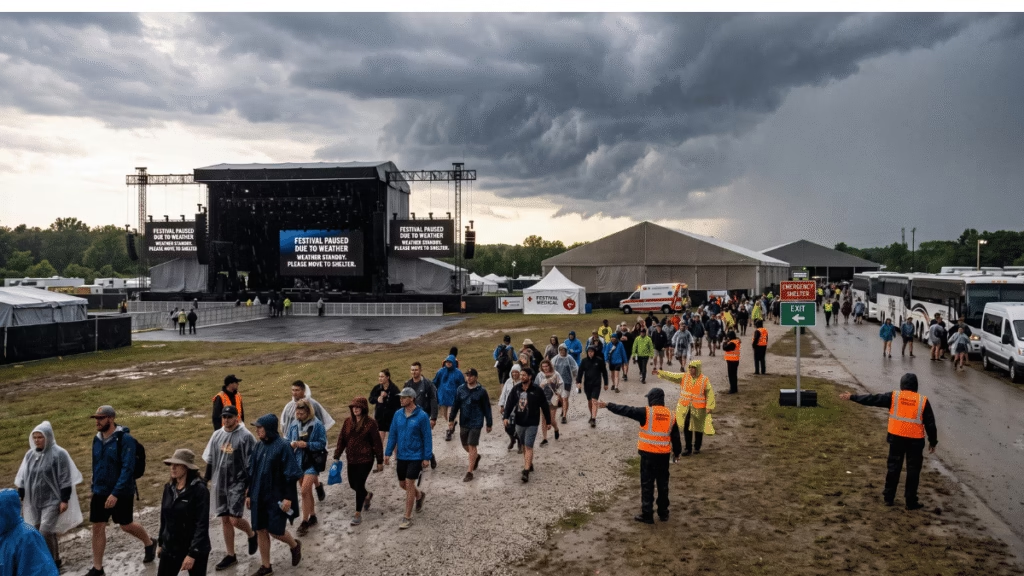
Lightning remains one of the most dangerous hazards for outdoor events because it can strike several miles from the center of a storm, even when skies overhead appear clear. The National Weather Service’s familiar guidance, “When Thunder Roars, Go Indoors”, emphasizes the importance of acting as soon as thunder is heard or nearby lightning is detected.
For festivals, lightning presents a unique operational challenge. Safely relocating thousands of attendees takes time, meaning organizers cannot wait until a storm is directly overhead.
Decisions to suspend performances or move attendees to shelter should be based on professional weather monitoring and predetermined safety thresholds rather than visual observations alone.
Every festival should establish a written Weather Action Plan that identifies who has the authority to suspend performances, how lightning will be monitored, where attendees should shelter, how public notifications will be delivered, and what conditions must be met before activities resume. Decision making should follow the event’s Incident Command structure to eliminate confusion during rapidly changing conditions.
Extreme Heat
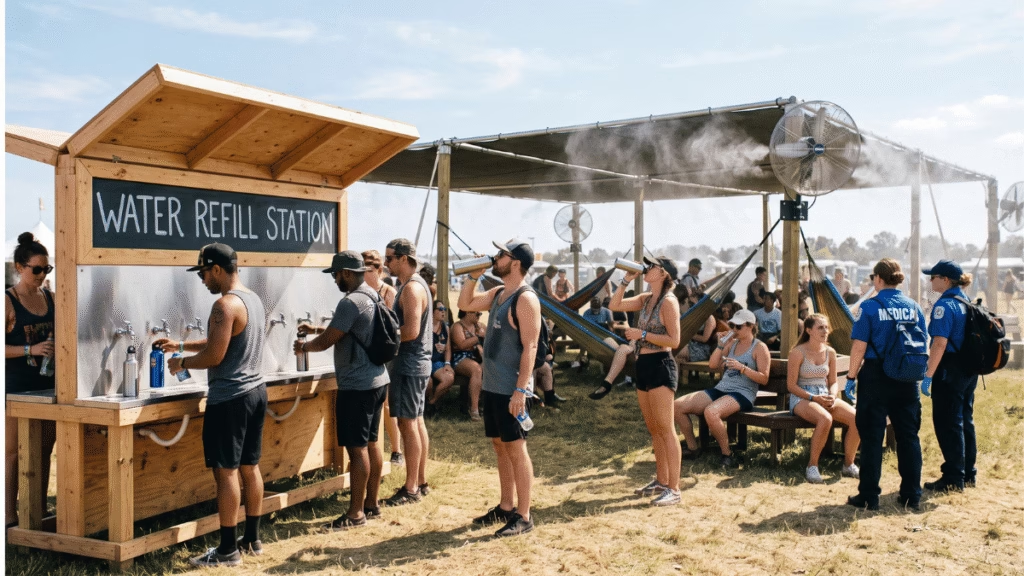
Although thunderstorms often receive the most attention, extreme heat consistently causes more weather-related illnesses than many other environmental hazards. Festival attendees may spend hours standing in direct sunlight, dancing, consuming alcohol, or camping with limited access to shade, increasing the risk of dehydration and heat related illness.
Heat preparedness should be incorporated into both site design and daily operations. Organizers should provide free drinking water, shaded rest areas, cooling tents, misting stations, and sufficient medical resources to treat heat related emergencies. Staff and volunteers should receive regular breaks, access to hydration, and training to recognize the early signs of heat exhaustion and heat stroke.
Rather than monitoring air temperature alone, organizers should also consider environmental measures such as the Heat Index for general heat awareness or the Wet Bulb Globe Temperature (WBGT), which better reflect the combined effects of temperature, humidity, sunlight, and wind on the human body. Public announcements and digital messaging encouraging hydration and regular breaks can also help reduce medical incidents during prolonged periods of excessive heat.
Flash Flooding and Heavy Rain
Heavy rainfall can quickly transform an otherwise safe venue into a hazardous environment. Flash flooding may overwhelm drainage systems, restrict emergency vehicle access, damage electrical equipment, and create dangerous conditions for attendees moving throughout the site. Camping festivals are especially vulnerable because guests may be sleeping or located in low lying areas when conditions deteriorate.
Flood planning should begin during site selection by evaluating drainage patterns, nearby waterways, stormwater flow, and access roads. Critical infrastructure, including generators, electrical distribution, and production equipment, should be placed away from areas prone to standing water whenever possible.
Operational plans should identify alternate emergency access routes and establish procedures for relocating campers or closing hazardous areas before flooding becomes severe. Waiting until water has already accumulated often limits available options and increases operational challenges.
High Winds and Temporary Structures
High winds present significant risks because nearly every temporary structure at a festival: including stages, roof systems, lighting towers, video walls, tents, fencing, and signage, is designed to operate within specific safety limits. Documented engineering and manufacturer limits must be treated as operational constraints and incorporated into the event’s High Wind Action Plan, together with applicable permit, code and AHJ requirements exceeding those limits can result in structural failures, flying debris, and serious injuries.
Production teams should maintain documented wind thresholds for every temporary structure and understand that these limits are safety requirements, not recommendations. Continuous wind monitoring should be part of daily operations, particularly when severe weather is forecast.
Before reopening any affected area, qualified personnel should inspect stages, rigging, lighting systems, and other temporary infrastructure to verify that it remains structurally sound.
Wildfire Smoke and Poor Air Quality
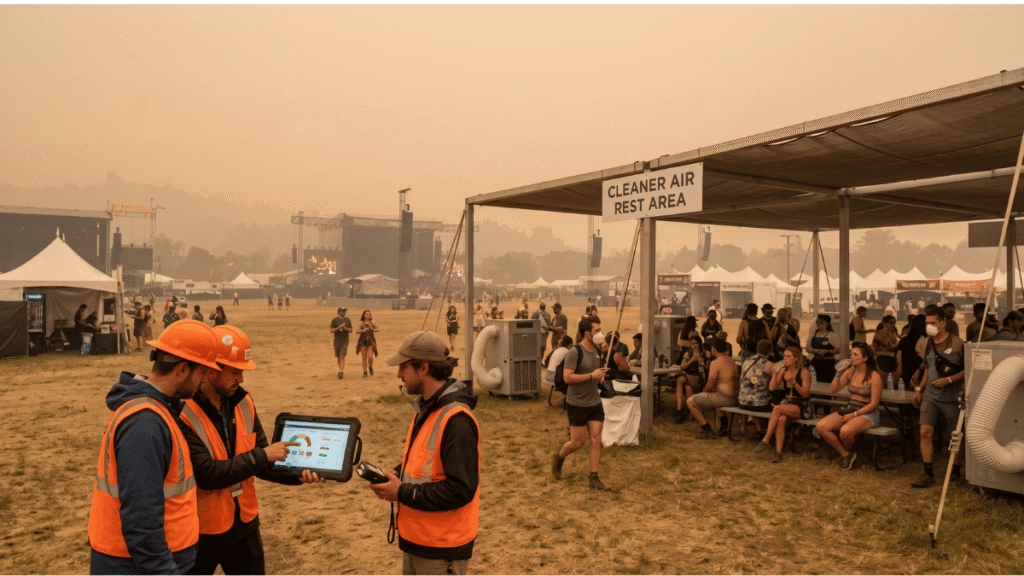
Wildfire smoke can affect outdoor festivals even when fires are located many miles away. Smoke may cause air quality to deteriorate quickly, exposing attendees, staff, artists, and contractors to fine particulate matter. Organizers should monitor reliable sources such as AirNow and local public health agencies, paying particular attention to PM2.5 levels and the Air Quality Index (AQI).
Weather Action Plans should establish procedures for deteriorating air quality, including reducing strenuous activity, adjusting schedules, providing access to cleaner-air spaces when available, and communicating precautions to attendees and staff. People with respiratory or cardiovascular conditions, children, older adults, and other sensitive groups may face greater risks. Because smoke conditions can change as winds shift, organizers should monitor air quality throughout operations and establish predetermined thresholds for modifying, suspending, or canceling outdoor activities.
Best Practices for Hazard Preparedness
While each weather hazard requires a different response, several preparedness measures apply to every festival:
- Continuously monitor weather using reliable professional sources.
- Establish clear operational thresholds before the event begins.
- Define who has authority to suspend or resume activities.
- Train staff on emergency procedures and communication protocols.
- Identify shelters, evacuation routes, and accessible alternatives.
- Coordinate planning with local emergency management and public safety agencies.
- Inspect temporary structures before reopening after severe weather.
Preparing for these hazards before festival season allows organizers to respond quickly, consistently, and safely when conditions change, reducing both operational disruption and risks to attendees, staff, artists, and contractors.
3. Operational Response During Severe Weather
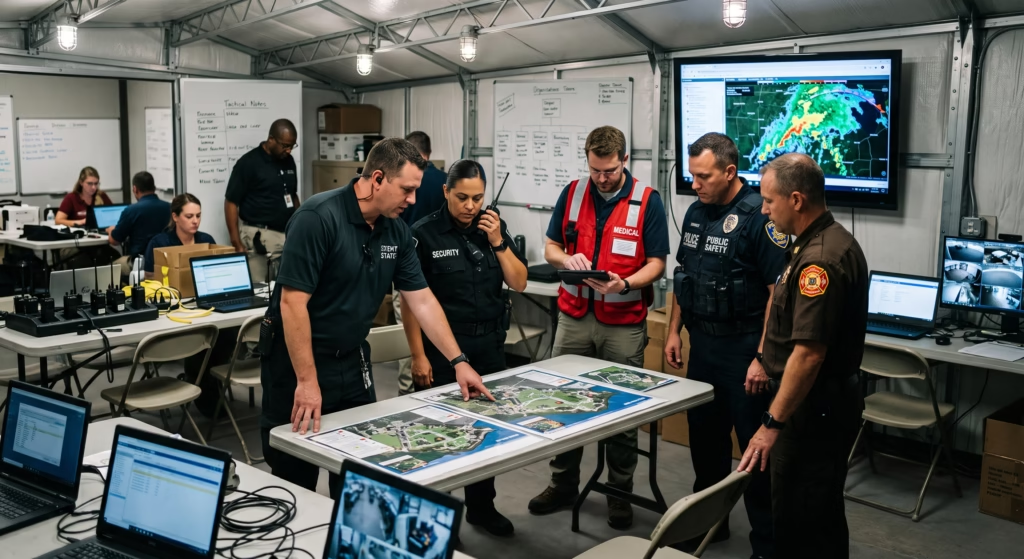
Even the most comprehensive weather plan is only as effective as its execution. When severe weather develops, festival organizers must make timely decisions while coordinating multiple departments, communicating with attendees, and adapting to rapidly changing conditions. A structured response helps reduce confusion, improves coordination, and supports safer outcomes.
Establish Clear Decision-Making Authority
One of the most common challenges during weather emergencies is uncertainty over who has the authority to make operational decisions. Production, security, medical services, venue management, and public safety officials may all have valuable input, but conflicting instructions can delay critical actions.
Many festivals use the principles of the Incident Command System (ICS) to establish clear leadership during emergencies. Under this framework, responsibilities are assigned before the event, ensuring everyone understands who can suspend performances, coordinate with emergency responders, manage public communications, authorize evacuations, and approve the resumption of operations.
Decision making roles should be identified by position rather than by individual name to ensure continuity if staffing changes occur. During significant weather events, key personnel should gather in a designated command center or Emergency Operations Center (EOC) where weather updates, operational reports, and incident information can be reviewed together. This shared situational awareness allows leadership to make informed, consistent decisions as conditions evolve.
Communicate Quickly and Consistently
Clear communication is often the difference between an orderly response and unnecessary confusion. During weather emergencies, attendees want to know what is happening, what actions they should take, and when they can expect additional updates. Delayed or inconsistent messaging can lead to frustration, misinformation, and reduced compliance with staff instructions.
Festivals should use multiple communication channels simultaneously rather than relying on a single system. Public address announcements, video screens, festival mobile apps, push notifications, SMS alerts, social media, digital signage, and staff equipped with radios all help reinforce official messaging.
Emergency announcements should remain concise, factual, and action oriented. Instead of explaining every detail of an evolving weather system, messages should focus on immediate instructions, such as directing guests to designated shelter areas or informing them that performances have been suspended. Providing scheduled update intervals, even if there is no significant change, helps reduce speculation and reassures attendees that organizers are actively managing the situation.
Evacuation and Shelter Procedures
Different weather hazards require different protective actions. Lightning may require attendees to move into enclosed buildings or vehicles, while flash flooding may require relocation away from low lying areas. High winds could necessitate clearing temporary structures, whereas some situations may be best managed through sheltering in place.
For this reason, evacuation planning should be hazard specific rather than relying on a single generic procedure.
Before the festival begins, organizers should identify primary and secondary evacuation routes, accessible pathways for guests with disabilities, designated shelter locations, emergency vehicle corridors, and assembly areas. Staff should participate in walkthroughs so they become familiar with routes before they are needed, and signage should remain visible during both daytime and nighttime operations.
Crowd movement also requires careful management. Large groups rarely evacuate as quickly as expected, particularly when alcohol consumption, uneven terrain, camping equipment, or families with children are involved. Staff positioned throughout the venue can guide attendees, answer questions, and help maintain an orderly flow while medical teams monitor evacuation routes for anyone needing assistance.
Coordinate with Emergency Services
Coordinate with local emergency management and public-safety agencies and, where appropriate, the local NWS office through those public-safety partners. Festivals requiring venue-specific forecasting should consider a qualified commercial meteorological provider. These relationships should be established well before the festival begins through planning meetings, site visits, and tabletop exercises.
Sharing emergency action plans, venue maps, communication procedures, and weather response protocols ensures that all agencies understand their roles if severe weather occurs. During an incident, coordinated decision making allows organizers and public safety officials to operate from the same situational picture, reducing conflicting information and improving overall response effectiveness.
Regular collaboration also supports post-incident recovery, as responders can assist with damage assessments, reopening decisions, and after-action evaluations that strengthen future planning.
Operational Priorities During Severe Weather
When weather conditions deteriorate, organizers should focus on several key priorities:
- Continuously monitor weather conditions and operational impacts.
- Follow established decision thresholds rather than delaying action.
- Activate the Incident Command structure when necessary.
- Communicate frequently through multiple official channels.
- Assist attendees with evacuation or sheltering as conditions require.
- Coordinate closely with emergency responders and weather professionals.
- Inspect affected areas before allowing public access after the event.
A disciplined operational response allows festivals to adapt quickly to changing conditions while protecting attendees, staff, artists, vendors, and emergency personnel. Most importantly, it reinforces public confidence that safety remains the event’s highest priority.
4. Business Continuity and Post-Event Recovery
Severe weather does not necessarily end when skies clear. Once the immediate threat has passed, organizers must determine whether the venue can safely reopen, assess damage to infrastructure, communicate with stakeholders, and document the event for insurance and future planning.
Historical success should never replace formal risk assessment.
Before performances resume, qualified personnel should inspect all affected areas, including stages, lighting and sound systems, electrical distribution, temporary structures, pedestrian routes, and emergency access roads. Standing water, saturated ground, damaged rigging, or compromised electrical equipment may require repairs before portions of the venue can safely reopen. Production schedules should never take precedence over safety, and reopening decisions should follow documented inspection procedures.
Business continuity planning also plays a critical role in reducing the operational and financial impact of severe weather. Delays or cancellations can affect artist schedules, vendor operations, staffing, sponsorship obligations, and ticket revenue. Organizers should review insurance coverage before each festival season, maintain detailed incident logs, document weather-related decisions, and photograph damage when appropriate. Accurate records can simplify insurance claims while supporting internal evaluations after the event.
Communication remains just as important during recovery as it is during the emergency itself. Attendees, artists, vendors, sponsors, and local agencies should receive timely, factual updates regarding schedule changes, reopening plans, or cancellations. Transparent communication helps maintain public confidence and reinforces that decisions were made with safety as the primary consideration.
Every significant weather event should conclude with an After-Action Review (AAR) involving representatives from operations, production, security, medical services, venue management, and public safety agencies. Reviewing what worked well, identifying operational challenges, and documenting lessons learned allows organizers to refine emergency procedures and strengthen future events. Continuous improvement transforms individual incidents into valuable organizational experience, helping festivals become more resilient over time.
Conclusion
Weather is one of the few aspects of festival operations that organizers cannot control, but they can control how well they prepare for it. Effective weather management begins months before an event through comprehensive risk assessments, thoughtful site planning, and coordination with emergency management and public safety partners. It continues during the festival through continuous monitoring, clearly defined leadership, effective communication, and well-rehearsed emergency procedures.
When severe weather occurs, successful festivals rely on established plans rather than improvised decisions. By combining proactive planning with coordinated operational response and thorough post-event recovery, organizers can reduce risk, protect attendees and staff, minimize operational disruptions, and preserve public trust.
As outdoor events continue to face increasingly unpredictable weather conditions, preparedness is no longer simply a best practice, it is a fundamental component of professional festival management. Organizations that invest in weather planning today will be better positioned to deliver safer, more resilient events for years to come.
Frequently Asked Questions
- When should weather planning begin for a music festival?
Weather planning should begin during the earliest stages of event development. Organizers should evaluate historical weather patterns, site conditions, seasonal risks, and emergency resources months before the event to incorporate weather considerations into site design, staffing, and operational planning.
- Who should make weather-related operational decisions?
Decision making authority should be clearly established before the festival begins. Many events use an Incident Command System (ICS), assigning responsibility to designated leaders who coordinate with weather professionals, emergency responders, and festival management to make timely operational decisions.
- Are smartphone weather apps enough for festival operations?
Consumer weather apps are useful for general awareness but should not be the sole source of weather information. Larger festivals often supplement public forecasts with qualified commercial meteorological services, lightning detection systems, or on-site weather consultants to support operational decision making.
- What weather hazard poses the greatest immediate risk to outdoor festivals?
Lightning is generally considered one of the most immediate life-safety threats because it can strike miles away from a storm. However, extreme heat, flash flooding, high winds, and poor air quality can also create significant operational and public safety challenges.
- Why are post-event reviews important?
After-Action Reviews (AARs) help organizers evaluate what worked well, identify areas for improvement, document lessons learned, and strengthen emergency procedures before future events.
- How often should weather and emergency plans be updated?
Emergency Action Plans should be reviewed before every festival season and updated whenever there are changes to the venue, staffing, infrastructure, emergency procedures, or applicable regulations and guidance.
- Does insurance replace emergency planning?
No. Insurance helps reduce the financial impact of weather-related disruptions, but it should complement, not replace, a comprehensive emergency preparedness program that includes risk assessment, operational planning, staff training, and coordinated response procedures.
References
Event Safety Alliance. ANSI ES1.7-2021 Event Safety – Weather Preparedness; ANSI ES1.19-2020 Safety Requirements for Special Event Structures. https://eventsafetyalliance.org/standards-guidance-2
Federal Emergency Management Agency (FEMA). NIMS Components – Incident Command System (ICS). https://www.fema.gov/emergency-managers/nims/components
Federal Emergency Management Agency (FEMA). Planning Considerations: Evacuation and Shelter-in-Place. https://www.fema.gov/sites/default/files/2020-07/planning-considerations-evacuation-and-shelter-in-place.pdf
National Oceanic and Atmospheric Administration, National Centers for Environmental Information (NOAA NCEI). Climate Data Online (CDO). https://www.ncei.noaa.gov/cdo-web/
National Weather Service (NWS). Event Ready: Incorporating Weather Safety Information into Your Safety Plan for Outdoor Events. https://www.weather.gov/crh/eventready
National Weather Service (NWS). Lightning Safety Toolkits for Organizations and Large Venues. https://www.weather.gov/safety/lightning-toolkits
National Weather Service (NWS). Flood Safety. https://www.weather.gov/safety/flood
Occupational Safety and Health Administration (OSHA). Heat – Heat Hazard Recognition. https://www.osha.gov/heat-exposure/hazards
Occupational Safety and Health Administration (OSHA). Heat – Water. Rest. Shade. https://www.osha.gov/heat-exposure/water-rest-shade
National Institute for Occupational Safety and Health (NIOSH). Workplace Recommendations: Heat Stress. https://www.cdc.gov/niosh/heat-stress/recommendations/index.html
U.S. Environmental Protection Agency (EPA). Wildfire Smoke: A Guide for Public Health Officials (2026). https://www.epa.gov/wildfires/wildfire-smoke-guide-public-health-officials
AirNow (U.S. EPA and U.S. Forest Service). Fire and Smoke Map. https://fire.airnow.gov/
