
Executive Summary
Most independent venues put most of their effort into booking the right artists, managing the marketing, and executing the show. But once the audience goes home, the review process is usually the first thing that gets skipped. Everyone is exhausted, already prepping for the next show, and nobody has time or energy to sit down and go through what happened.
The problem is that without a consistent post show process, the same mistakes keep repeating. Budgets get overspent in the same places. Safety concerns that came up on show night never get talked about. Fans have the same complaints week after week, and staff walk away without knowing what to do differently next time. The venues that stay profitable and keep improving show after show tend to focus on five things:
- Building a strong financial foundation
- Never cutting corners especially on safety
- Putting themselves in the fan’s shoes
- Listening to their audience, and
- Talking with their team while the show is still fresh
1: Build a Financial Foundation Before the Show Even Starts
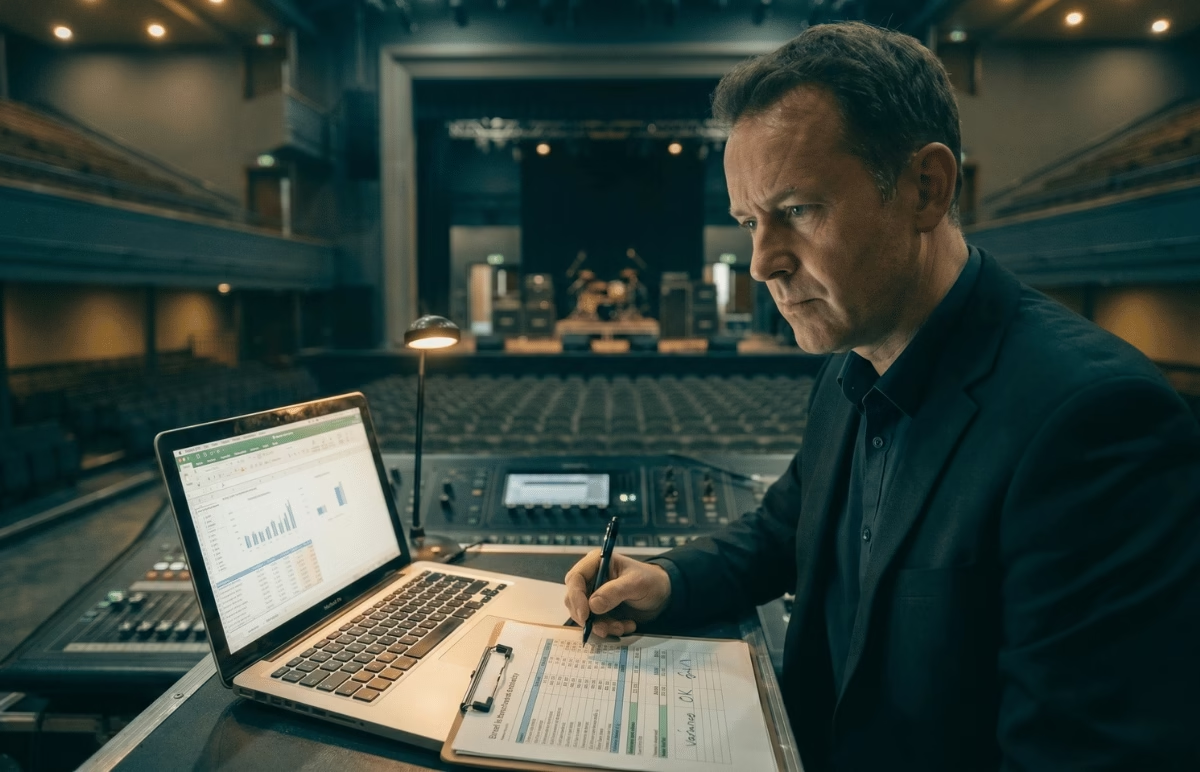 The post-show review actually starts before the show, specifically on how the budget was made before going in. Venues that overbid on artists or underestimate production costs coming in often find themselves in a position where no amount of strong attendance numbers can dig them out of a bad deal.
Keeping a close eye on your budget means accounting for everything, not just the artist fee. That includes production, hospitality, staffing, marketing, ticketing platform fees, and the day-of costs that are always unexpected. According to research on common event planning mistakes, roughly 65% of event organizers exceed their budget, with overruns averaging about 20%, mostly due to last-minute expenses or poor tracking. Beyond just the standard budget, every event should have a contingency fund set aside for the unexpected. Since those overruns average around 20%, a buffer in the 15 to 20% range is a safer target than a thin 5 or 10%, with the upper end reserved for outdoor or production-heavy shows where more can go wrong. The discipline of building the budget line by line in the first place is what lets you sit at the lower end of that range rather than the top. A weather contingency for outdoor shows, a support act or even a replacement artist if the headliner suddenly cancels. Preparing for the worst and hoping for the best is what separates a venue that barely survives versus one that always has a backup plan.
When the post show numbers come in, the first thing you should do is to compare them against your original budget, line by line, not just the total. There is a difference between losing money due to low attendance and due to overpromising from the start. Knowing which situation was involved makes the next decision smarter.
What to do:
- Build every budget with a 15 to 20% contingency before committing to any artist fee, leaning to the higher end for outdoor or production-heavy shows
- Know your break-even number before the on sale goes live
- After every show, compare actual spending against budgeted amount line by line
- Keep a venue level emergency fund separate from your per show budget
2: Safety and Compliance Are Not Optional
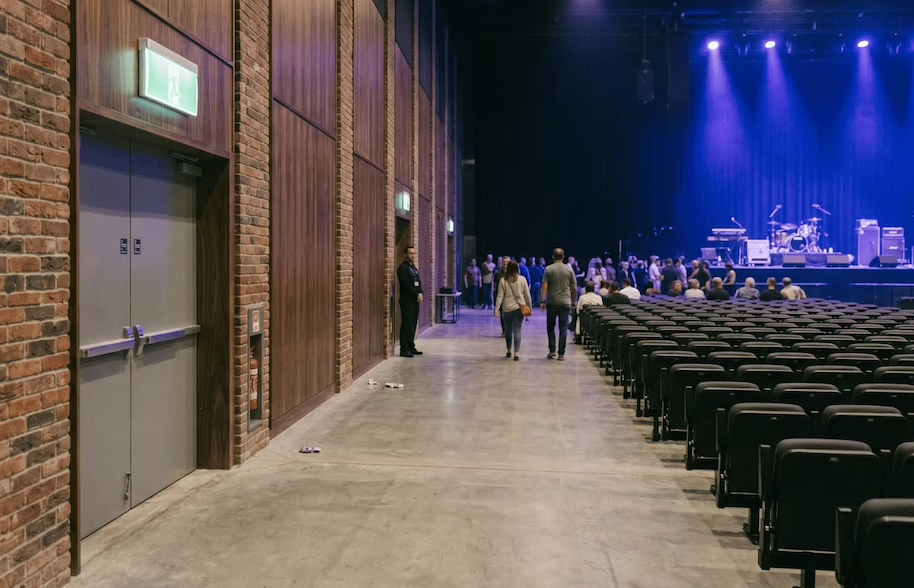 When budgets get tight, safety and compliance are often the first things operators look at cutting. That is one of the most expensive decisions a venue can make. A single incident that results from a compliance shortcut, whether it is an overcrowded room, a security gap, or a liquor service issue, can result in fines, lawsuits, lost permits, and heavy damage to a venue’s reputation.
Venue operators have a legal and ethical duty to care for and protect guests, staff, and performers from preventable harm. That duty does not become less of a priority because the budget is tight. The areas that should never get reduced regardless of budget issues include having licensed and properly staffed security, fire marshal capacity compliance, ADA accessibility, alcohol service protocols, and clearly marked and unobstructed emergency exits. Obeying these local laws and fire codes is not optional and should not be treated as such when money is tight.
Rebuilding a reputation can be significantly harder than one thinks. Venues known for running clean, safe shows have an easier time attracting agents, artists, and repeat fans because industry professionals know how to run a room.
What to do:
- Treat safety and compliance costs as fixed cost; build them in first, then work around them
- Review your compliance checklist before every event, not just once a year
- Document every safety decision made for each show in case it is ever questioned
- Include a safety review as a standing item in every post show debrief
3: Put Yourself in the Customer’s Shoes
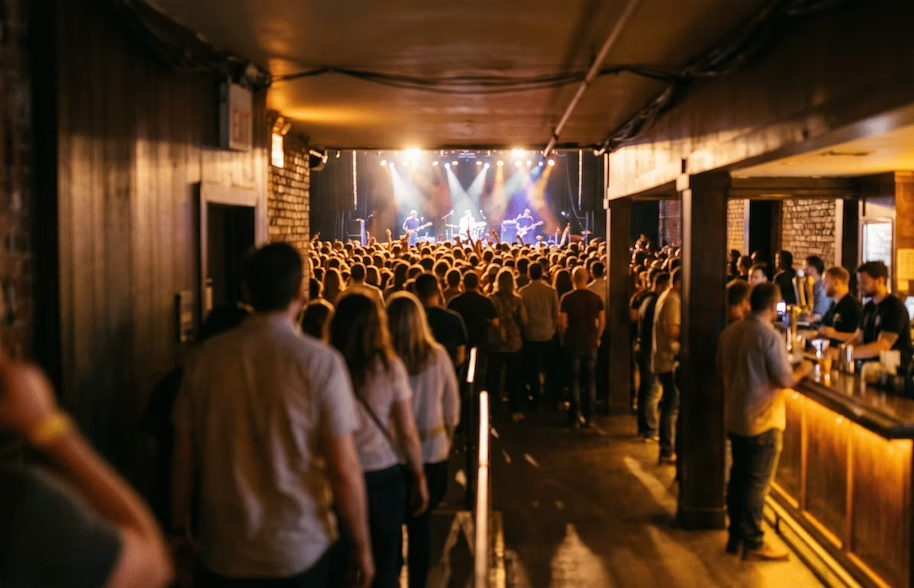 After every show, one of the most important questions to ask is what was it like to be a fan in that room tonight. Fans who have a bad experience do not always complain directly. They just do not come back, and according to Ticket Fairy, repeat attendance is one of the strongest indicators of long-term venue health. Loyalty programs alone can boost revenue when fans feel genuinely connected to the experience.
Putting yourself in the fan’s shoes means evaluating everything from the moment someone buys a ticket to the moment they leave the parking lot. How easy was the purchase process? How long were the entry lines? How did the sound feel from the floor? How long was the wait at the bar? The details that feel small from behind the bar or the production desk are often the ones fans remember most.
A sold-out show doesn’t always mean that it lived up to the customers’ expectations, and that experience directly shapes whether they come back or not. Sometimes just walking around the venue on a show night as if you were an attendee, from the parking to the main floor, is one of the simplest and most effective ways to understand the customer’s perspective.
What to do:
- Walk the venue on show night from the fan’s perspective, not the operator’s
- Identify the three most common pain points in your current experience and address one before the next show
- Track repeat ticket buyers through your ticketing platform. If the number is low, the experience needs work
- Compare your experience against a venue your audience also attends and note what they do differently
4: Listen to Your Audience: Surveys and Community Engagement
 Your own view of the fan experience is valuable, but it is still just one perspective. The only way to really know what fans felt is to just ask them. A post show survey does not need to be long; three to five questions sent within 24 hours after the event can tell you exactly what you need to hear.
Survey responses can reveal some of the most useful information over time because you can start to see patterns across multiple shows. What looks like one person’s opinion after a single show can reveal itself as a pattern across many. The more consistently you collect feedback, the clearer it is about what you need to do in order for you to connect with your audience.
Community engagement goes beyond surveys though. It means treating your audience as part of your venue rather than just ticket buyers. Venues that actively respond to feedback, whether that be on Google Reviews, Instagram comments, or direct messages, are a sign to fans that their experience actually matters. That kind of response builds trust in a way that no marketing campaign can replicate. The feedback and content you gather here also feed the next campaign: our guide to post-event marketing best practices covers how to turn post-show engagement into your next sell-out.
What to do:
- Send a post show survey within 24 hours. Response rates drop significantly after 48 hours.
- Keep it short: overall rating, best part of the night, one thing to improve, likelihood to return, and how they heard about the show are key topics. Multiple choice helps with fast responses, but a fill-in-the-blank option gives those with more to say a place to do it.
- Monitor Google Reviews, Yelp, and Instagram tags after every show and log recurring themes.
- Respond publicly to negative reviews. How you handle criticism is visible to every future attendee who reads it.
- Bring survey data into your weekly team review so it drives actual decisions.
5: Debrief Your Team: While It Is Still Fresh
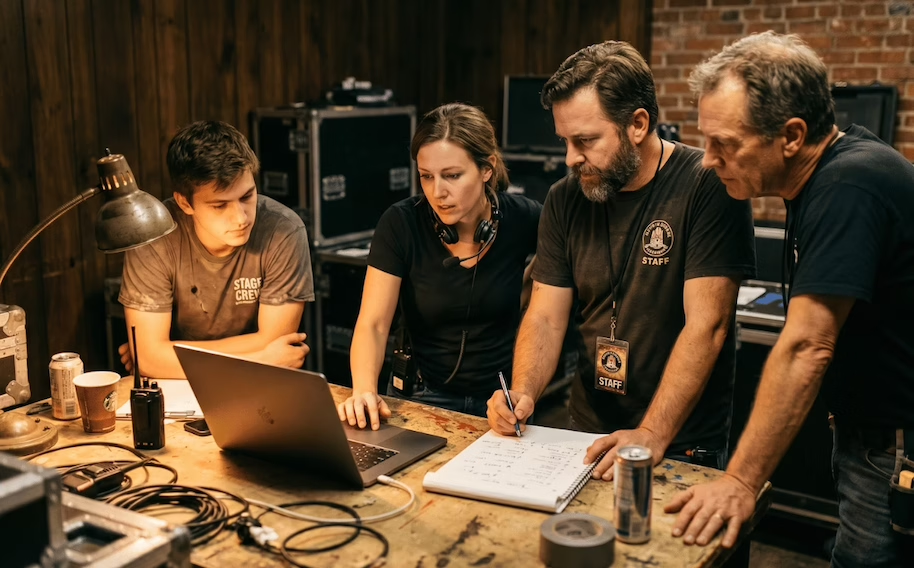 The most valuable post-show conversation your team will have is the one that happens right after the show, either a quick 20 to 30 minute meeting directly after or the next morning, especially if this was a large-scale event. It is important to evaluate how the event was executed before details fade and everyone moves on to the next one.
A good debrief covers five areas:
- Financial execution: did revenue and costs match the budget, and where were the biggest gaps
- Safety and risk management: any incidents, near misses, or compliance issues that need to be documented
- Operations: what ran smoothly and what created friction
- Customer experience: what did floor staff observe that lines up with fan feedback
- One change: the single most important adjustment before the next show
Safety and risk management deserves its own primary moment in every debrief because incidents or near misses are easy to gloss over, but they rarely stay that small if they are ignored.
What This Means
A debrief is only useful if it produces something actionable, the goal is not to rehash what happened but to learn what to prevent or change if something went wrong or if you want to improve something overall.
It is important to keep a record of what was talked about during the debrief and store it alongside the show’s financial information. This creates a record that helps the whole team stay on the same page about what works and what doesn’t.
What to do:
- Schedule the debrief before the show happens: put it on the calendar so it does not get skipped
- Keep it to 30 minutes with a structured agenda: financials, safety, operations, fan experience, one change
- Assign someone to take notes and file them with the show report the same day
- At larger events, run a safety-specific debrief with security leads within two hours of close, then follow up with the full team the next morning
- End every debrief with one clear decision: what changes before the next show
Common Mistakes to Avoid
- Skipping the budget safety net and then having no options when something unexpected comes up
- Treating safety compliance as an option when money is tight, rather than a necessity
- Evaluating the fan experience only from behind the bar or the production desk, rather than walking the room yourself
- Sending a post-show survey three days later; response rates drop sharply after 48 hours
- Running a debrief without a structured agenda
- Documenting the debrief but never connecting it to the next booking or staffing decision
- Treating each show as a standalone event rather than one data point in a longer pattern
Conclusion
The venues that improve consistently are not always the ones with the biggest budgets or the most experienced teams. They are the ones that close the loop after every show, on money, on safety, on the experience, and on what the team saw on the floor.
None of these five habits require expensive equipment or a dedicated tech team to show up. They require discipline, a simple outline, and the commitment to do it after every show. Done consistently, the effect of small improvements made show after show is what makes a venue grow.
Frequently Asked Questions
How soon after a show should we hold the debrief?
While it is still fresh: right after the show or the next morning, before details fade and the team moves on to the next event. For large-scale events, run a safety-specific debrief with your security leads within two hours of close, then follow up with the full team the following morning.
When should we send a post-show survey, and what should it ask?
Send it within 24 hours, since response rates drop sharply after 48 hours. Keep it to three to five questions: overall rating, best part of the night, one thing to improve, likelihood to return, and how they heard about the show. Lean on multiple choice for fast responses, but add one open field for fans who want to say more.
How large should our contingency fund be?
Aim for 15 to 20% of the event budget, set before you commit to an artist fee. Because overruns average roughly 20%, a thinner 5 or 10% buffer tends to get swallowed by the first surprise; the higher end suits outdoor or production-heavy shows, while a disciplined, line-by-line budget lets you sit at the lower end. Keep that contingency separate from a venue-level emergency fund, which sits apart from any single show’s budget and covers larger surprises such as weather cancellations or a headliner pulling out.
Which costs should never be cut when money is tight?
Safety and compliance. That means licensed and properly staffed security, fire marshal capacity limits, ADA accessibility, alcohol service protocols, and clearly marked, unobstructed emergency exits. Treat these as fixed costs, build them in first, and work the rest of the budget around them.
How do we tell whether our fan experience needs work?
Watch your repeat-buyer rate in your ticketing platform, since repeat attendance is one of the clearest signals of venue health. If that number is low, the experience needs attention. Pair it with two free checks: walk the venue on show night as if you were a fan, and log recurring themes from Google Reviews, Yelp, and Instagram after every show.
References
- Budget overrun figure (65% of planners, averaging roughly 20% over budget): qondor.com/blog/the-hidden-costs-of-event-planning
- soncocrowdcontrol.com/blog/event-venue-security
- ticketfairy.com/blog/personalizing-the-venue-experience-in-2026-using-data-to-treat-every-fan-like-a-vip
- meetingtomorrow.com/blog/conduct-better-post-event-debriefs
- tempguru.co/quick-guides/post-event-staffing-debrief
- mtisound.com/crowd-control-services-10-strategies-for-2025-events