
How to Build an Effective Internal Event Communications Strategy
Executive Summary
An effective internal event communications strategy to increase employee attendance focuses on clarity, consistency, and value-driven messaging. Companies that prioritize intentional event communications, simple RSVP tools, and employee-focused messaging consistently outperform organizations relying on last-minute reminders or single announcement emails.
In most cases, attendance problems aren’t caused by scheduling conflicts. They’re caused by communication gaps. Organizations that invest in strategic internal event communications, streamlined RSVP systems, and compelling messaging, supported by experienced corporate event production partners like TSE Entertainment, see measurably higher turnout. Attendance increases even further when internal communications clearly connect the event experience itself, including corporate entertainment and engaging programming, to employee value and cultural impact.
From the first save-the-date to the final post-event recap, every internal communication touchpoint shapes how employees perceive the value of an event. Thoughtful, strategic messaging leads to higher attendance by reinforcing value, reducing uncertainty, and creating consistent communication touchpoints that guide employees toward participation. This article outlines a practical internal event communications strategy designed to improve turnout, strengthen employee engagement, and support stronger internal events across organizations of all sizes.
Why Internal Event Communications Are Critical for Employee Attendance
Employee attendance improves when internal communications answer one simple question: Why should I attend?
Too often, internal events are promoted with calendar invites and logistical details, but there is little explanation of value. When employees do not clearly understand what they will gain, attendance can become optional rather than expected. A strong internal event communications strategy ensures messaging is intentional rather than reactive.
Instead of sending one invitation and hoping for the best, high-performing organizations build event comms in stages. They create anticipation, maintain momentum, and remove friction along the way. When employees receive timely updates, reminders, and context, events feel purposeful rather than last-minute obligations. This is especially true for internal meetings and corporate entertainment events, where employees are more likely to attend when the experience feels engaging rather than obligatory.
This structured approach is especially important for company-wide meetings, leadership summits, internal conferences, and team engagement initiatives where participation is extremely beneficial for everyone. Strong internal comms also helps reduce confusion around schedules, formats, locations, and expectations. When people know what is happening and why it matters, they are far more likely to show up. This is especially true for internal meetings and corporate entertainment events, where employees are more likely to attend when the experience feels engaging rather than obligatory.
Learn more about how TSE can support the entertainment portion of corporate events. TSE’s turn-key service provides seamless production for all event types.
Why Use Save-the-Date Communications
At TSE, we see that “save-the-date” communications play a critical role in corporate events where leadership alignment and early employee buy-in directly impact turnout.
What It Is
 Save-the-date announcements are the first touchpoint employees have with an upcoming event. They not only signal importance but also allow staff to plan their schedules in advance. While often overlooked, this first message sets the tone for everything that follows and is a key element for internal communication.
Why It Works
Early announcements increase attendance by giving employees time to prioritize the event before their calendars fill up. They also create early awareness and interest, especially when paired with visuals, branded templates, or short teasers about what is coming.
A strong save-the-date positions the event as intentional and organized, and it communicates that leadership values attendance and expects participation, rather than treating the event as optional or secondary.
Best Practices
- Use branded, visually engaging templates for email or internal platforms
- Include an RSVP link to capture early interest and intent
- Highlight one or two clear benefits, such as networking, learning opportunities, or team recognition
- Reinforce company values to connect the event with organizational culture
- Tease experiential elements such as keynote moments, interactive segments, or corporate entertainment to spark early interest
- Preview featured corporate entertainment or special guest performers to build excitement
Pitfalls to Avoid
- Sending save-the-dates too late for employees to plan
- Overloading the message with unnecessary details that distract from the main purpose
Save-the-dates should be simple and clear. Their job is not to explain everything, but instead their purpose is to signal importance and get the event on people’s calendars early.
What are Event Comms?
 Event comms are the series of messages sent between the save-the-date and the event itself. These should include reminders, program highlights, logistical updates, and last-minute instructions.
Why It Works
For events that include corporate entertainment or live experiences, clear communication helps set expectations and reinforces why attendance is worth the time investment.
One message is rarely enough, because employees are busy, inboxes are crowded, and priorities are shifted quickly. Strategic repetition builds familiarity and reinforces importance without overwhelming recipients when done thoughtfully.
Well-timed event comms help employees stay informed while continuing to reinforce the value of attending. Instead of repeating the same message, effective event communication evolves over time. Early reminders may focus on why the event matters. Later messages may focus on logistics and what to expect on the day itself.
Effective Event Comms Include:
- Reminder emails sent at logical intervals
- Clear updates about speakers, programming, entertainment, or experiences
- Simple explanations of what attendees will gain
- Messaging tailored for in-person, remote, or hybrid audiences
Best Practices
- Use consistent subject lines so messages are recognizable in inboxes
- Highlight one key benefit per message instead of listing everything
- Coordinate messaging across email, intranet, and internal platforms
What to Avoid
- Overloading employees with repetitive reminders that add no new value
- Assuming one announcement is enough to drive attendance
Strong event comms should be helpful, not intrusive. When done well, they create momentum leading up to the event.
What are RSVP Tools: Turning Interest into Commitment
 RSVP tools allow employees to formally register for an event and give organizers visibility into expected turnout. While simple in concept, they play a critical role in attendance strategy.
Why It Works
RSVP tools reduce friction and create accountability. When employees actively confirm attendance, they are more likely to follow through. Registration also creates a small psychological commitment that makes attendance feel intentional rather than passive.
For organizers, RSVP data improves planning accuracy for space, staffing, catering, seating, and programming. It allows teams to adjust resources ahead of time rather than reacting on event day.
Best Practices
- Use simple, mobile-friendly RSVP tools
- Send confirmation messages immediately after registration
- Follow up with reminders tied to RSVP status
- Track response trends to adjust messaging if needed
Common Pitfalls
- Using complicated or multi-step registration systems
- Failing to follow up with employees who have not responded
The goal of RSVP tools is to remove barriers to participation while giving planners clear insight into engagement levels.
What are Post-Event Recap Communications?
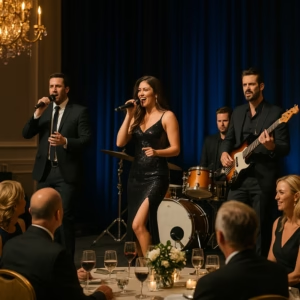 Post-event recaps summarize what happened, highlight outcomes, and reinforce the value of participation. While often treated as optional, recaps are one of the most powerful engagement tools available. Highlighting moments of connection, including standout corporate entertainment performances, reinforces the emotional impact of the event and increases interest in future programming
Why It Works
Recap communications help employees feel included, even if they were unable to attend. They also reinforce why attending matters and create positive momentum for future events.
When employees see highlights, photos, key takeaways, and recognition shared publicly, it validates the time they invested and encourages others to participate next time.
Highlighting moments of connection, including standout corporate entertainment, reinforces the emotional impact of the event and increases interest in future programming.
Effective Recaps Include
- Photos or short videos from the event
- Key takeaways or highlights
- Recognition of speakers, teams, or contributors
- Links to recordings or additional resources
Best Practices
- Send recaps promptly while the event is still fresh
- Focus on outcomes, not just attendance numbers
- Tie the event back to company goals or culture
What to Avoid
- Generic recaps that feel like an afterthought
- Ignoring employee feedback or engagement opportunities
Strong post-event communication closes the loop and helps transform one successful event into long-term engagement.
Key Takeaways
High attendance does not happen by accident. It is the result of intentional internal communications that treat employees like participants, not just recipients of information. When internal communications align messaging, RSVP tools, and thoughtfully produced experiences, including entertainment for corporate events, attendance becomes a predictable outcome, not a guessing game.
When organizations align save-the-dates, event comms, RSVP tools, and post-event recaps into one cohesive strategy, attendance becomes more predictable and engagement more meaningful. The goal is not just to get people in the room. It is to build trust, strengthen culture, and make events feel worthwhile.
Companies that take this approach seriously are not just improving turnout. They are creating stronger internal experiences that employees actually want to be part of.
Partner with TSE Entertainment for Higher Event Attendance
At TSE Entertainment, we help organizations transform internal events through strategic corporate entertainment booking and comprehensive event production support. Our internal event communications expertise ensures your events drive meaningful employee attendance and engagement.
Ready to increase your event attendance? Contact TSE Entertainment to discuss how professional corporate entertainment and strategic event planning can transform your next corporate event. You can also call us at 1-800-765-8203.
Explore TSE’s Corporate Entertainment Talent Booking Services
FAQ: Internal Comms That Drive Attendance
Why does internal comms affect attendance so much?
Employees attend events when they understand the value and receive clear, consistent information. Strong communication reduces uncertainty and helps employees recognize the purpose behind attending.
Internal communications also shape perceptions. When events are promoted early and consistently, they are viewed as intentional and important. When communication is rushed or unclear, attendance often declines. Over time, strong internal messaging helps create a culture where participation in internal events becomes expected rather than optional.
How many messages should an event include?
Most events benefit from a save-the-date, two to three reminder messages, and a post-event recap. This cadence gives employees multiple opportunities to see the event without overwhelming inboxes.
The save-the-date secures calendar space, reminder emails maintain momentum, and the recap reinforces value. The exact number may vary depending on the size and scope of the event, but consistency matters more than volume.
What role do RSVP tools play?
RSVP tools convert interest into commitment and provide planners with reliable attendance data. When employees register, follow-through rates increase.
From a planning perspective, RSVPs improve decisions around space, catering, staffing, and event flow. They also allow organizers to identify low response rates early and adjust communications if needed.
Are post-event recaps really necessary?
Yes. Recaps reinforce the value of the event, recognize participation, and support stronger engagement for future events.
They also extend the impact of the experience by sharing highlights and takeaways with employees who could not attend, which helps maintain momentum across internal programming.
For trends shaping high-performing corporate events, explore Forbes Events Trends:
Related Posts:
Why Event Planners Choose TSE for Entertainment for Corporate Events
