

The secret isn’t a bigger budget. It’s smarter programming and the right entertainment on the ground.
Executive Summary
A family entertainment event with low turnout is one of the most avoidable problems in live event planning. The venue gets booked, the catering gets ordered, and the marketing goes out and yet families arrive late, leave early, or skip the event entirely. In most cases, the issue isn’t logistics. It’s programming.
Families today have endless options competing for their time. A few bounce houses and background music rarely give them a compelling reason to plan their day around your event. What does drive attendance is thoughtfully chosen family event entertainment, i.e., attractions and performances that create anticipation before the event and memorable moments during it.
Successful events are usually built around what we call an attendance anchor: one headline experience strong enough to motivate families to show up and stay. Around that anchor, event planners layer additional programming that keeps the grounds active and engaging throughout the day.
In this guide, we’ll explore the programming framework that helps family events succeed, along with family event entertainment ideas that work especially well for festivals, fairs, and community gatherings. We’ll also look at how partnerships can help fund better entertainment and highlight formats, including drone shows, specialty acts, and feature attractions that consistently capture attention and keep families on site longer.
For more than five decades, TSE Entertainment has helped fairs, festivals, and venues book the kinds of acts that turn ordinary events into experiences families remember. This guide brings together many of the programming principles that make those events work.
Why Most Family Events Underperform
Most family events fail programming long before they fail logistics. An announcement goes out; a flyer gets posted, and families mentally file it under “maybe.” That’s not a scheduling problem. It’s a programming problem.
According to research covered by BizBash, the gap between what organizers think audiences want and what audiences want has widened significantly in recent years. Families aren’t showing up for a generic bounce house and background music. They show up when there’s something worth planning around, something they can’t replicate on a free Saturday afternoon.
The planners who recognize this are producing events with strong word-of-mouth and growing attendance year over year. The ones who miss it are wondering why half their catering went untouched.
Build the Day Around an Attendance Anchor Strategy
The most important concept in family entertainment programming is the attendance anchor. It’s one specific experience so compelling that families plan their arrival around it. Think of it the way a theme park thinks about its headline attraction. Everything else on the grounds has value, but people come for the thing they can’t miss.
For example, drone shows have become one of the most reliable anchors in family entertainment programming. A coordinated light show lasting eight to twelve minutes generates anticipation before it begins, and social media content that outlasts the event itself. Families who weren’t even invited see the footage online. Your family festival entertainment becomes a community moment, not just a ticketed afternoon.
The anchor is what families tell their neighbors about on the drive home. Plan it first and build everything else around it. Once you understand the role of the attendance anchor, the next step is choosing the right mix of family event entertainment to support it. The most successful festivals and family days use several types of family entertainment attractions to keep guests engaged throughout the event.
 Family Event Entertainment Ideas That Increase Attendance
 Family Event Entertainment Ideas That Increase Attendance
If you’re building a family day event, the goal is not just activities. It’s experiences that families plan around and talk about afterward. These entertainment formats consistently draw crowds and keep guests on site longer.
- Drone Shows
Drone shows have become one of the strongest attendance anchors for community events and festivals. A coordinated aerial light show creates anticipation before the event and generates shareable moments on social media.
- Specialty Acts
High-energy specialty performers such as stunt teams, magicians, high-wire acts, and interactive performers create gathering points across the event grounds. These moments of live spectacle naturally pull in crowds and keep families engaged.
- Interactive Activity Zones
Obstacle courses, climbing walls, carnival-style games, and skill challenges give kids something to do between performances. When these zones are spaced around the grounds, they encourage movement and exploration.
- Strolling Entertainment
Roving performers such as jugglers, costumed characters, street performers, and balloon artists add energy throughout the event without requiring families to commit to a scheduled show.
- Arena Attractions
Arena attractions are larger scheduled performances such as stunt shows, thrill acts, or large-scale demonstrations that take place in a central show area and gather a crowd at specific times during the event. Large-scale attractions such as stunt shows, BMX demonstrations, or animal exhibitions create scheduled moments that bring guests together and build excitement throughout the day.
The best family events combine several of these formats and build the entire schedule around one major attendance anchor.
A Real Example of Festival Entertainment for Families
 A great example of the impact of such attractions was a regional Texas festival produced by TSE for a parks and recreation department. TSE added a 30-minute circus show between the music performances and other attractions at the event. It included aerial acts, stunt performers, and a human cannon along with other acts. We scheduled the show twice during the festival; once in the afternoon, and a different version of the show right before the main music headliner which was closing the event. We gave the circus show its own space and stage next the to main stage.
That allowed small children to see the show during the afternoon as well as being a great event for the nighttime crowd and older kids. We even scheduled it during the changeover from the opener to the headliner, so it was nonstop entertainment with the audience not needing to move to see both shows.
The results were fantastic. Kids and their parents were enthralled by the circus acts. Promoting it ahead of the event brought many more families and total attendance was up over forty percent from the prior year without the thrill show. The audience’s feedback was that adding the circus shows took the community festival which had music entertainment to a whole new level. Needless to say, the parks and recreation department asked TSE to book such acts for future festivals.
Layer the Programming So Families Stay
Once you’ve identified your anchor, the goal is enough programming depth that families stay for two, three, or even four hours. Layered programming is what separates a good event from a great one.
Think of it in three tiers. First is your anchor: the drone show, a headline specialty act, or a high-energy arena attraction that serves as the day’s signature moment. The second tier is active engagement: obstacle courses, carnival games, strolling performers, and interactive zones that create movement across the whole ground. Finally, the third is passive comfort: food, shade, seating, and a social environment where adults can relax while kids are nearby.
Kids drive the second tier. Parents live in the third tier, and everyone shows up for first. When all three tiers work together, you stop losing families at the ninety-minute mark and start seeing them stay through the anchor moment, which should always be scheduled toward the end of the event to maximize attendance throughout.
Why Specialty Acts Outperform Generic Entertainment
A DJ and a bouncy castle will bring people in. A world-class juggler working the crowd, a stunt act that stops people mid-step, or a roving costumed character experience will create the kind of shared moments families talk about for weeks.
TSE’s specialty acts range from arena-level magicians to motorcycle stunt teams and high-wire thrill shows, along with costumed performers who can turn a fairground into something that resembles a real event. What separates a specialty act from a generic entertainer usually isn’t the price. It’s the specificity. The right act is clearly chosen for that audience, not just pulled from a long vendor list.
Acts that truly capture kids’ attention are especially valuable. When a child is completely focused on a close-up magician or a circus performer, the parent standing or sitting with them naturally leans in too. Suddenly it’s not just something to occupy the kids. It becomes a shared moment, which is really the whole point of family entertainment in the first place. TSE has witnessed this experience first hand at its event.
Drone Shows: The Anchor That Markets the Event for You
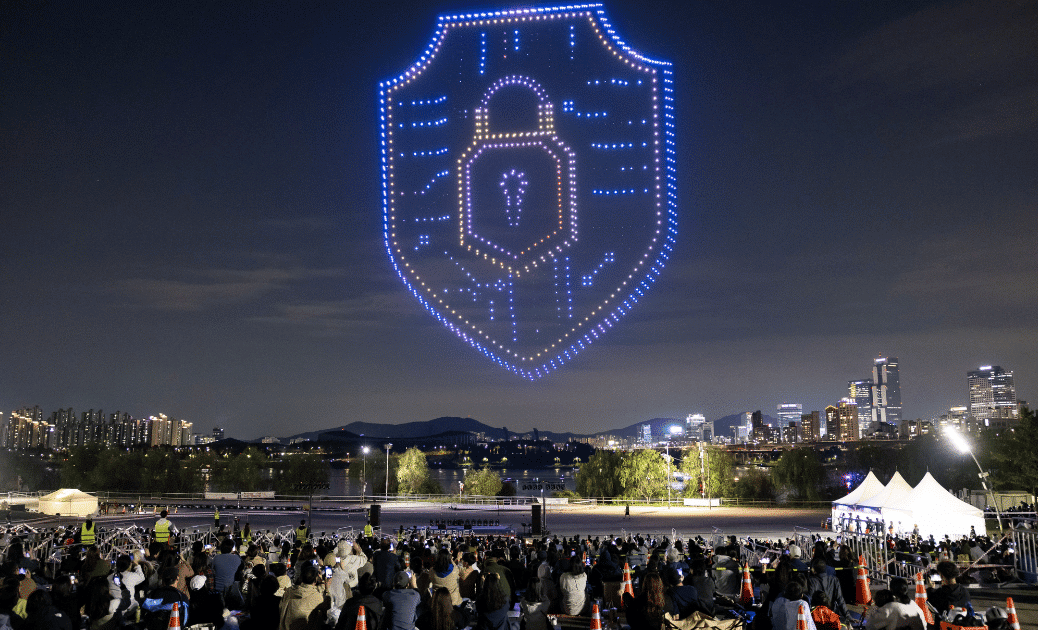 If you’re producing a family day in the next twelve months and haven’t seriously considered a drone show, it deserves a closer look. What was once reserved for major brand activations is now accessible for county fairs, community festivals, and mid-size venue productions.
A drone show works for every age simultaneously. A five-year-old and a grandparent will both stop mid-conversation when the drones start moving. It photographs beautifully, which allows attendees to become your marketing team in real time, by posting and sharing footage that extends your event’s reach well beyond the gate and could increase attendance for the next year.
Drone shows come with a few logistical realities. They need to open outdoor space, an evening performance, coordination with the FAA, and enough lead time to plan the technical side properly. Not every venue can support a flight zone, especially in dense areas or locations with airspace restrictions. That’s why it helps to talk with an experienced booking or production team early in the planning process. They can help you understand what’s realistic for your location, date, and budget before you commit to something that might not work. Having that conversation early can save time, avoid last-minute changes, and make sure the show is set up to run safely and smoothly.
For daytime, consider circus acts as an option to separate your family entertainment programming from other community events.
Partnerships: Fund Better Programming Without Stretching the Budget
One of the most underused strategies in family event planning is the local sponsorship partnership. Food and beverage brands, regional retailers, children’s services companies, and local credit unions are all realistic partners for a well-attended family day. In exchange for a branded activity zone or a named entertainment moment, a sponsoring partner might offset twenty to forty percent of your entertainment costs. That’s the difference between booking a bounce house and booking a drone or circus show.
Start those conversations eight to twelve months out and offer something specific. Sponsors close much more easily when you say, “you’ll own the obstacle course zone with signage and a branded giveaway moment” versus “your logo will appear on our event materials.” Specificity closes deals.
Common Pitfalls to Avoid
The biggest programming mistake is scheduling the anchor too early. When the anchor show happens at noon, families who arrive at 1pm miss it entirely, and the energy of the grounds drops for the rest of the day. Schedule your anchor for the final hour and tease it in every pre-event communication.
The second mistake is designing only for young children. A family event that ignores teenagers and older attendees loses a significant portion of its audience. Acts and attractions that work across age ranges are always your safest investment. As shown in our example, timing may also be necessary when dealing with toddlers and young children.
On the partnership side: don’t wait too long. Sponsors work on marketing calendars, and an outreach call eight weeks out almost never lands.
Conclusion
A Family Day that draws a real crowd usually is not the result of luck. It comes down to how the event is programmed. You need something strong enough to give people a reason to show up in the first place, along with enough going on throughout the day to keep families from leaving early. When specialty acts are mixed in thoughtfully, they create the moments people talk about later, whether it is the stunt everyone gathered around, the magician who pulled in a crowd, or the performance that made people stop and watch together. Those are the details that turn a simple event into something families remember.
TSE Entertainment has been helping fairs, festivals, and venues book entertainment that delivers since 1975. Whether you’re looking at a drone or circus show as your anchor, specialty acts for ground-level engagement, or a full entertainment build-out, TSE’s booking team is ready to help. Tell us your date, your audience, and your goals, and we’ll take it from there.
Frequently Asked Questions
How far in advance should we book entertainment for a family day event? Most headline entertainment should be booked six to twelve months in advance. Drone shows require FAA coordination and custom animation development, so earlier is always better. TSE can work within tighter timelines, but starting early gives you more options at better rates.
What is the ideal schedule structure for maximizing attendance? Start with a soft open to welcome early arrivals: food, casual games, strolling performers. Build into arena attractions and specialty act performances through the middle of the day. Schedule your anchor in the final sixty to ninety minutes. This rewards families who arrive on time and gives late arrivals a reason to stay.
Are drone shows only after dark? Drone shows are most visually impactful at dusk or after dark. If your event runs in the evening, a sunset or post-sunset show is the strongest option. Many events are replacing fireworks with drone shows as they experience more dry spells and want to minimize the risk of fires.
Where can I find more family event programming inspiration? BizBash is one of the best resources in the industry for programming ideas, experiential trends, and case studies across live events of all sizes. Worth bookmarking for any event planner working in family entertainment.
