
7 Short-Form Video Formats That Move the Needle
Executive Summary
Short-form video is the bread and butter for promoting concerts and events. It has become one of the most reliable ways to promote a show. The core problem: most event accounts are still posting the same flyers, graphics, and captions while wondering why their posts underperform.
Instagram and TikTok both reward accounts that keep viewers engaged and hooked. The algorithm does not care how good your graphics are. It cares about viewer duration and video interaction. You do not need a production team or an insane budget to make this work. What you need is a consistent approach to how you shoot and structure content around your shows.
The whole idea is to get people to stop scrolling and watch your video. This guide breaks down seven short-form video formats that will create engagement online and drive ticket sales in person.
Why Short-Form Video Actually Matters for Shows
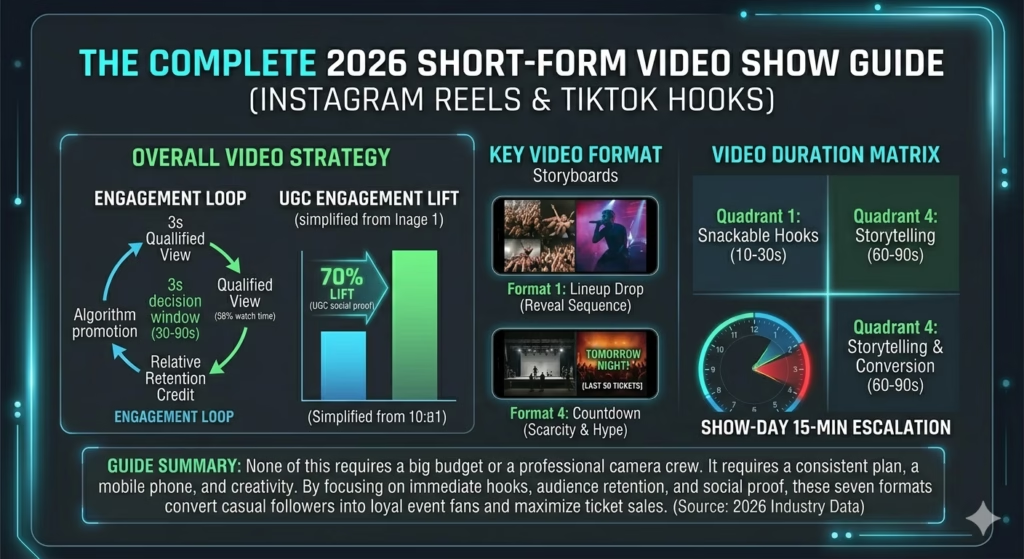
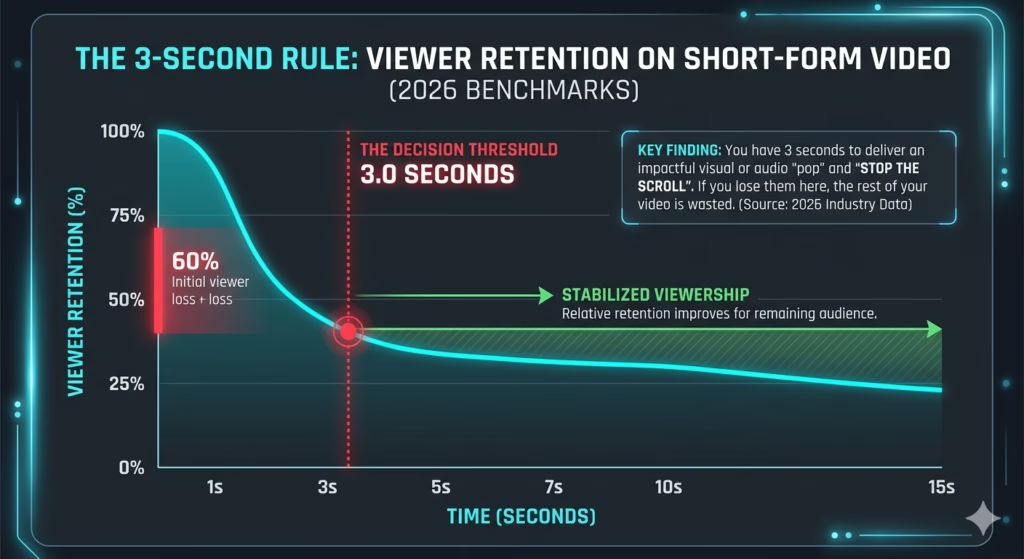
The industry-standard decision window is 3 seconds, known as the “Window of Truth.” Both Instagram and TikTok use the 3-second mark to define a qualified view for their algorithms, meaning your content only registers as a legitimate view once a user clears that threshold.
Creators who build a hook into the first 3 seconds report a 58% increase in average video watch time. That is just enough room for your hook, and your hook is everything.
The hook must deliver an immediate visual or auditory “pop”: a sharp cut, a direct question, motion, or a moment of tension. A title card or slow intro will not survive this window in the current competitive landscape.
| 3 Seconds
Window of Truth |
+58%
Watch Time (hooked content) |
#1
Watch Time: Instagram Ranking Factor |
The 7 Short-Form Formats
Format 1: The Lineup Announcement Drop
What It Is
A lineup announcement done differently: a short video that builds anticipation rather than simply presenting a name and date.
Why It Works
The lineup drop is one of the most anticipated posts an event account can publish. When followers see an artist they love, they comment, tag, share, and like. As engagement grows, the algorithm pushes your content to new audiences. Fan tags create a chain reaction of potential attendees.
How to Do It
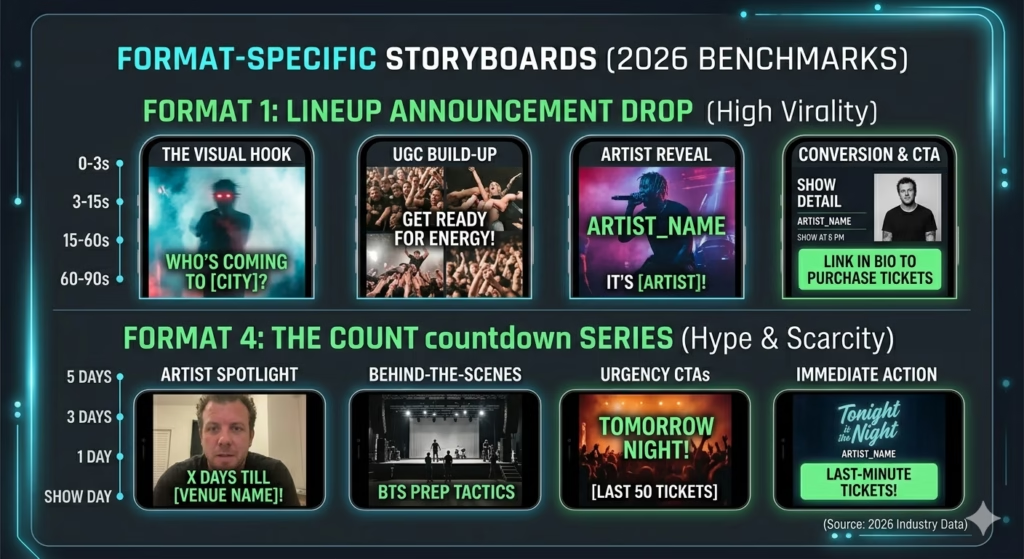
Keep the video under 20 seconds. Open with a question: “Guess who’s coming to [City] this [Month]?” Then reveal the artist in the final seconds. Use the artist’s most popular song in the background and include a link for ticket purchase. Direct viewers with “Link in Bio to Purchase Tickets.”
Optimal length: 10–20 seconds (high virality / reach tier).
Format 2: The Countdown Series
What It Is
A series of posts in the days leading up to the show, each counting down to showtime and giving followers an eager reminder of what’s coming.
Why It Works
Sequential countdown posts create a compounding sense of urgency. Seeing “2 days left” followed by “Last 50 tickets” followed by “Tomorrow Night!” compels action from fence-sitters. This is one of the most effective marketing tactics available for show promotion.
How to Do It
Suggested framework:
- Day 5: Artist Spotlight clip (who’s coming)
- Day 3: Behind-the-scenes teaser / rehearsal clip (what to expect)
- Day 1: Urgency post (“Last 50 tickets” or “Tomorrow Night!”)
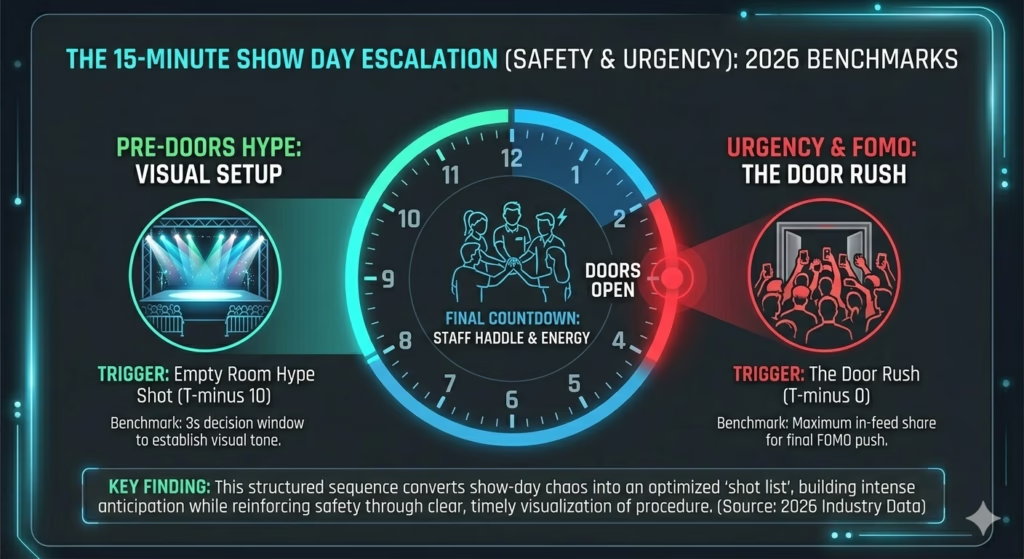
- Day of: BTS / Doors content (peak anticipation)
Include “Tickets in Bio” in the caption of every post. Pair countdown language with a genuine scarcity signal (remaining ticket count) whenever possible.
 Optimal length per post: 10–20 seconds.
Format 3: Behind the Scenes on Show Day
What It Is
Raw behind-the-scenes footage captured before doors open: soundcheck, stage setup, catering, backstage hallways, crew running cables.
Why It Works
BTS content lets viewers peek behind the curtain and see what most people never get to see. That curiosity keeps them watching. It also makes your venue feel personal rather than transactional.
How to Do It
Post on the day of the show as anticipation builds. A 15–30 second clip of the stage lighting up with the artist’s music in the background and a caption reading “Doors in 3 hours” performs consistently well. The before-and-after format (crew setting up, then cutting to the same angle with a packed house) is a proven classic.
Optimal length: 30–60 seconds (storytelling / BTS tier).
Format 4: The Artist Spotlight Clip
What It Is
A short video introducing the artist or band to your online audience, filmed by the artist specifically for your page or captured at soundcheck.
Why It Works
It makes the viewer feel like the artist is speaking directly to them and their city. This drives saves and interaction, and creates anticipation in the days before the show.
How to Do It
Ask the artist or their team for a 5–10 second direct-to-camera clip: “Hope to see you tonight at [Venue] on [Date].” City-specific language (“Austin, we’re coming”) outperforms generic phrasing. If a personal clip is unavailable, a soundcheck clip with name and date overlaid is a solid fallback.
Optimal length: 5–10 seconds (short / reach tier).
Format 5: Live Crowd Moments
What It Is
Clips filmed during the show of crowd reactions, singing, dancing, stage diving, and anything that captures the energy of being in the room.
Why It Works
This format gives attendees a free shareable video and shows those who missed the show exactly what they passed up. People who couldn’t make it become your most motivated audience for the next one. Post during or immediately after the event, when attention on the artist is at its highest.
How to Do It
Designate one team member to capture content throughout the show; someone without other operational duties. Collect as many crowd reaction clips as possible, then cut them into a 30–50 second montage. You should have enough footage for one or two posts the same night, with additional content to carry posting cadence over the following days.
Optimal length: 30–60 seconds (storytelling / engagement tier).
Format 6: Fan-Created Content Reposts
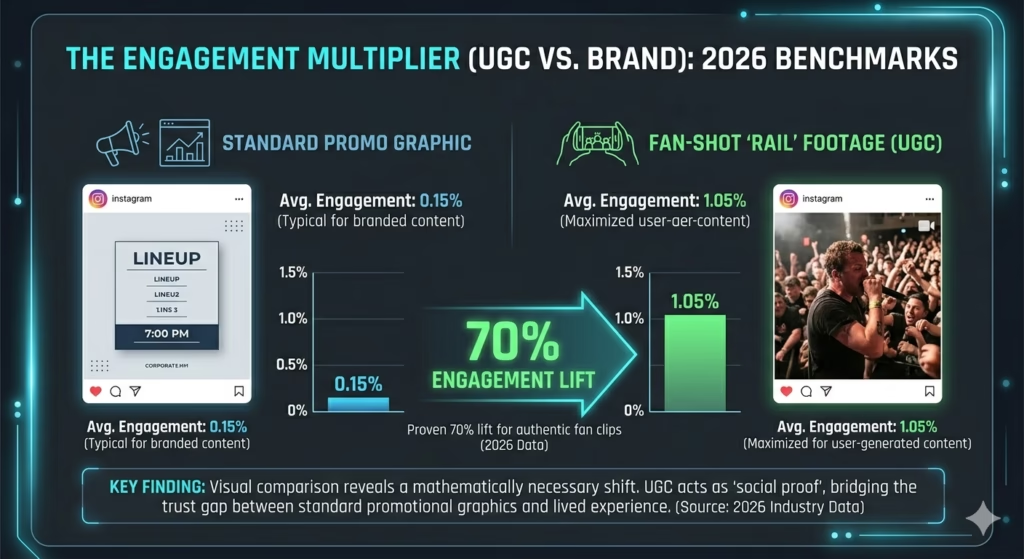
What It Is
Reposting videos and clips that attendees film and share on social media. This is user-generated content (UGC), and it is one of the most powerful tools at your disposal.
Why It Works:
Instagram posts featuring UGC now earn up to 70% more engagement than brand-only content. The downstream effects extend further:
- Trust: 80% of consumers trust UGC more than traditional ads because it reflects lived experience rather than scripted marketing.
- Conversion: Social posts featuring UGC can drive over 10x higher conversion rates compared to brand-created content.
- The Loyalty Loop: 64% of customers are more likely to share content about a brand again if their original post was featured. Reposting fan content generates repeat contributors, not just impressions.
How to Do It
Create a dedicated hashtag for the show and promote it before, during, and after the event: include it on the ticket confirmation email, the event page, your account’s Stories on show day, and on signage at the venue entrance. Repost your favorite clips with the attendee’s account credited. Comment with energy: “Thanks for rockin’ with us tonight. Great video!” Getting reposted by the venue account carries real social currency for fans; it is an incentive that compounds with every show.
Format 7: The “You Had to Be There” Recap
What It Is
A short highlight video posted one to two days after the show, showcasing favorite moments (crowd shots, best song performances) assembled into a 30–60 second package.
Why It Works
The recap serves three purposes beyond the event itself:
- Attendance gratitude: People who were there get a shareable memory that extends your reach through their networks.
- FOMO for future events: People who missed the show see what they passed up and become your most motivated audience for the next one.
- Page health: Consistent posting between shows prevents algorithmic dormancy. Accounts that go silent lose distribution when they resume posting.
How to Do It
Use leftover footage, or ask the artist’s team for clips from their perspective. CapCut and InShot are both more than capable of assembling a 30–60 second montage. Lay the artist’s music underneath. Include a teaser for your next upcoming show at the end of the video so viewers know when to come back.
Optimal length: 30–60 seconds (storytelling / engagement tier).
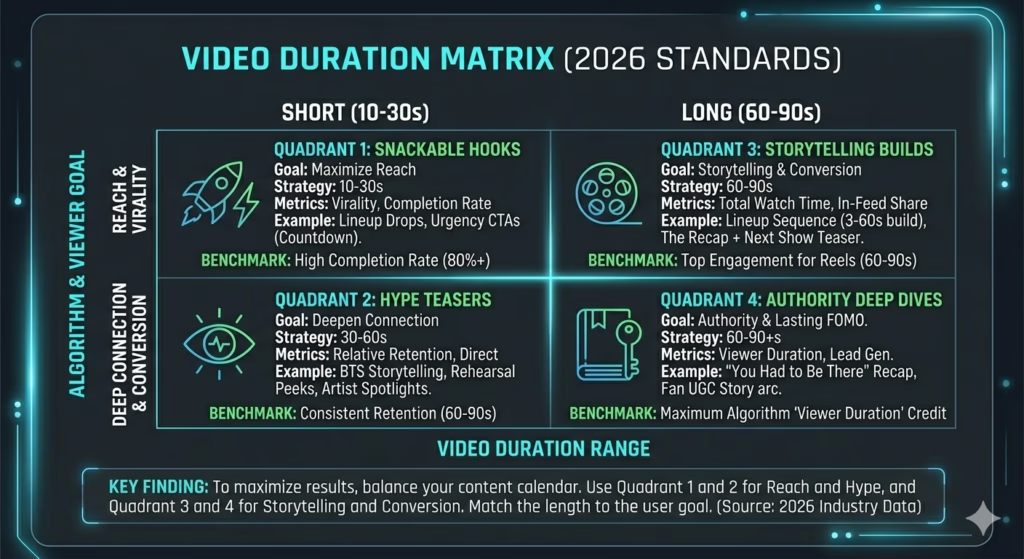
2026 Optimal Video Length Framework
The current short-form landscape has stratified into three distinct length tiers, each serving a different objective. Balance your content calendar across all three for maximum impact.
| Length | Objective | Best Formats |
| 10–20 seconds | High Virality / Reach | Lineup drops, artist spotlight, trend hooks, quick crowd moments |
| 30–60 seconds | Storytelling / Engagement | BTS show day, crowd montages, countdown recaps, fan reposts |
| 60–90+ seconds | Conversion / Authority | Event recaps, deep-dive storytelling, educational content (Instagram rewards relative retention at this length; TikTok normalizing 60–180s) |
| Expert Tip
Balance your content calendar with snackable 15-second hooks for reach and 60–90 second storytelling pieces for conversion. The lineup drop and artist spotlight belong in the short tier. The countdown series, BTS content, and recap belong in the mid and long tiers. Running both ensures the algorithm serves you to new audiences and converts them into buyers. |
Platform Strategy: Instagram vs. TikTok
The content strategy in this guide works on both platforms. Understanding how they differ allows you to deploy each format in the right context.
| Factor | Instagram Reels | TikTok |
| Avg. Engagement Rate | 0.48% (broader audience) | 3.70% (higher per-post engagement) |
| Watermark Policy | Deprioritizes TikTok-watermarked content | No penalty for CapCut native exports |
| Ticket Links | Link in bio only (no caption links) | Caption links available above follower threshold; Eventbrite integration available |
| Algorithm Priority | Watch time + DM shares (Mosseri, Jan 2025) | Completion rate + rewatch + shares |
Conclusion
None of this requires a big budget or a professional camera crew. It requires having fun and being creative with what you post. A phone and a plan are all you need.
These seven formats work because they are curated to your shows and your environment. People on social media want to be entertained, and your videos not only deliver that but give them the opportunity to feel the same way by buying a ticket and experiencing it themselves. They watch because they want to feel something. They want to feel like they were there.
When your content does that, it is doing something special. Use it. Implementing these strategies turns your followers into fans.
FREQUENTLY ASKED QUESTIONS
01 THE FUNDAMENTALS
Why does short-form video outperform static graphics for show promotion?
Both Instagram and TikTok algorithms rank content on watch time and viewer engagement, not aesthetic quality. A well-designed flyer earns no algorithmic credit. Video generates a measurable retention signal both platforms use to decide how many additional users to show your content.
Instagram confirmed in January 2025 that watch time is its #1 ranking factor for Reels distribution. TikTok operates similarly: high completion and share rates from an initial test audience trigger automatic distribution widening. Static posts cannot compete for that pathway.
Do you need a production budget or professional camera?
No. TikTok’s algorithm evaluates engagement signals, not production value. Authenticity and viewer retention consistently outperform polished branded content on both platforms. A phone-shot backstage clip that holds attention for 20 seconds will outperform a professionally edited announcement that viewers skip in 2.
What you need is a plan (which format to use and when), a hook (the first 3 seconds), and consistency (posting across the event lifecycle, not just once).
02 THE 7 FORMATS: EXPLAINED
Format 1: What makes the Lineup Announcement Drop different from a standard post?
A standard announcement posts the artist name and date. The Lineup Drop withholds that information briefly, opening with a question like “Guess who’s coming to Austin this June?” The delay creates a curiosity gap that keeps the viewer watching until the reveal, generating completion rate data that the algorithm treats as a positive signal.
Keep these under 20 seconds, use the artist’s most popular song as background audio, and direct viewers to a link-in-bio for tickets.
Format 3: When exactly should BTS content be posted?
Post on the day of the show as anticipation is building. Attention for a specific artist peaks in the hours before showtime. A “Doors in 3 Hours” post rides that peak; the same post the week before lands in a cold audience with no urgency.
The before/after cut (empty stage, then same angle with a packed house) is a proven format because the visual contrast itself is the hook. No narration required.
Format 4: Does an Artist Spotlight clip need to be long to be effective?
No. Keep it to 5–10 seconds. A clip of the artist saying “See you tonight at [Venue]” is short enough to watch to completion, personal enough to generate shares, and specific enough to convert followers into ticket buyers.
City-specific language (“Austin, we’re coming”) outperforms generic content. If a personal clip is unavailable, a soundcheck clip with name and show date overlaid is a solid fallback.
Format 2: How far in advance should a Countdown Series start?
Day 5: Artist Spotlight clip. Day 3: Teaser or rehearsal clip. Day 1: Urgency post (“Last 50 tickets” or “Tomorrow Night!”). Day of: BTS / Doors content.
Include “Tickets in Bio” in every caption. Pair countdown language with a genuine scarcity signal such as remaining ticket count whenever possible.
Format 5: When should Live Crowd Moments be posted?
Post during or immediately after the event, when attention on the artist is at its highest. Real-time and same-night posts capitalize on two simultaneous audiences: people still at the show sharing to their networks, and followers watching coverage from home.
Designate one person without other operational duties to capture content throughout the show. A 30–50 second montage is enough for one or two same-night posts. Save remaining footage for the following days.
Format 7: Why post a recap if the show is already over?
Three reasons: (1) Attendance gratitude: attendees get a shareable memory that extends your reach. (2) FOMO: people who missed the show become your most motivated audience for the next one. (3) Page health: accounts that go silent between events lose distribution when they resume posting.
Include a teaser for your next upcoming show at the end of the recap video so viewers know exactly when to come back.
03 PLATFORM & ALGORITHM
Should I post the same video on both Instagram and TikTok?
Use the same raw footage, but do not cross-post with a watermark. Instagram explicitly deprioritizes TikTok-watermarked Reels. Edit natively on each platform or export from CapCut/InShot without platform branding.
TikTok delivers a higher average engagement rate (3.70% vs. Instagram’s 0.48% per 2026 benchmark data) but Instagram Reels reach a significantly broader audience by raw numbers. Running both is the correct strategy for event promotion.
Does using popular music in the background actually help reach?
Yes, on both platforms. Trending audio attaches your content to discovery streams outside your follower base. For show promotion, using the headline artist’s most popular song also targets fans by taste: people with that song in their listening history are more likely to be served your content as a recommendation.
On Instagram, content using TikTok-watermarked audio may be deprioritized. Use the native audio library or clean exports.
How important are hashtags?
Hashtags matter less than they did in 2020–2022. Both platforms now rely primarily on content-based signals (watch time, completion rate, shares) rather than keyword tagging. Hashtags can help attach content to niche communities but are not a substitute for engagement fundamentals.
The exception is the event-specific hashtag for UGC. That hashtag is a collection mechanism, not an algorithmic tool. Promote it on ticket confirmation emails, day-of Stories, and venue signage so your team can find and repost fan clips.
04 EXECUTION & IMPLEMENTATION
What editing apps does the guide recommend and are they sufficient?
CapCut and InShot are both legitimate and widely used at every scale. CapCut in particular offers auto-caption generation, beat-sync, and templates that significantly reduce editing time.
Export from CapCut without the CapCut watermark before posting to Instagram. The watermark option can be toggled off in export settings. TikTok’s native CapCut integration does not carry this penalty.
How many people does it take to execute this at a real show?
Minimum: one dedicated person with a smartphone. In practice: one person pre-show (BTS during load-in and soundcheck, posts the Doors clip); one separate person during the show (floor roaming for crowd reactions, not on ops duty); same person or team post-show (rough-cuts a same-night montage and posts before midnight).
The full recap edit can happen the following day with remaining footage.
Where should the ticket purchase link live?
Instagram: link in bio with “Link in Bio” language in captions and on-screen text. Instagram does not permit clickable links in post captions.
TikTok: accounts above certain follower thresholds can include caption links. If your account qualifies, use both a caption link and the bio link. TikTok’s Eventbrite integration also enables in-app ticket discovery for events listed on that platform.
What if the artist’s team is unresponsive about a spotlight clip?
Use soundcheck footage with the artist’s name and show date overlaid, a real-world solution that works. Additional options: pull the artist’s own social content and repost it with your venue tagged; build a fan-submitted question format (“What song do you want to hear?”) to generate engagement before the show.
Build spotlight requests into your standard advance communication with management. The earlier the ask, the higher the response rate.
Ready to Put This Into Practice?
TSE Entertainment has been booking talent and managing live events for over 50 years. We can help structure your event marketing from announcement to recap. Visit our Event Marketing Page to learn more. Whatever you need. Give us a call at 1-800-765-8203
tseentertainment.com
Related Post
TikTok & Reels for Fair & Festival Marketing
REFERENCES & DATA SOURCES
3-Second Hook & Watch Time
- Instagram Algorithm Confirmation (Adam Mosseri, Jan 2025): Watch time confirmed as #1 Reels ranking factor. https://www.dataslayer.ai/blog/instagram-algorithm-2025
- Metricool: Instagram Skip Rate & 3-Second Retention Threshold (2026). https://metricool.com/instagram-reel-analytics
- Meta Business / Facebook: Viewers who clear 3 seconds are 65% more likely to watch to the 10-second mark. https://www.truefan.ai/blogs/silent-video-hooks-optimization-guide
- OpusClip: TikTok Hook Formulas: videos with 65%+ three-second retention receive 4–7x more impressions. https://www.opus.pro/blog/tiktok-hook-formulas
- Brandefy: Optimizing the First 3 Seconds for TikTok, Reels, and Shorts (2025). https://brandefy.com/optimize-first-3-seconds-video
User-Generated Content (UGC) Engagement & Trust
- com / Marketing LTB: Instagram posts with UGC earn 70% more engagement than brand-only content (2025–2026). https://archive.com/blog/ugc-marketing-statistics
- Marketing LTB: 70+ UGC Statistics (2025): consumer trust, conversion rates, and engagement benchmarks. https://marketingltbcom/blog/statistics/ugc-statistics
- The Shelf: UGC Is Redefining Social Media Marketing in 2025: Instagram UGC posts earn 70% more engagement; campaigns with UGC see 50% higher engagement overall. https://www.theshelf.com: UGC Redefining Social Media
- Taggbox: UGC Stats & Facts 2025: 90–92% of consumers trust UGC over traditional ads; 29% higher conversion rates for UGC campaigns. https://taggbox.com/blog/ugc-facts-and-stats
- Bazaarvoice: 64 UGC Statistics (2024): 84% of consumers trust brands more when they feature UGC; UGC increases revenue per visitor by 154%. https://bazaarvoice.com/blog/ugc-statistics
- SQ Magazine / Instagram Statistics 2025: Instagram posts featuring UGC get 70% more engagement than brand-only posts. https://sqmagazine.co.uk/instagram-statistics
Platform Engagement Rates & Algorithm Benchmarks
- Socialinsider 2026 Social Media Benchmark Report: TikTok 3.70% vs. Instagram 0.48% average engagement rate; analysis of 70 million brand posts (Jan 2024–Dec 2025). https://www.socialinsider.io/social-media-benchmarks
- Digital Information World: 2026 Social Media Benchmark summary: TikTok engagement up 49% YoY. https://digitalinformationworld.com: 2026 Benchmark
- Socialinsider: 2026 Instagram Organic Engagement Benchmarks: Reels account for 60–70% of optimal Instagram content mix; relative retention rewarded at 60–90 seconds. https://www.socialinsider.io/social-media-benchmarks/instagram
- The Influencer Marketing Factory: TikTok vs. Instagram Engagement Rates 2026: TikTok 7.4–8.1% vs. Instagram 4.5–7.9% (by follower range). https://theinfluencermarketingfactory.com/tiktok-instagram-er
- com: 2025 Instagram Reels Statistics: average video watch time 8 seconds; 200 billion daily Reel views in 2025. https://www.teleprompter.com/blog/2025-instagram-reels-statistics
- Social Media Today: 2026 Social Media Benchmarks Infographic (Socialinsider data). https://socialmediatoday.com: 2026 Benchmarks